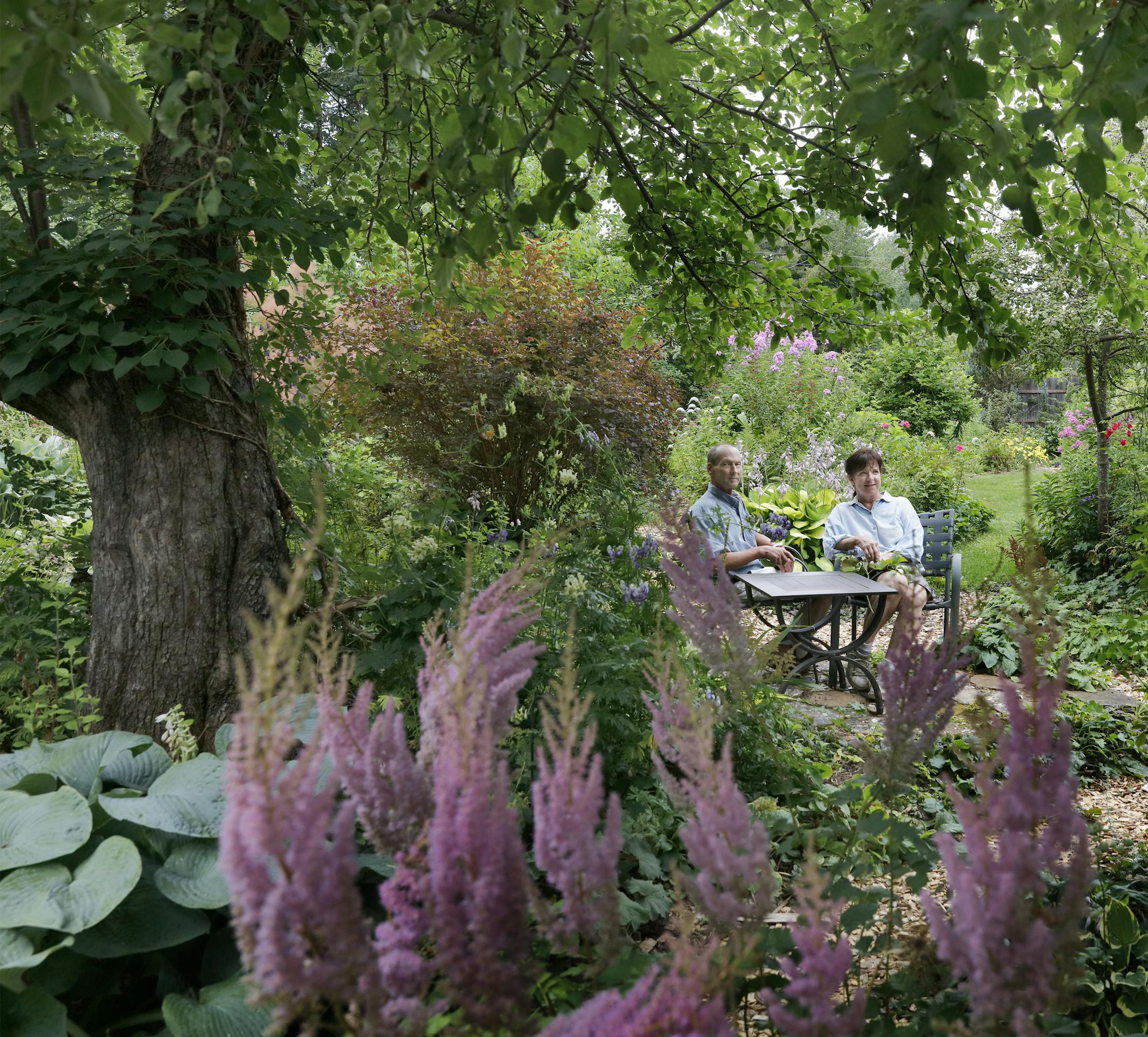
In a spot along the back border of Ellen Akins' sprawling backyard, where the lawn wages a dogged battle against the ever-encroaching woods of northern Wisconsin, lies the Island of Misfit Plants.
Here are the lilies that didn't thrive where they were planted; the roadside foundlings that responded too well to the beneficence of tending; the flowers that proved a little too pink to play well with others; the dead Gooseneck Loosestrife that revived.
Other gardeners might pitch such misfits into the compost. But Akins' gardens in Cornucopia, Wis., are in the land of USDA Zone 4A, where the temperature often plummets to minus 25-30 degrees. The weather already is enough of a predator. Why should she further the horticultural toll? Second chances for all!
Somewhat like her misfit plants, Akins doesn't hew to the usual profile of an ardent gardener. She places well-researched catalog orders, but also scavenges ditches. She creates carefully considered garden "rooms," but lets hollyhocks wander about like stray cats.
"I let them go to seed, then just throw them around where I want them," she said with a shrug. "And they come up where they want to be."
Akins and her husband, Steven Denker, have lived in Cornucopia for 27 years. On the shores of Lake Superior at the northernmost tip of Wisconsin, the climate is an ever-present challenge. Summers are short; winters can be brutal.
"The guideline is whatever is safe in Zone 3 is OK here, but it's surprising what thrives," she said.
Indeed, depending on the season, the ditches are filled with vast waves of lupine, or bright with wildflowers that often are considered weeds.