

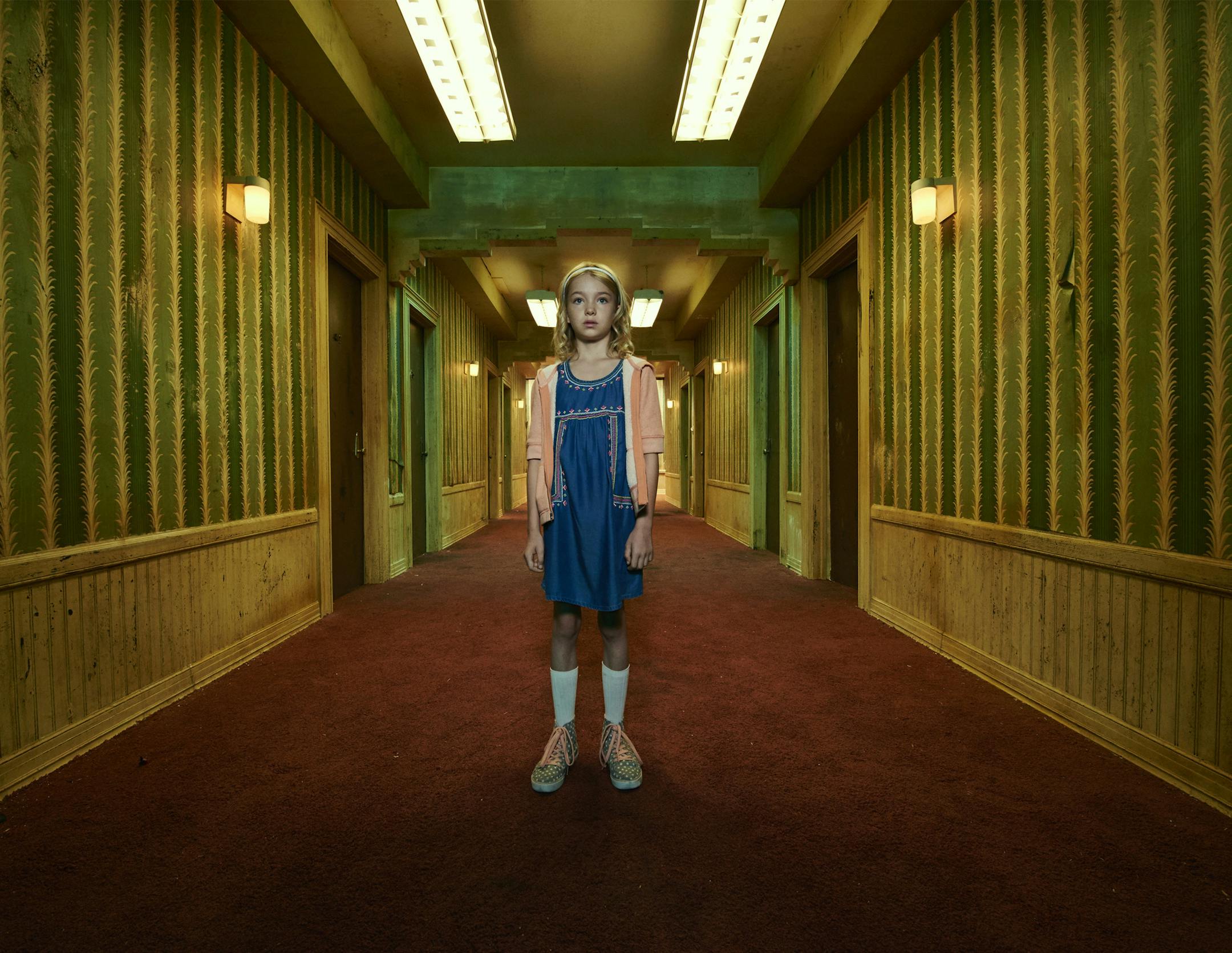
LOS ANGELES – Production designer Jack Mossa has his own version of a nightmare.
It recurs every time the boss, Ryan Murphy, comes to inspect his work on "American Horror Story: Cult," debuting Tuesday. The show takes place largely in a couple's carnivore-friendly restaurant and the upscale home where their young son's comic books, featuring vicious clowns, may be coming to life.
Will Murphy warm to the copper-accented stove in the kitchen? Savor the slabs of meat hanging in the cooler? Throw cold water on the antique bathtub?
"When Ryan walks on the set, I'm prepared for two things," said Mossa while maneuvering between tables in the bistro last month. "One, a deep sigh of relief and everyone's patting me on the back except Ryan. And two, me packing up my office and going home."
Murphy may be heralded these days for resurrecting the careers of aging actresses like Jessica Lange and Kathy Bates, but the stars wouldn't shine if he didn't pay just as much attention to the settings, whether it's Joan Crawford's tufted, plastic-covered furniture in "Feud: Bette and Joan" or the walkway leading up to the Brentwood mansion in "The People v. O.J. Simpson: American Crime Story."
For "The Assassination of Gianni Versace: American Crime Story," set to premiere in early 2018, Murphy insisted that his crack research team chase down the most trivial of factoids: the backpack and shoelaces favored by killer Andrew Cunanan, the ashtray where Versace stashed his keys, the orchid plant on his dining room table.
"Detail is everything," said producer Alexis Martin Woodall, who has worked with Murphy for a decade. "If you have to stop in the midst of a great moment because you're looking at the artifice, then we're not doing our job. Every bit of polish has to be there so the minute you hit 'play' or turn on the TV, you're in it. We're all obsessive about that."
With at least three series in production at any moment, Murphy doesn't have time to personally sweat over every prop and color scheme. He'll meet with department heads months before the cameras roll, offer general notes and then have his team report back with miniature models and storyboards a few weeks later. Even after the sets are up, Murphy still must give his stamp of approval — and a thumbs down can come at any time.


