

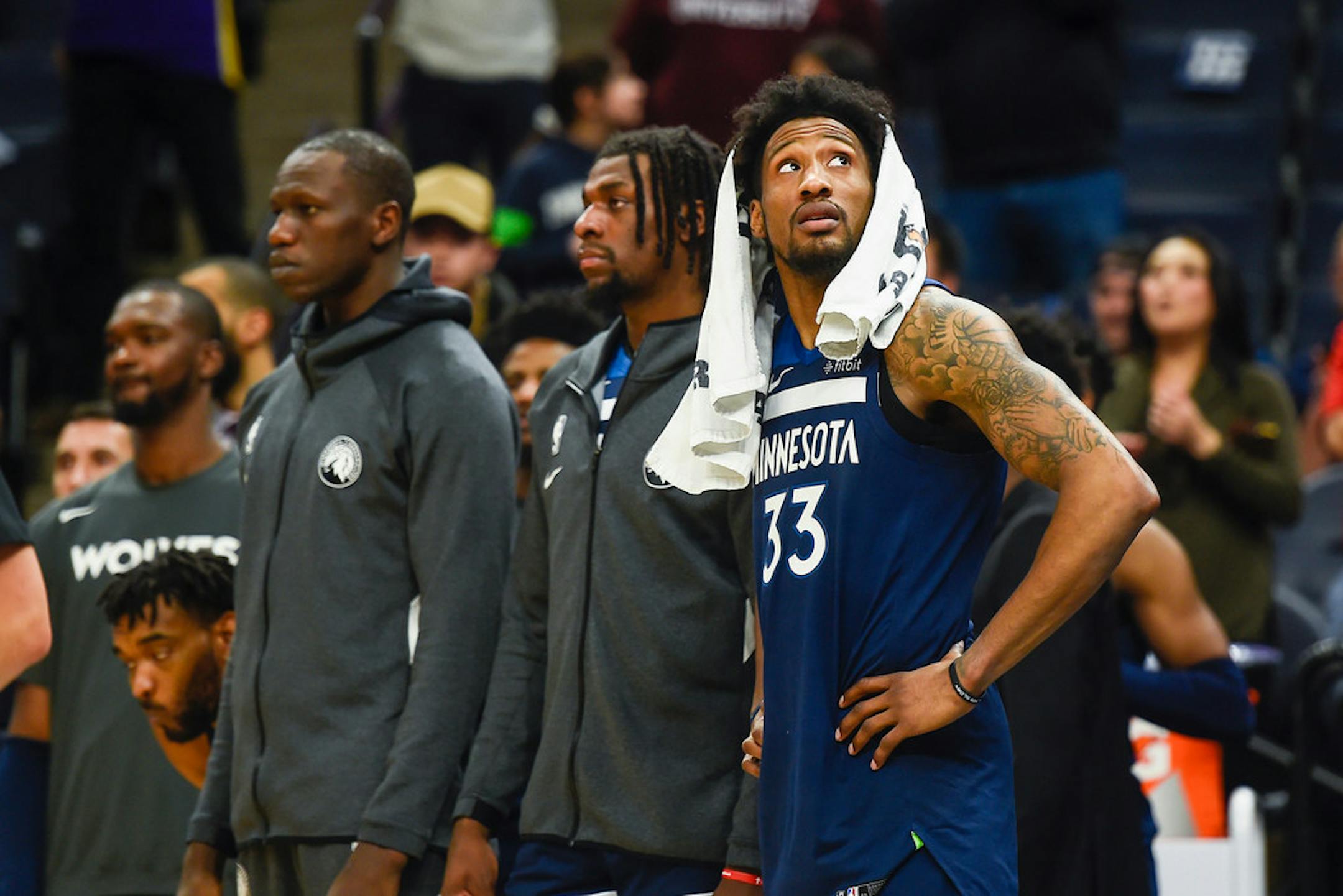
In a roller-coaster season for a franchise that has seen more downs than ups in its history, this question still needs to be asked: Have the Timberwolves reached a new low?
That's probably a subjective question with an impossible answer, but we do know some pretty compelling evidence emerged from Monday's loss to the Kings.
First, point guard Shabazz Napier used these exact words – "As low as you can get. This is it." – to describe a 133-129 overtime loss to the Kings in which the Wolves somehow found a way to lose despite leading 115-100 with 2:05 to play in regulation.
But Napier likely meant the specific feeling about that specific game, and at most how he felt about it in the context of the season. Is this, though, a broader low?
I mean, it was the Wolves' 10th consecutive loss, but that isn't even their longest losing streak of the season. That honor goes to the 11-game skid in December, a plummet the Wolves ended finally by winning at Sacramento. The Kings looked to be playing the role of streak-buster again Monday … until they weren't.
This is the 31st year of Wolves basketball. They have lost at least 50 games in half (15 of 30) of the completed seasons in their history, and 60 or more games in nine of them.
But in looking back at those mostly lean years, I found this: Never before had the Wolves had two different double-digit losing streaks in the first 50 games of a season – until this year.
Maybe that 50-game marker seems like a very specific cut-off point cherry-picked to make this year look really bad. I see it this way: Most teams, even those who eventually become non-competitive, can maintain interest for about that long into a year. Then things fall apart as the finish line of a lost season grows closer, the playoffs become out of the question entirely and/or good players are dealt away before the trade deadline to start a rebuild.


