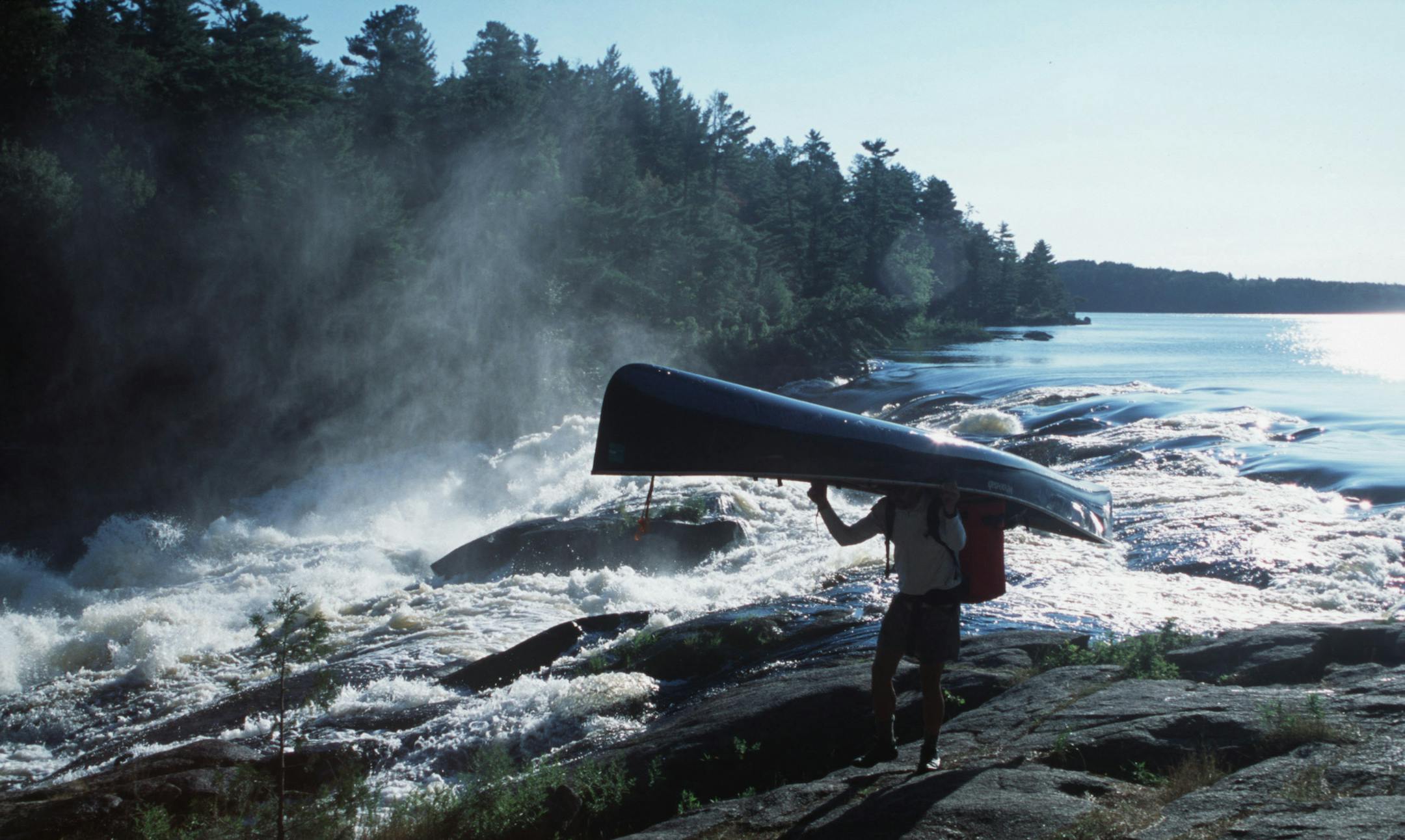
Before the Boundary Waters became a quiet wilderness, there was a loud fight.
Ely residents and national lawmakers battled for years over the Wilderness Act, which protected 9.1 million acres — including 1.1 million acres of the Boundary Waters.
Last week, that law turned 50. Conservationists marked the anniversary with a conference in Duluth.
One of the event's speakers, Kevin Proescholdt, author of "Troubled Waters: The Fight for the Boundary Waters Canoe Area Wilderness," reflected in an interview on the significance of the law, which defines wilderness as "an area where the earth and its community of life are untrammeled by man, where man himself is a visitor who does not remain."
His answers have been edited for length.
What do people forget about the Wilderness Act's passage 50 years ago?
It was not a forgone conclusion that the Wilderness Act would pass. It took eight long years of slogging through the congressional process before the act passed. The Wilderness Act was such a remarkable, almost revolutionary law. As a nation, we sort of decided that some of these areas of wilderness should be protected — that we're not just trying to develop the wilderness and open up the frontier, as had been our country's mentality for several centuries before that. Now, when people think about wilderness, they think, geez there are almost 110 million acres nationally in the National Wilderness Preservation System. But it took a lot of hard work by a lot of those conservationists back in the 1950s and '60s to make this happen.
Given past proposals — to build a road to every lake, for one — what might the Boundary Waters look like today if not for the Wilderness Act and laws that followed?
I think the area would have eventually become fairly developed, with roads penetrating large parts — if not all parts — of the area. Certainly, there would have been logging that continued. There may well have been mining that occurred. I think it would have still been a beautiful place in some ways, but it would have lost its wild character.
Who opposed the Wilderness Act?
At the first congressional hearing in June 1957, the chief of the U.S. Forest Service testified against the bill in general — and also testified against including the Boundary Waters because the Forest Service wanted the ability to keep logging there. Shortly after that hearing, there was a firestorm of protests, particularly in the Ely area, against the bill. The concern was that it would take away all motorboats and cripple the tourist industry.