

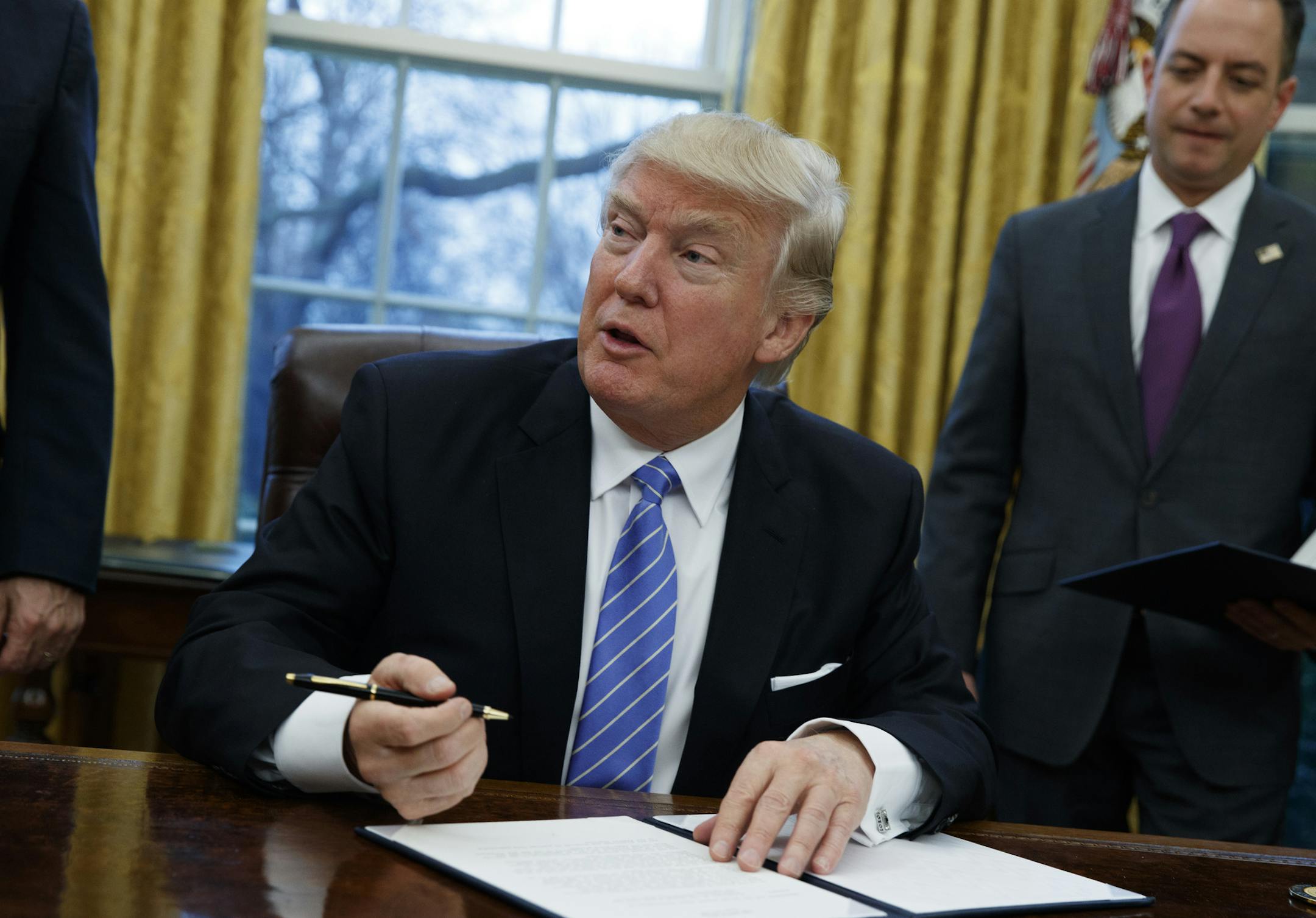
When President Donald Trump withdrew the U.S. from the Trans Pacific Partnership (TPP) three days after he took office, most observers believed that the trade agreement was dead. Not so.
In early November, the trade ministers from the 11 remaining TPP countries (Australia, Brunei, Canada, Chile, Japan, Malaysia, Mexico, New Zealand, Peru, Singapore, and Vietnam) announced their commitment to the agreement, but under a new name — the Comprehensive and Progressive Agreement for Trans-Pacific Partnership (CPTPP).
The renamed pact incorporates most of the TPP, with the exception of a number of hard-fought provisions on intellectual property protection. Those provisions were U.S. industry driven and begrudgingly included in the TPP at the insistence of the U.S. With the U.S. out of the picture, the CPTPP countries "suspended" the provisions.
The provisions would have required TPP countries to move closer to U.S. standards of intellectual property protection. By strengthening minimum requirements, the provisions would have harmonized and reinforced intellectual property in the region and made it easier for U.S. companies to do business there.
The provisions touched both copyright and patents and would have, for example: increased to 70 years following the death of the author the duration of protection for creative works, which is a pillar of the U.S. copyright system; required countries to provide patent term adjustment to compensate for delays in patent prosecution and to allow patents for inventions that are new uses of known products; and oblige countries to provide periods of market exclusivity for biologic medicines.
The U.S. turned its back on the TPP in 2017; in 2018 the CPTPP countries will be poised to embrace a trade agreement that not only turns its back on the U.S. but also rejects the very provisions that the U.S. insisted were vital to protect U.S. intellectual property.
Perhaps the greatest irony is that the TPP was largely a US-led initiative.
If the TPP and CPTPP are any indication, the U.S. government's role as a leader of the international intellectual property system is under self-imposed threat and is not likely to emerge unscarred. The administration's focus on highlighting other nations' abusive practices (particularly those of China), although of critical importance, seems to have come at the expense of advancing constructive solutions. When, in the past, the U.S. has taken a positive approach to intellectual property negotiations, the country has often emerged with pro-intellectual property provisions that advance U.S. interests.


