

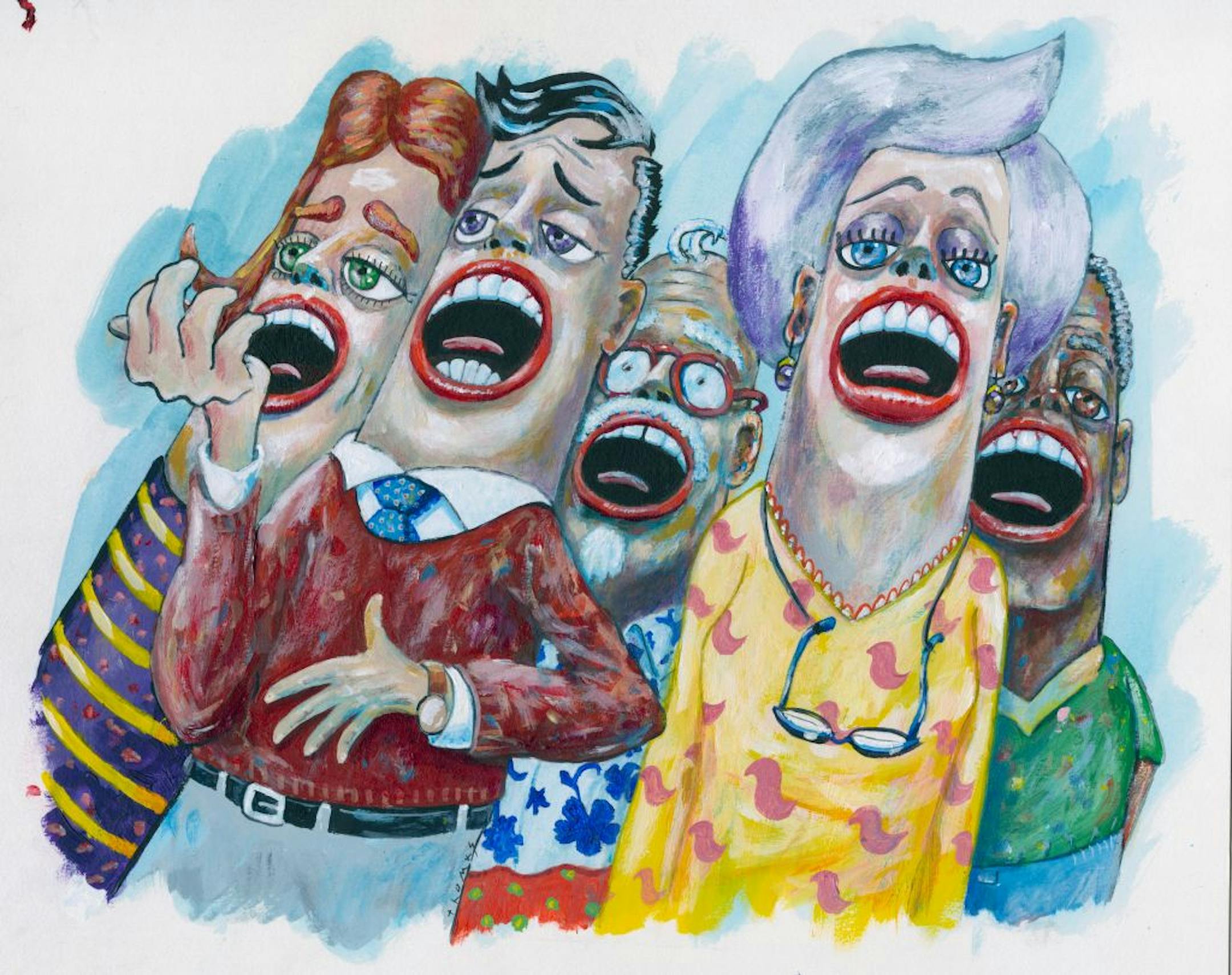
Aging baby boomers have long used exercise, surgery and collagen as they try to slow the natural bodily processes of aging.
Now, some are flocking to do the same with something that's usually a dead giveaway: a voice that sounds "old."
Research shows that older people's voices often develop breathiness, weakness and loss of range or quality from causes that include disease, changed use of their voices and a condition called presbylaryngis, also known as "aging of the larynx."
As baby boomers grow old, the estimated 30 percent of older folks with speech disorders will roughly double over the next two decades. Those born between 1946 and 1964 will likely object even more than today's patients to a lessened ability to speak and be heard clearly, said Dr. Robert Buckmire, an otolaryngologist at the University of North Carolina at Chapel Hill.
"There's a significant social cost to not being able to communicate," said Buckmire, who works with a team that includes speech therapist Ellen Markus.
"Our aging population is more active; they are working; they are more active socially. There's a much higher stake in the effectiveness of the voice for personal and professional reasons than there was five or 10 years ago."
From precise vocal-function exercises to laryngeal surgery to collagen injections that plump thinning vocal cords, doctors and therapists use a variety of approaches to ward off the effects of aging on patients' voices.
Self-image, basic communication and professional reputation are at stake for the rising number of patients who have sought help from medical facilities. An oft-cited study from the '90s found that listeners tended to rate an older voice as "doddery," "vague" and "rambling" while giving more credibility to the same words from a younger speaker.


