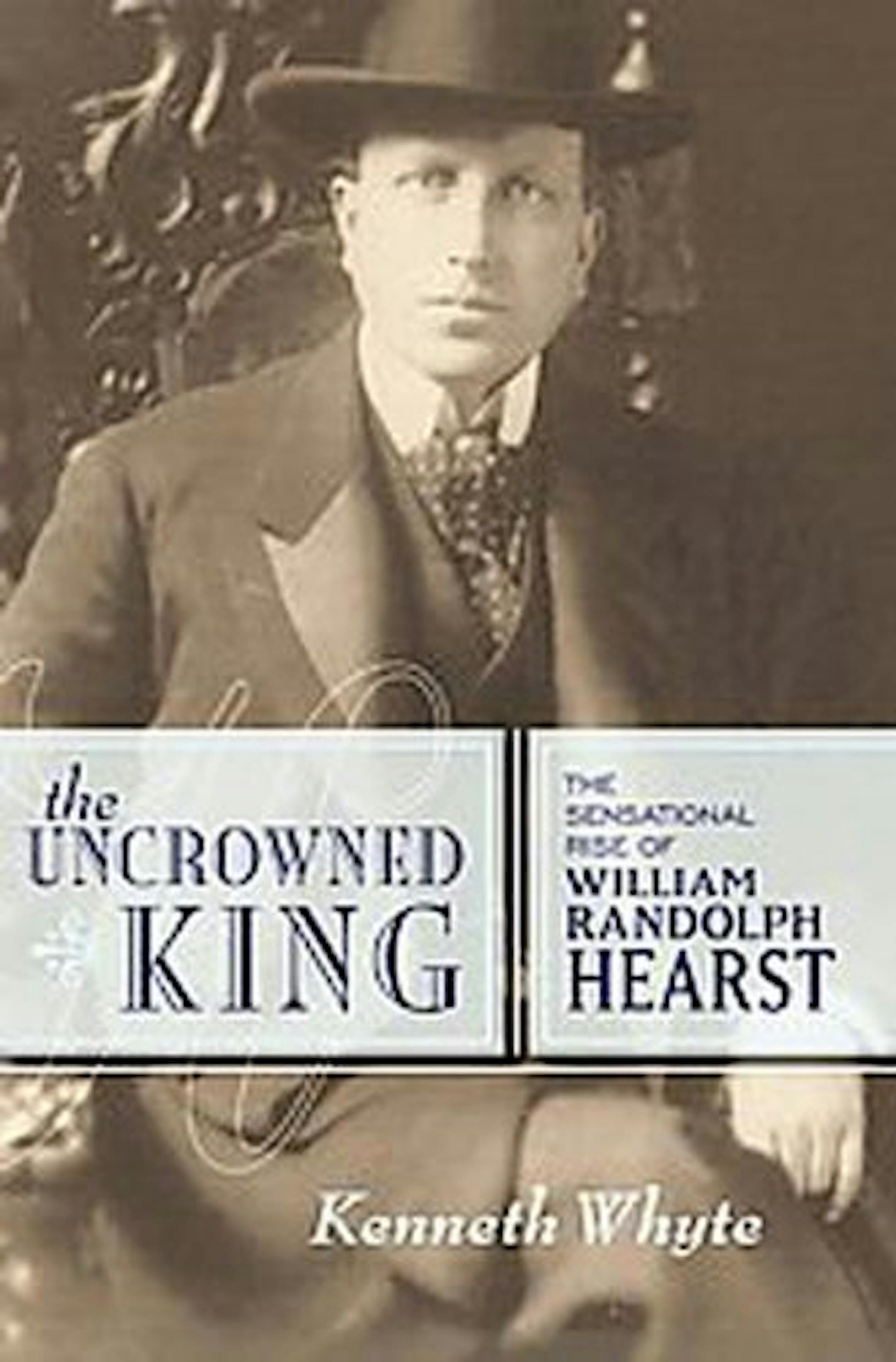
To call "The Uncrowned King: The Sensational Rise of William Randolph Hearst" a biography of the newspaper tycoon would not be quite accurate.
"Biography" usually connotes a cradle-to-grave treatment. But author Kenneth Whyte has chosen to focus on Hearst in his youth -- especially his 20s and 30s -- almost entirely omitting the final 50 years of the subject's life. Furthermore, the context of those years -- Hearst invading the already crowded New York City newspaper market, succeeding surprisingly well and then using his newspaper to cover the hell out of the Spanish-American War during 1898 -- takes the focus away from the biographical, placing the focus instead on the larger canvas of U.S. history.
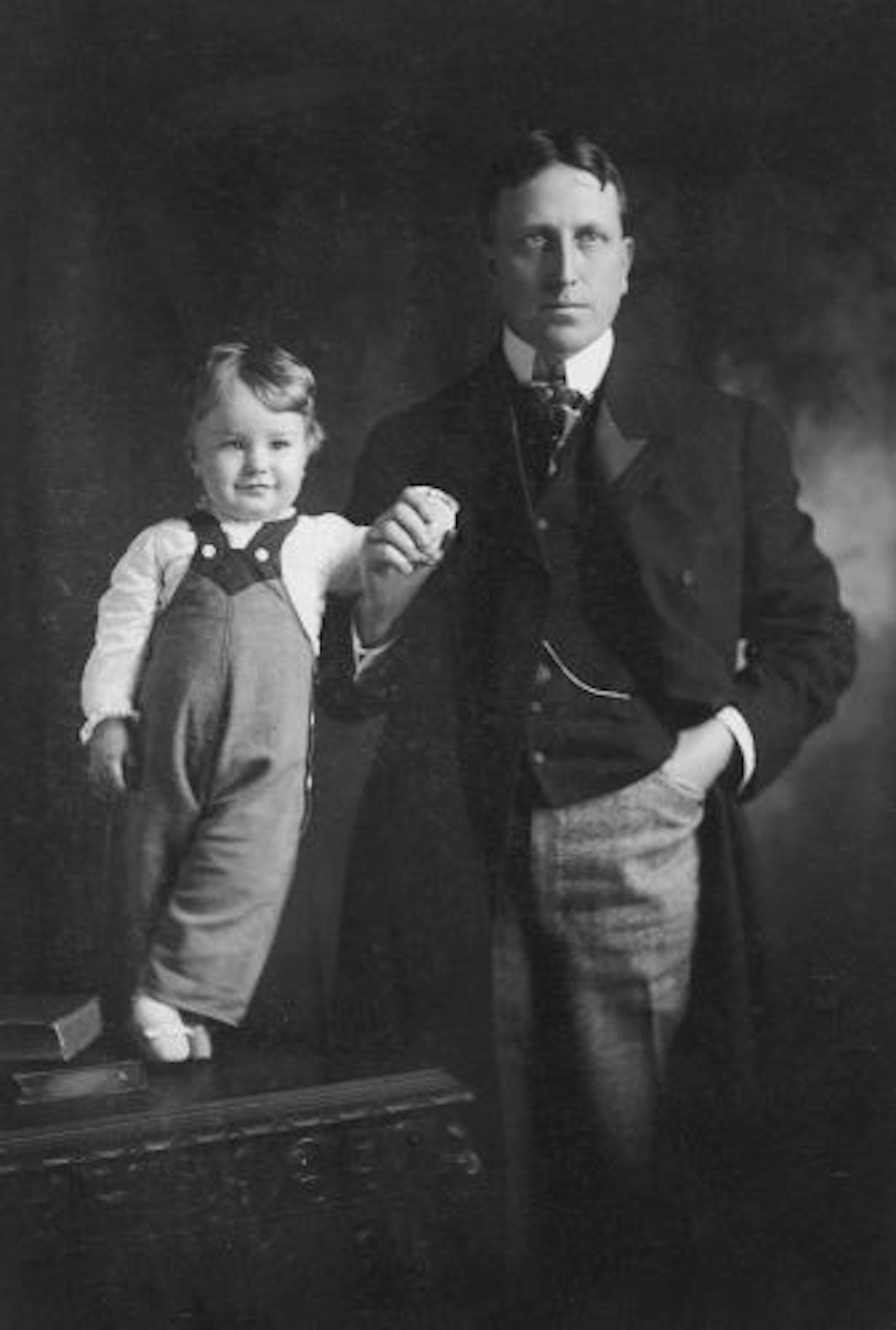
Cradle-to-grave biographies of Hearst are plentiful, with those by W.A. Swanberg and David Nasaw the most prominent of the bunch. Whyte, a Canadian magazine and newspaper editor, read those biographies, admired portions of them, yet concluded they were misguided in the emphasis they give to Hearst's sensationalistic treatment of the news at home and abroad. In Whyte's view, based on extensive research, Hearst qualifies as a hard-working visionary who could have lived as an idle gentleman on inherited wealth, but instead used his newspapers in New York and San Francisco to comfort the afflicted and afflict the comfortable.
"Journalism was an opportunity to make a difference, which mattered to Hearst; despite his carefree poses, he had absorbed some of [his mother's] noblesse oblige and passion for a cause," Whyte writes.
Whyte's attacks on previous chroniclers of Hearst seem calculated to fan controversy and thus perhaps sell more books. Those spats will serve as nothing more than sidelights to all but narrowly focused professional historians. Most readers quite likely will focus on the book's many strengths.
The chief strength is the reconsideration of the war, fought to free Cuba, an island dominated by Spain despite the distance from the Iberian Peninsula. Whyte argues that the conventional wisdom -- that Hearst fanned war hysteria so he could sell more copies of the newspaper -- is wrong. Instead, Whyte believes the United States' engagement of Spanish troops in battle was justified by Spain's harsh treatment of the Cuban population, treatment bordering on genocidal.
Impetuous and confident in his ability to survive warfare up close, Hearst traveled to the war zone rather than holing up in the White House. What he saw left him certain his newspaper had taken the side of the angels.
Steven Weinberg's most recent book is "Taking on the Trust: The Epic Battle of Ida Tarbell and John D. Rockefeller."