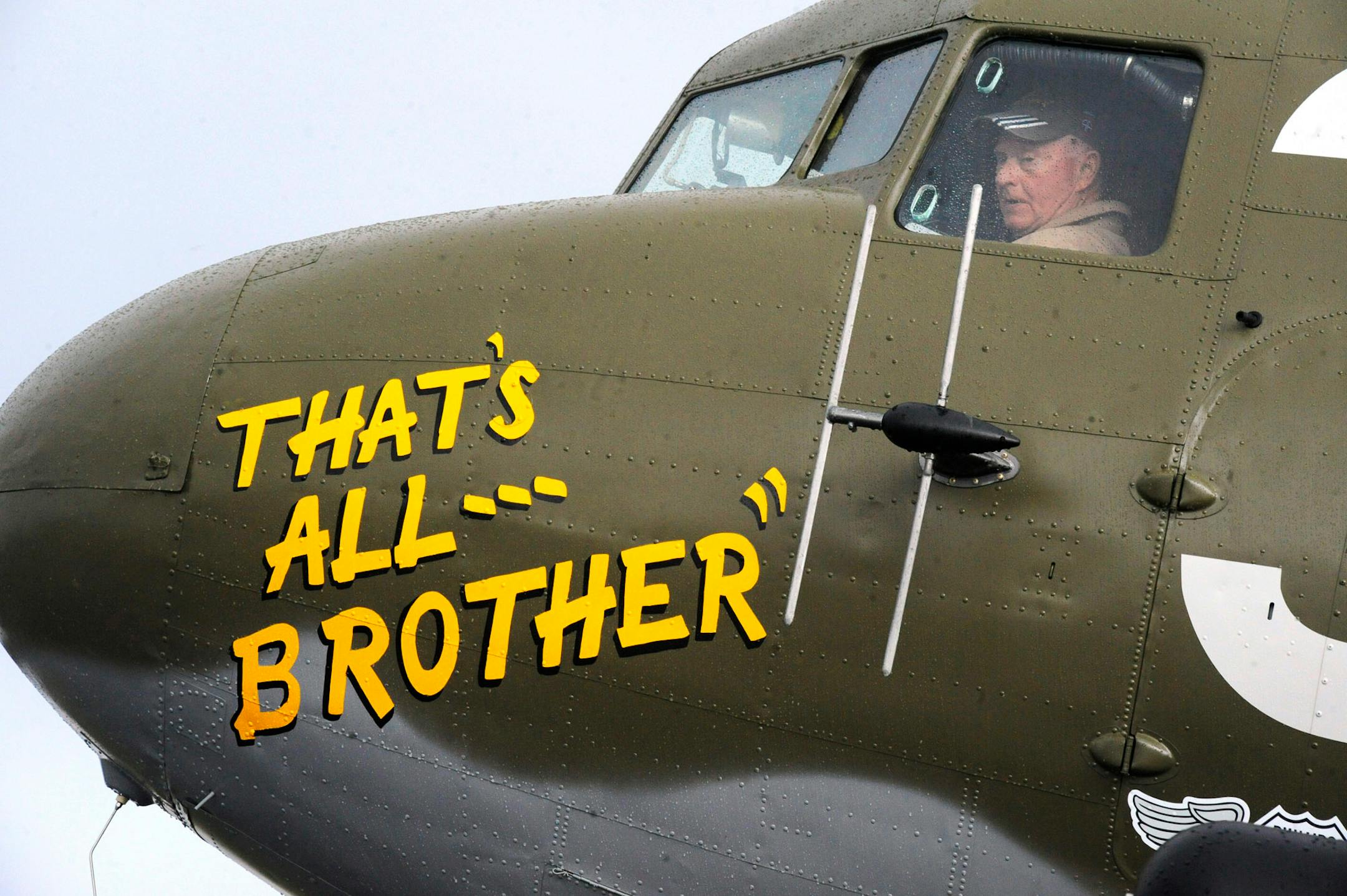
BIRMINGHAM, Ala. — Filled with paratroopers, a U.S. warplane lumbered down an English runway in 1944 to spearhead the World War II D-Day invasion with a message for Adolf Hitler painted in bright yellow across its nose: "That's All, Brother."
Seventy-five years later, in a confluence of history and luck, that plane is again bound for the French coast for what could be the last great commemoration of the Allied battle to include D-Day veterans, many of whom are now in their 90s.
Rescued from obscurity in Wisconsin after Air Force historians in Alabama realized its significance, the restored C-47 troop carrier that served as a lead aircraft of the main invasion force will join other vintage planes at 75th anniversary ceremonies in June.
After flying over the Statue of Liberty in New York on Saturday, the plane embarked for Europe with other vintage aircraft along the same route through Canada, Greenland and Iceland that U.S. aircraft traveled during the war. There, it and other flying military transports are expected to drop paratroop re-enactors along the French coast at Normandy.
"It's going to be historic, emotional," said pilot Tom Travis, who is helping fly That's All, Brother to Europe for the event. "It'll be the last big gathering."
Air Force historian Matt Scales said there's no question that the twin-engine plane is the same one that led the main D-Day invasion. It's now operated today by the Texas-based Commemorative Air Force, which preserves military aircraft.
"There's not a doubt in my mind. We have three separate documents that prove it," said Scales, who found the aircraft with help of a colleague.
Scales tracked it down a few years ago while researching the late Lt. Col. John Donalson of Birmingham, who was credited with piloting the lead aircraft that dropped the main group of paratroopers along the French coast in preparation for the assault on June 6, 1944.