

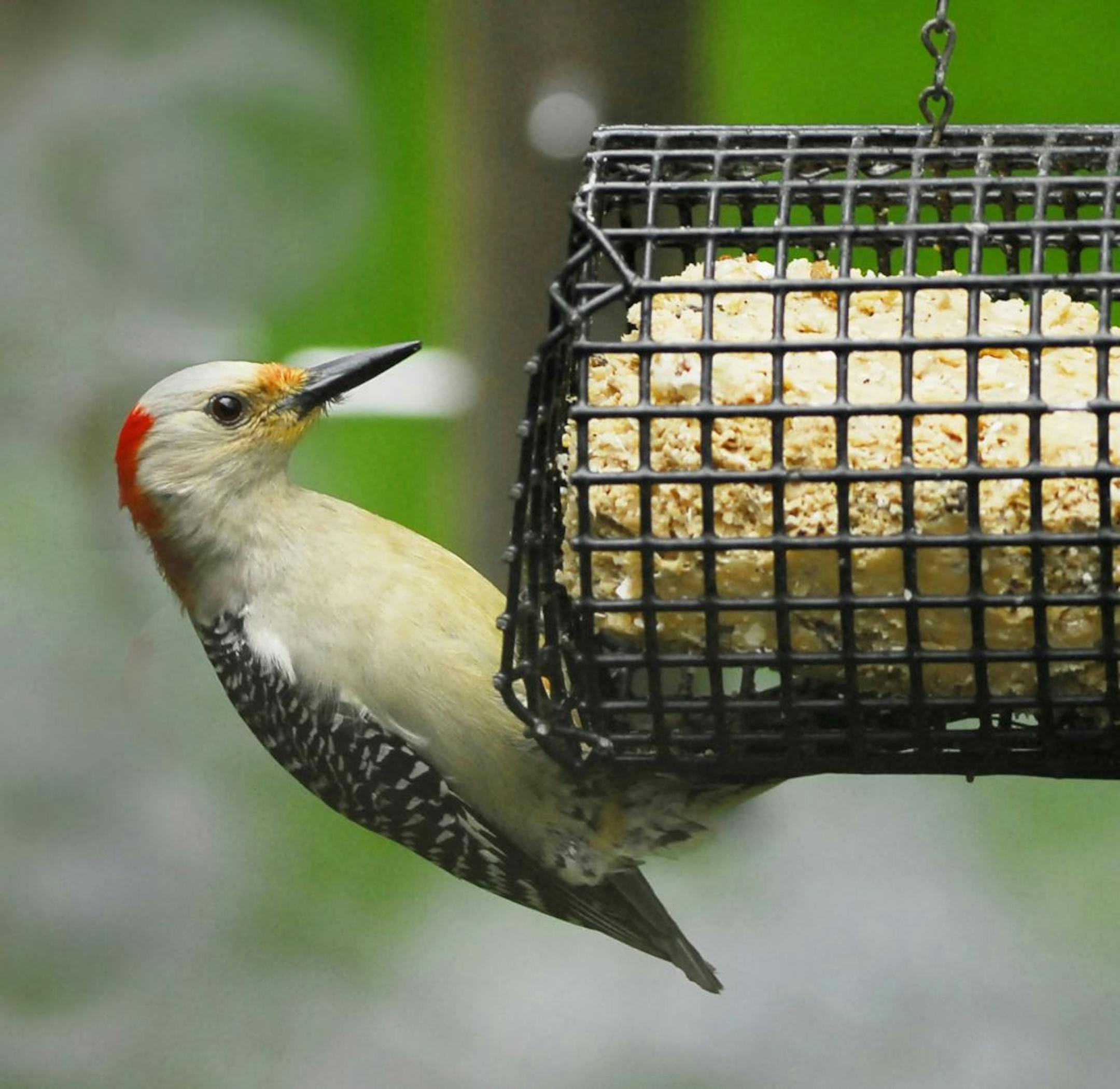
Q Have you ever heard of woodpeckers eating jelly? A red-bellied woodpecker has been eating the orioles' grape jelly this summer. Isn't this unusual?
A A number of readers have reported seeing these woodpeckers slurping up the jelly they put out for orioles. You've got a smart woodpecker that decided to give the purple stuff a try, decided he likes it and keeps coming back for more. Woodpeckers are big fans of ripe fruit, especially mulberries at this time of the year, and the jelly probably approximates that taste.
Bacon grease treat Q I've been making a treat for birds using bacon grease sprinkled with millet, peanut pieces and dried cranberries. But now I wonder if it's OK to put this outside or will it harm birds?
A Your mixture sounds like a good treat for birds, and there's nothing wrong with using bacon grease. However, I'd save this food for late fall and winter: Since the grease won't "firm up," it could harm birds if they get it on their feathers. Oily substances won't wash off and will interfere with their ability to keep their feathers performing well. In cold weather, the grease will remain much firmer and won't present a hazard.
Joining the chorus Q My daughter was playing outdoors with a plush chickadee toy that calls when she presses a button inside. Soon a real chickadee arrived and started a conversation with the toy, then another chickadee arrived and a concert began. Have you ever heard of this happening?
A I've seen those toys at wild bird stores and never realized their sounds were so accurate that they could fool a real bird. Since this occurred during nesting season, the real chickadees probably flew in to see which new 'dee was intruding into their neighborhood. Some bird-watchers play bird tapes to call in birds (this should only be done during non-breeding season, so parents don't feel harassed), but I'd never heard of a bird-toy call-in before.
Dealing with blackbirds Q Any suggestions for getting red-winged blackbirds to go away? Two of them perch on my feeders and won't let any other birds near them.
A Red-winged blackbirds are highly territorial and vigorously defend whatever they decide is theirs. I'd suggest a different type of feeder to help discourage them. They prefer feeders that are easy to stand on, so a domed feeder that requires birds to perch on the edges should help foil them. Fill it with safflower seed, which blackbirds don't seem to like, and your cardinals, chickadees and nuthatches will still visit. To attract additional species, you could set out a tube feeder with very small openings and fill it with a mixture of nyger seed and small sunflower chips. Finches love these feeders and this food and should flock in.


