

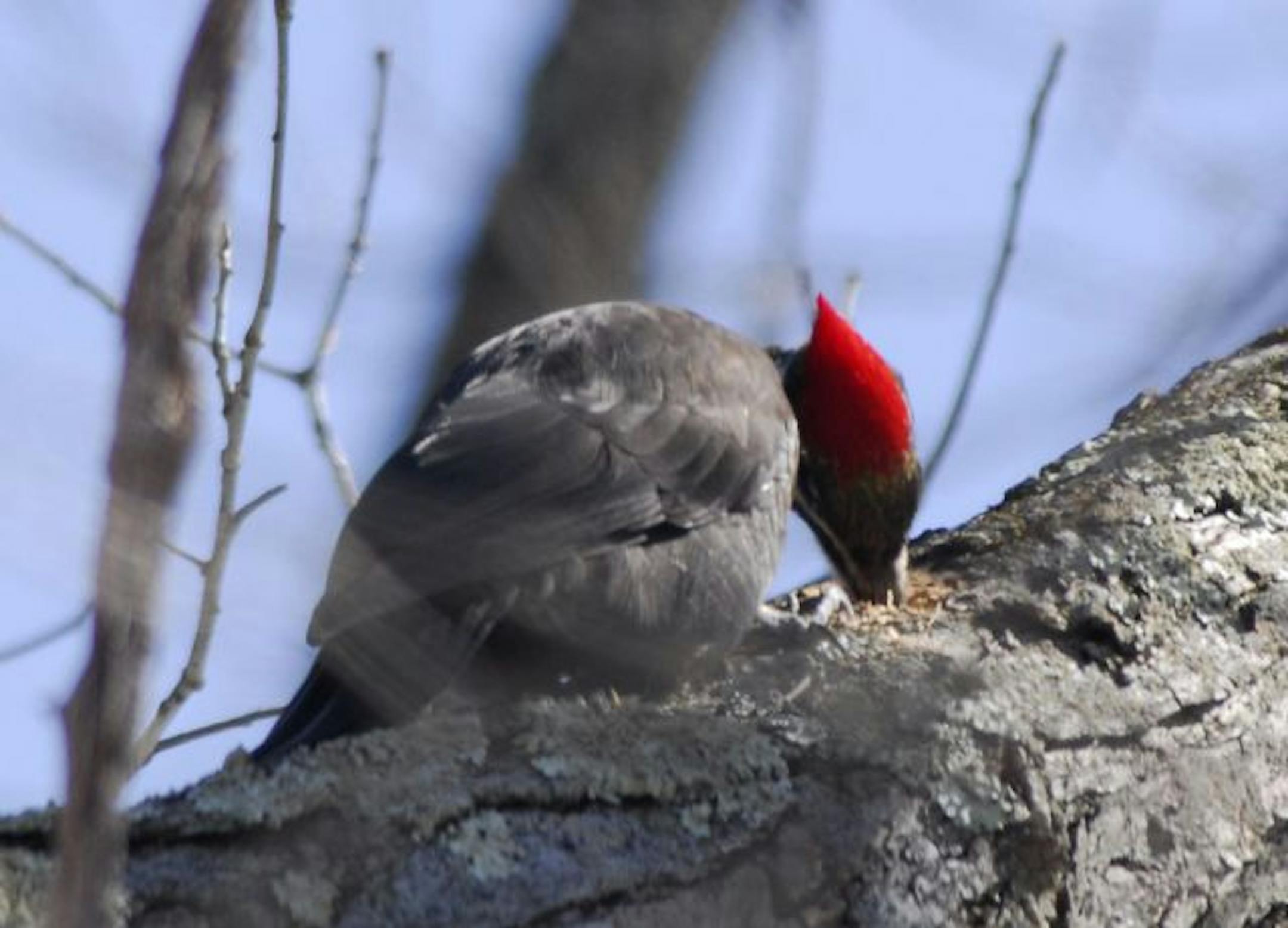
It's noisier these days. And woodpeckers are partly to blame.
While they're fairly subdued in winter, woodpeckers burst forth in early spring -- but not with song. At this time of year, woodpeckers are defining their territories and re-establishing the bond with their mates. Unlike songbirds, woodpeckers aren't equipped to communicate via song, so they do so by drumming with their beaks on resonant surfaces. All our woodpeckers like to make noise -- hairy, downy, red-bellied, red-headed and pileated woodpeckers as well as the northern flicker.
A woodpecker will perch on a tree, your home or some other structure and hammer away for minutes at a time. Then it will move to another perch and repeat the process, creating a sort of sound fence. Because a louder sound carries farther, woodpeckers tend to favor hardwoods and other surfaces that give off a rich, resonant knock.
But woodpeckers peck to do more than make noise. They also use their beaks to chisel into trees in search of insects and protein-rich larvae to eat. And, later in the season, each pair of woodpeckers will spend days or even weeks chiseling a hole in a tree to house their nest and their young. They make much less noise when they're looking for food or excavating a nest than they do with they're defining their territory.
Food and shelter
Despite the fact that they make so much noise, woodpeckers are good listeners. Wood-boring insects are a staple of a their diet. Interestingly enough, woodpeckers use their acute hearing to pick up the sound of insects or larvae chewing into wood or moving around under the bark.
Some people worry that the pounding and chiseling of woodpeckers might kill their trees. But woodpeckers usually aren't the culprits. It's hard work cutting through bark and wood, so woodpeckers look for branches and trees already compromised by insects or fungi. Woodpecker activity doesn't necessarily mean that a tree is unhealthy, because most trees have some deadwood. But these birds do tend to search out trees whose heartwood has been softened by rot.
One kind of woodpecker, the aptly named yellow-bellied sapsucker, can be more of a problem. This bird chisels shallow wells in tree bark, then laps up the sap that oozes out. The holes themselves usually don't damage a tree, but diseases and insects can enter through those holes. Sapsuckers aren't considered a major problem in Minnesota because, unlike most other woodpeckers, they're migratory. They're usually found here only in spring and fall.


