

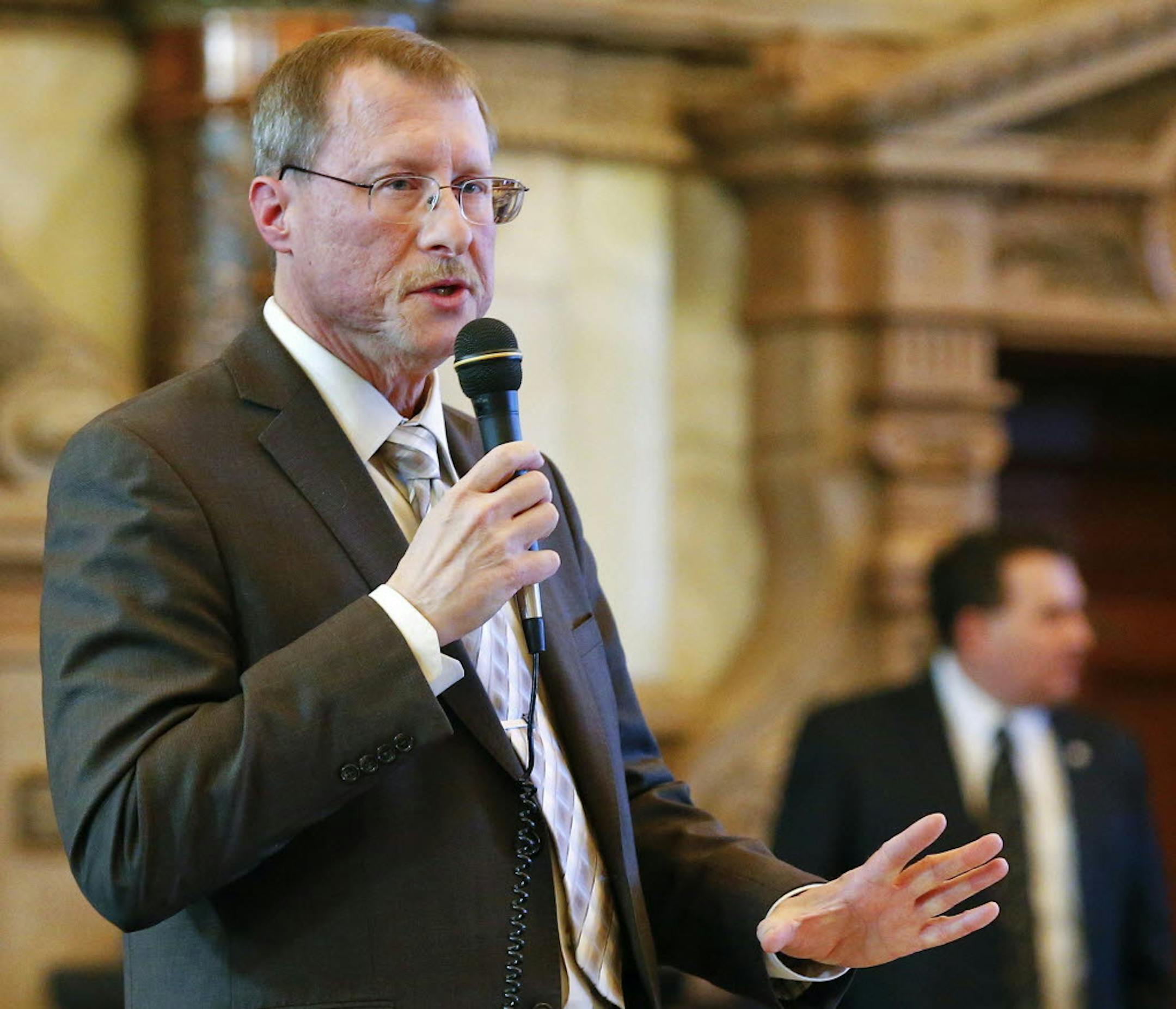
TOPEKA, Kan. — Republican Sen. Mitch Holmes clearly recalls when women have worn "over the top" attire during his decade in the Kansas Statehouse.
"A blouse that came way past the rib cage was one of the most outlandish ones," he told The Associated Press. Such women's wear can distract from the legislative process, he said, explaining why a dress code was needed in his Ethics and Elections committee.
Holmes dropped his guidelines on Tuesday, the day after his AP interview, after he was shamed on social media as a "sexist" and "cave man" for telling women how to dress. In a written apology, he said he "meant no offense" by suggesting that "for ladies, low cut necklines and mini-skirts are inappropriate."
It's at least the fourth time that lawmakers have retreated from dress codes for female colleagues, lobbyists, interns and other citizens recently.
After Missouri's House speaker resigned in a scandal last year — he acknowledged exchanging sexual text messages with a female intern — some of his colleagues suggested an intern dress code could help eliminate "distractions." Republican Todd Richardson quickly squelched that idea after taking over as speaker.
Montana's House speaker, Austin Knudsen, also suffered backlash when he issued a dress code before the 2015 session urging women to be "sensitive to skirt lengths and necklines," while telling men simply to wear jackets, ties and dress pants.
Knudsen, a Republican, later called it a "rookie mistake" and reversed course. "It wasn't a hill worth dying on at the beginning of the session," he said.
One of the women who led that charge was Democratic Rep. Jenny Eck, of Helena. Women already have to be smarter and work harder to be considered equal, she said; a dress code suggests men have permission to evaluate women based on their bodies.


