BANGKOK — At the time — the evening of March 24 — it seemed like the breakthrough the world was waiting for.
In a hastily called speech, Malaysian Prime Minister Najib Razak announced that an unprecedented analysis of satellite signals concluded that Malaysia Airlines Flight 370 "ended" deep in the Indian Ocean, far from any possible refuge for the 239 souls aboard.
Finally, there was a solid explanation for what happened to the aircraft. A much more focused search could begin, and so perhaps could the grieving process for families from 14 countries. Najib's announcement quieted wild speculation about desert islands and terrorists and covert operations.
But four weeks after the plane disappeared, the apparent pivot in the search is proving to be not much of a pivot at all.
Not a single piece of wreckage from the lost plane has been found, not even after a new analysis led investigators to change the focus of their search yet again. The latest search area is based on extremely limited satellite data combined with radar data taken some five hours before the plane is believed to have gone down. It is, as one search official said, "a very inexact science."
Australian Prime Minister Tony Abbott, whose country is coordinating the current search effort, spoke of "very credible leads" and "increasing hope" a day before Najib's announcement. But on Thursday he said the search has become "the most difficult in human history."
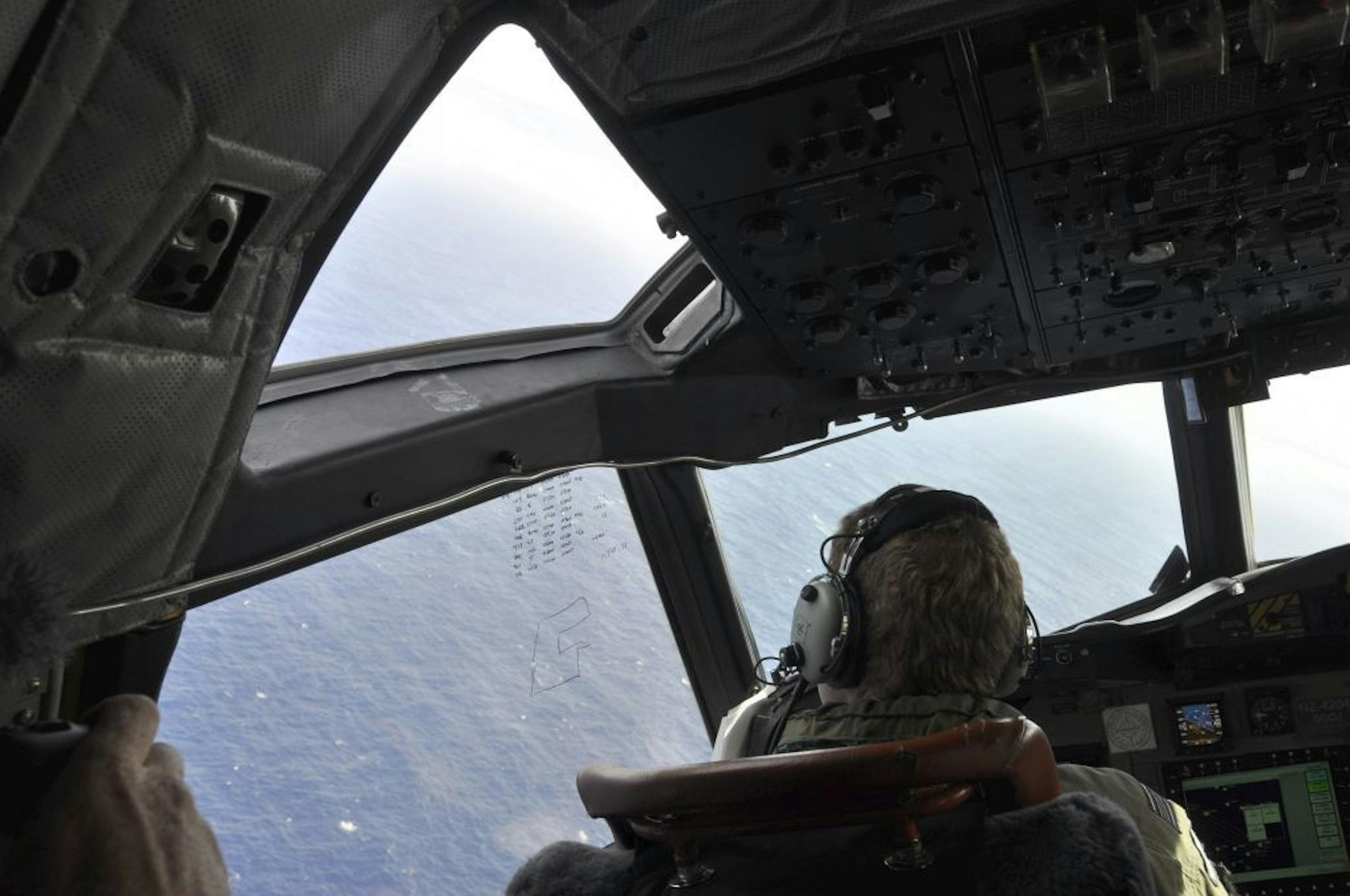
The aircraft could indeed still be in the area planes and ships from several countries have been combing for nearly a week. Currents change the area each day, but on Thursday it was a 223,000-square kilometer (86,000-square mile) patch of ocean 1,680 kilometers (1,040 miles) northwest of Perth.
Each unsuccessful day adds to the skepticism.