

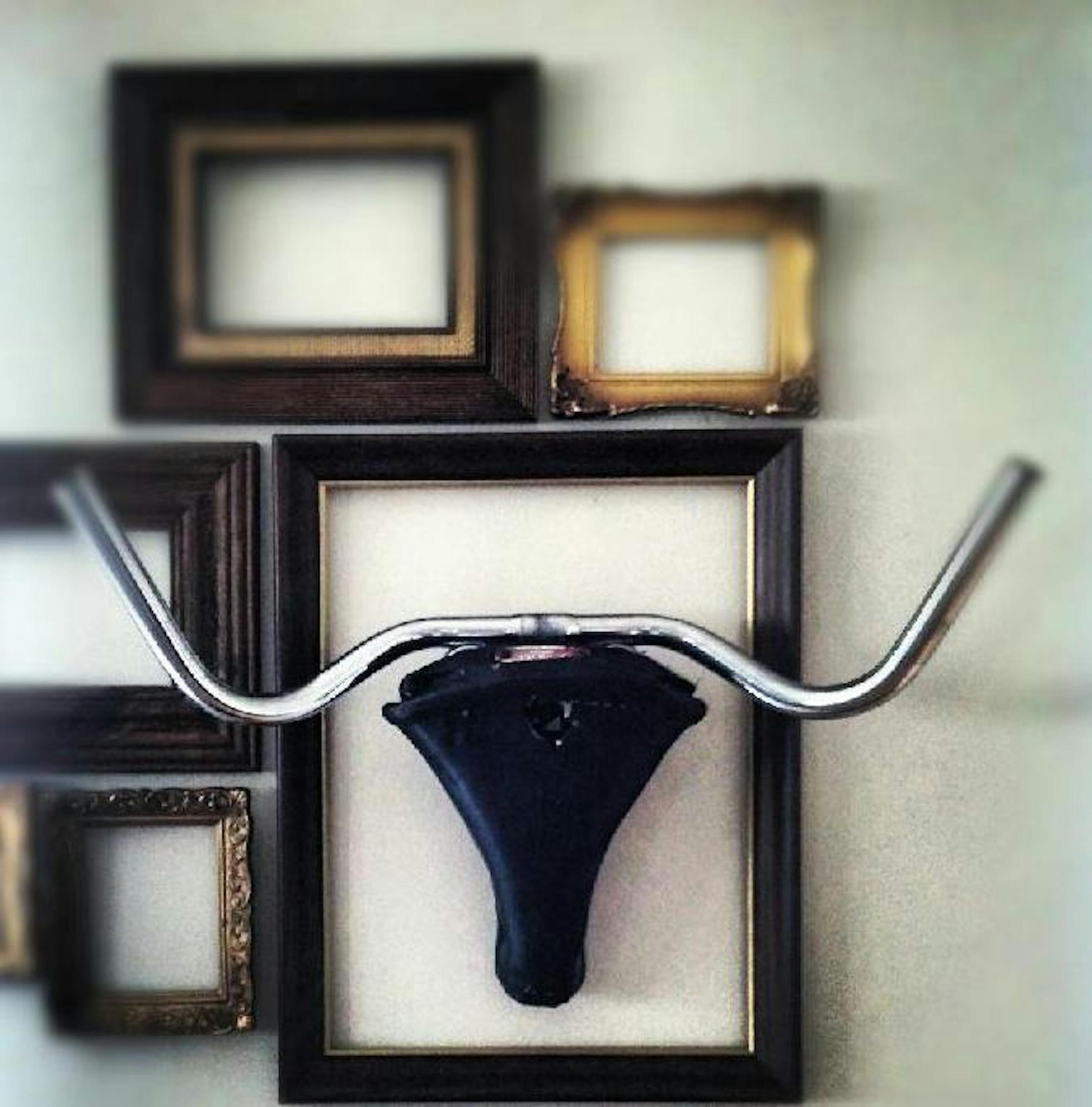
Taxidermy or bicycles? With so many trends emerging, it's easy to forget which ones are cool.
It turns out both of these are. The two staples of apartment decor have entered into a marriage of pure hipster bliss. Now, you can get handlebars mounted like deer antlers for your walls.
An artist in the U.K. is offering what he calls "bicycle taxidermy," by affixing the handlebars of "dead" bikes to wooden plaques.
Turns out that bicycle taxidermy already existed in the Twin Cities, albeit without the fancy name.
Aaron Duchon sleeps, eats and breathes bikes (his words, not mine), so when he saw bicycle parts mounted like taxidermy in a bar a few years ago, he knew he had to re-create the look for his own apartment.
Working with his girlfriend, Duchon started affixing bicycle handlebars and seats. They sell the sculptures for $48 under the business name Arcane Inventory on Etsy.com.
The pieces, called "cycleopes," are described as "A rare, urban hunter's delight, this trophy beast will surely bring the wild inside. Great for the college dorm, office, living room, above the mantel, or even the shop, garage or workspace. Show off your urban wilderness by mounting the hipster's most desired creature."
So dry those weepy eyes, bike fanatics. Your ride — or at least some of its parts — can live on forever. □


