

A small group of birdwatchers headed out on a cold morning in late December to see what birds were around. As cold as it was (14 degrees) and as windy as it became, birds still needed to fuel their furnaces, and we tromped around a nearby woodland to see if we could find them.
Over the next two hours we saw brown creepers, a pileated woodpecker, two cold-looking flickers and many chickadees, among others. And then a sharp-eyed member of our group pointed to a small spruce tree, whose base was scattered with cones. "Isn't this what crossbills do?" he asked. And sure enough, as we peered into the branches, there they were, four red crossbills, busily ripping cones apart to snag the seeds inside.
We were all elated, since none of us had seen crossbills in the metro area in years and years. And this small flock was feeding close to the ground, giving us good looks at birds usually found at the tops of trees.
Perfect tool for the job
Crossbills are sparrow-sized finches and are fascinating to watch: They insert their oddly shaped beaks, which truly are crossed near the tips, between the tightly closed scales of a cone. Opening their beaks to pry apart the scales, they snap up the seeds hidden inside. They've evolved to be cone seed specialists, and a single bird may eat 3,000 seeds a day.
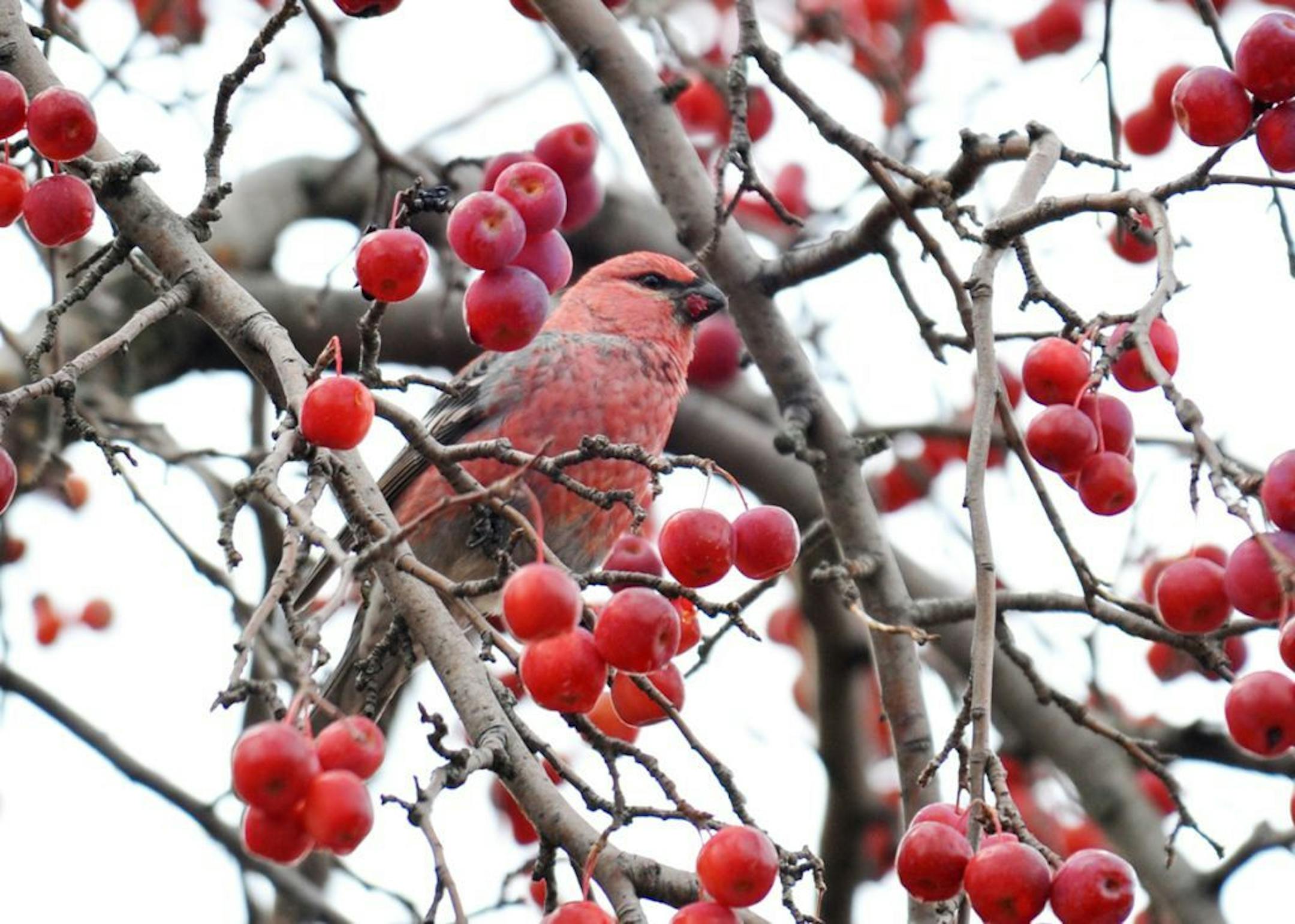
And they're not the only visitors from the northern boreal forest showing up in our region this winter. If you have a crabapple tree nearby, keep an eye out for pine grosbeaks. These large, stocky birds, about the size of a cardinal, feast on fruit wherever they can find it. They're also fans of tree seeds, such as those of mountain ash, box elder and ash.
Minnesotans also are reporting flocks of common redpolls feeding on birch tree seeds or under bird feeders. Redpolls travel in flocks, and are a treat to see on a winter morning, with their bright red caps and black throats. They chatter away as they feed, sounding a bit like a digital goldfinch.
Many of us are familiar with pine siskins, those striped-all-over little birds with yellow accents on the wings, since these birds drop down to visit many winters. And evening grosbeaks also can appear in numbers, although there are few reports of this handsome finch this year.
It's all about food
What are these winter finches doing here? Their appearance far to the south of their typical wintering grounds is called an irruption — the unpredictable, erratic appearance of large numbers of birds outside their breeding season. This differs from migration, which occurs more or less on schedule every year.


