

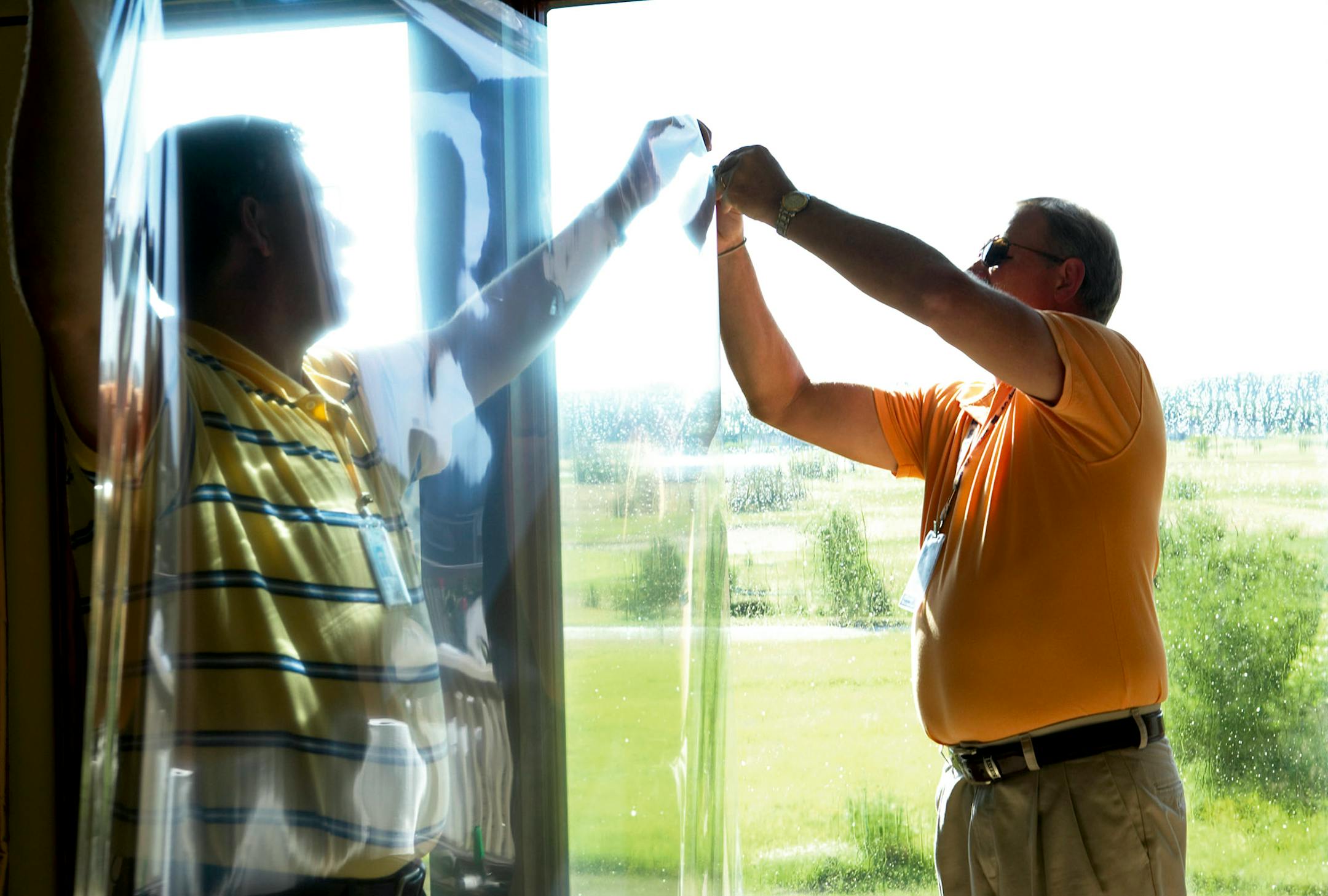
Solar window film offers a variety of functions and benefits to existing homes with older or less efficient windows.
It helps keep ultraviolet light from entering the home, which reduces fading of flooring, furnishings, pictures and artwork exposed to sunlight. It can improve a home's energy efficiency by keeping heat out during the summer and warm air in during the winter. It offers an additional layer of security against glass breakage and reduces glare.
Window film is also a good option for odd-shaped windows, those that can be difficult to reach to apply a covering to, or rooms in the home that are a challenge to keep cool or warm.
Still, window film has gotten a bad rap over the years -- that it easily cracks, peels, bubbles and turns purple -- but that's something Ron Best is hoping to change. Best, of Pro-Tection Seattle Inc., a solar window film company based in Kirkland, Wash., is quick to point out that residential window film of today doesn't compare to the rippling, flaking do-it-yourself film commonly seen in cars or older homes.
"It gives window film a bad name, Best said. "People say they won't put it in their home because they saw a '78 Chevette down the street that looked horrible. The film you buy at [a home-improvement store] is not the same quality as the films you see from a dealer for one of the main manufacturers. I don't know how many times clients get referred to us by an interior designer or HVAC company and they say, 'Wow, I never believed it would be this clear. I thought it would be too dark, too bubbly, too purple.' People don't realize the technologies today are totally different."
Although most people think of window film as being darker in color, the market now is centered on clear film that allows in natural light without all of its drawbacks.
"One myth is that darker [film] is better," said Jaime Fernandez of Affordable Window Protection/Solar Pro Inc. in Weston, Fla. "Darker isn't better. The technology has advanced such that you now have optically clear films that reject more heat than really dark films. The industry has come a long way and is producing good-looking, high-quality films. The inferior-quality film that's fading, bubbling or purple, that's really the lowest-quality film. The highest-quality films you don't even notice. You just think it's part of the glass.'"
The key to how well the film looks depends greatly on the installation. Well-reviewed companies on Angie's List thoroughly clean the windows before custom cutting and seamlessly applying the film.


