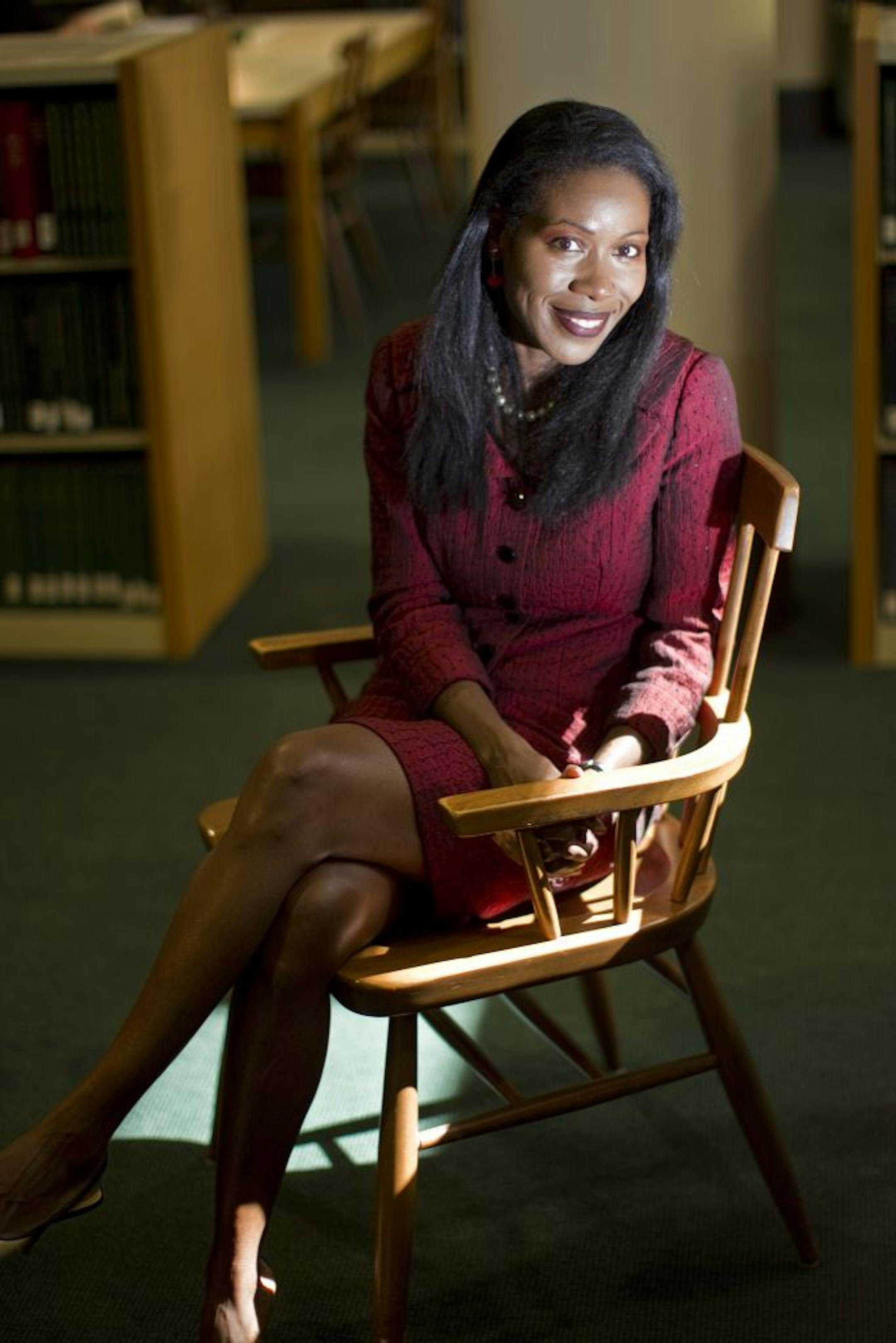
Isabel Wilkerson doesn't want to be a novelist -- she just wants to write like one.
Wilkerson, the first black woman to win a Pulitzer Prize in journalism and the author of the highly acclaimed history "The Warmth of Other Suns," wants to know so much about her subjects that she can portray them with the same depth and nuance as novelists do fictional characters.
"I view myself as a journalist and nonfiction writer: That's what I am at the core," she said. "But you have to get into the heart and mind of that other person you are writing about, so that you can carry that story into the heart of the reader."
Where novelists are bound by their imaginations, Wilkerson is restricted to facts. So she uses everything in her power -- especially persistence and empathy -- to bring her characters to life.
Her 1994 Pulitzer Prize was awarded for stories she wrote for the New York Times -- the human cost of floods in Mississippi, and a story about a 10-year-old Chicago boy named Nicholas who felt obligated to take care of his impoverished family. For the Nicholas story, she spent dozens of hours with the boy, in school and at home.
But that was a drop in the bucket compared to the 15 years she spent researching and writing "The Warmth of Other Suns." That book, winner of the National Book Critics Circle Award for nonfiction and just released in paperback, traces the Great Migration of 6 million American blacks who fled the lynchings and Jim Crow laws of the South to risk the uncertainty of the North, the Midwest and the West between World War I and the 1970s.
During her research, Wilkerson conducted more than 1,200 interviews, eventually settling on three protagonists of different generations and distinct journeys.
"People always ask me if I am personally affected by these stories as I do my research, and of course they do touch me deeply," Wilkerson said. "But I use that emotion as a motivating force to tell the story the best way I can."