

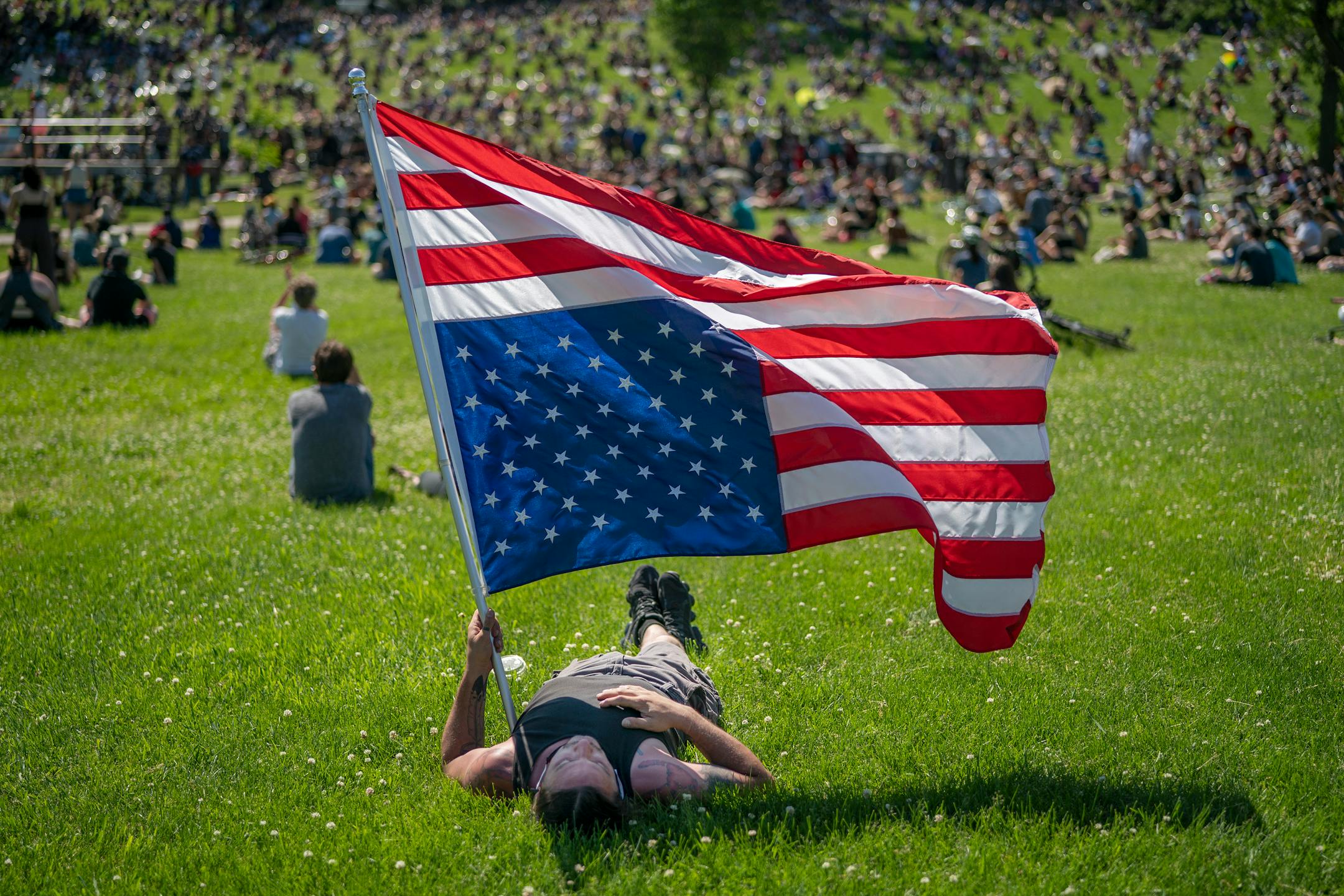
American history is, in many ways, a story of grand protests. They generally come in two types.
There are protest movements that, even in ferocious dissent, believe that the American system is ultimately geared to fulfill its inner promises — of equality, unalienable rights, the pursuit of happiness, e pluribus unum, a more perfect union. This is what Frederick Douglass had in mind when, in an otherwise scathing indictment of America's hypocrisy, he called the Constitution a "glorious liberty document."
And there are protest movements that have turned against the system, either because they don't think the system can meet its promises, or because they never agreed with the promises in the first place. "We didn't land on Plymouth Rock," Malcolm X said memorably. "The rock was landed on us."
The experience of nearly 250 years is that the first type of movement generally succeeds: emancipation, suffrage, civil rights, marriage equality. They have aimed to build the country up, and bring Americans more closely together, on foundations already in place.
The second type — from the Confederacy to the white supremacy of the Jim Crow era to Black nationalism in the 1960s — always fails. These movements want to tear things down, divide Americans, reject and replace our national foundations.
The ideology-cum-protest movement loosely referred to as Wokeness belongs to the second type. Last week it had its first major encounter with electoral democracy, not only in the governor's race in Virginia but also in a referendum on replacing the Police Department in Minneapolis and on law-and-order issues in Seattle. Wokeness got clobbered, and not for the last time.
What's wrong with a movement that, on its narrowest terms, aims to make Americans more aware of racial injustices, past and present? Nothing. In cases like those of Eric Garner, George Floyd and Ahmaud Arbery, non-Black America has had a long-overdue education about the fact that Black lives can still be subject to the same casual cruelties of a century ago.
But, like many movements that overspill their initial causes of action, Wokeness now connotes much more than an effort to reform the police or denounce racial injustice when it occurs. It is, instead, an allegation that racism is a defining feature, not a flaw, of nearly every aspect of American life, from its inception to its present, in the books we read, the language we speak, the heroes we venerate, the roads we drive, the way we do business, the way we select for merit and so on.


