

Rep. Michele Bachmann, no stranger to outlandish claims, once said: "It appears that there has been deep penetration in the halls of our United States government" by the Muslim Brotherhood.
At the time, a member of the Brotherhood responded to the Minnesota congresswoman's rant by quipping: "We can't even penetrate our own government."
He was right; they couldn't. But they tried, too hastily and too fast, to take control of strategic positions and institutions in Egypt — justice, education, culture, security, tourism — replacing former dictator Hosni Mubarak's corrupt "deep state" with a Brotherhood shallow state.
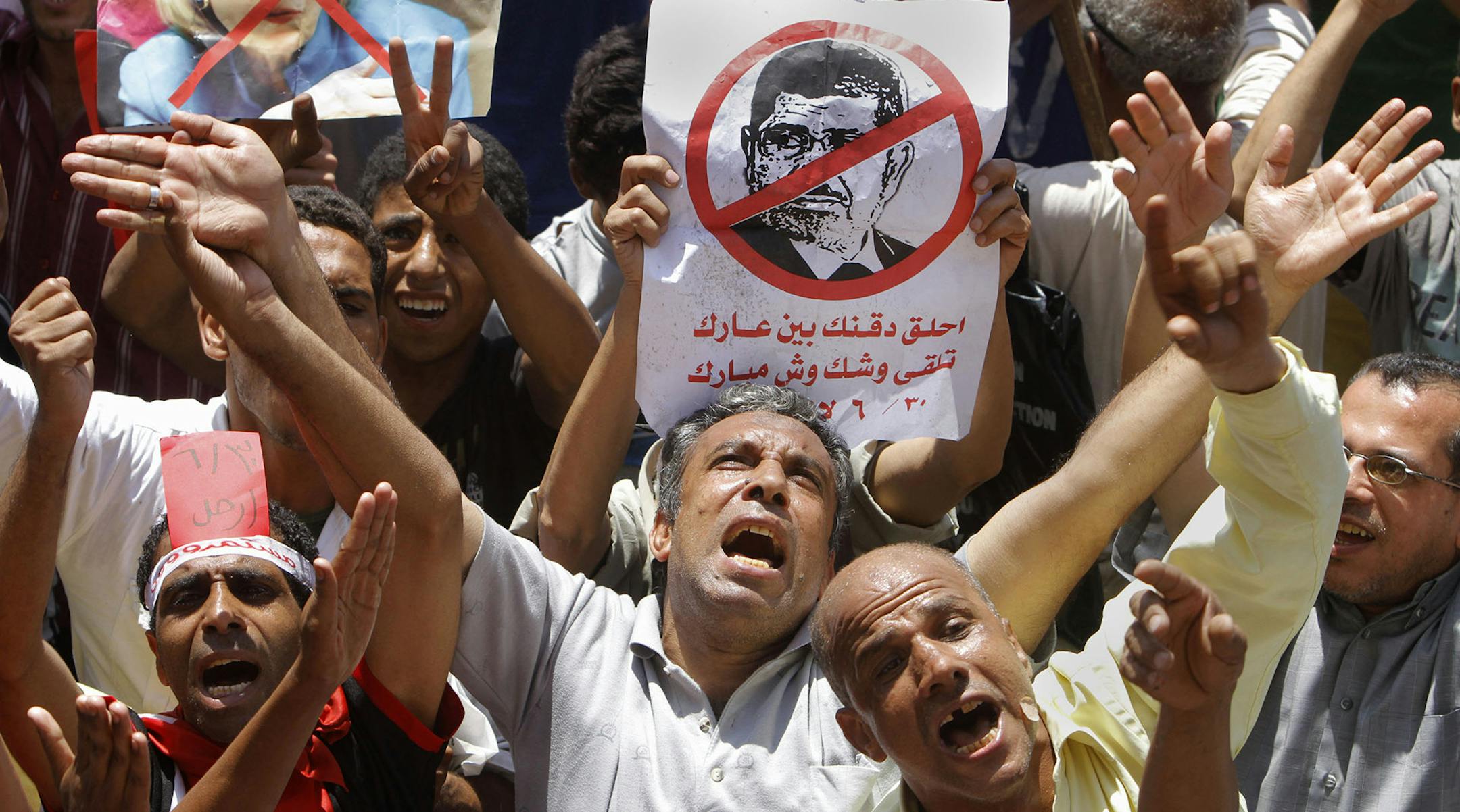
Incompetent and parochial, what the opposition called the "brotherization of Egypt" under Mohammed Morsi brought more protesters out into the streets after just one year than Mubarak brought forth after 30 years of dictatorship.
Why did so many Egyptians suddenly want to oust the first civilian elected president in their long history? It isn't so much what Morsi did or didn't do — it is what Morsi represents. Morsi was accused of all sorts of failures that he actually inherited from Mubarak's 30-year legacy — a ruined economy and a bankrupt country, where Egyptians suffer daily blackouts and long lines for gas — along with absurd accusations about selling the Suez Canal to Qatar, and Sinai to Hamas.
But the real downfall of Morsi and the Brotherhood was an image problem that the more Westernized, secular, liberal elite in Egypt feared. This was magnified and propagated by the privately owned sellout media. Morsi for them represents everything they hate about themselves and their traditional matriarchal society.
As one activist at Tahrir tweeted: "Egyptians are the only people on earth [who will] put their lives on the line in Tahrir, but will be afraid to tell their parents where they are going."
It is ironic that those in the liberal secular elite in Egypt share Bachmann's Islamophoic view. With their fascination toward everything coming out of the West, they hated what Morsi embodied — the traditional, the parochial, the too-religious. This Westernization of the Egyptian secular elites has history and roots dating to when the Europeans invaded and occupied this part of the word at the turn of the last century. Nobody trusted the majority — a majority made up of uneducated religious traditionalists, who look and talk like Morsi — to be able to govern themselves or produce their own leaders.


