

The federal income tax celebrates its 100th birthday this month. With so few fans of the tax in and outside Washington, few are likely to celebrate.
But maybe we should.
The income tax was once quite popular. In fact, it was farmers in the South and the West, small-business owners and middle-class consumers - people who might belong to the tea party today - who put the income tax on the national agenda.
After the Civil War, the federal government relied on a combination of consumption taxes and high tariffs to raise revenue. Both bore most heavily on regular people while doing little to tap the fortunes of the Gilded Age's robber barons.
Popular hostility toward these moneyed interests helps explain the initial popularity of the income tax. In their 1892 platform, a group of agrarian radicals known as Populists demanded a graduated income tax to bring an end to "oppression, injustice, and poverty" and to restore "equal rights and equal privileges for all." Republicans and Democrats took notice; in 1894, Congress imposed a 2 percent tax on incomes over $4,000.
The new tax lasted less than a year. In 1895, the Supreme Court ruled it unconstitutional in Pollack v. Farmers' Loan and Trust. In a scathing dissent, Justice Henry Billings Brown accused the court of surrendering the "taxing power to the moneyed class." Justice John Harlan called the ruling a "disaster."
But the court's decision made the income tax more popular. At their 1896 convention, Democrats endorsed such a tax as the best way to ensure that the "burdens of taxation" be "equally and impartially laid" so that "wealth may bear its due proportion of the expenses of Government." By 1908, both parties supported a national income tax. The following year, Congress sent an income-tax amendment to the states for ratification.
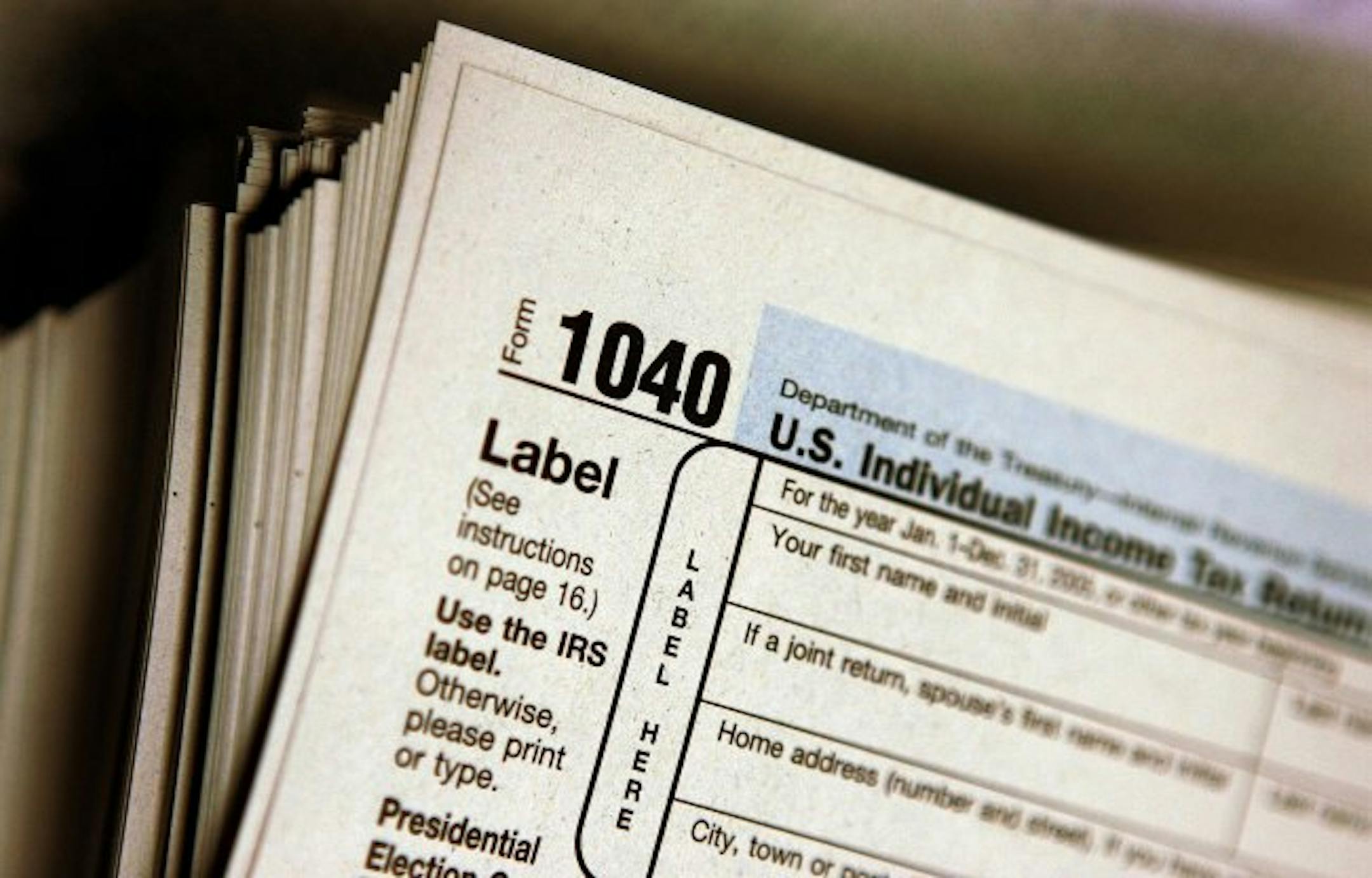
Added to the Constitution in February 1913, the 16th Amendment gave Congress the power to "lay and collect taxes on incomes." Congress passed an income-tax law that spring, and the Treasury issued the nation's first 1040 - a three-page form that required only one page of instructions to complete.


