
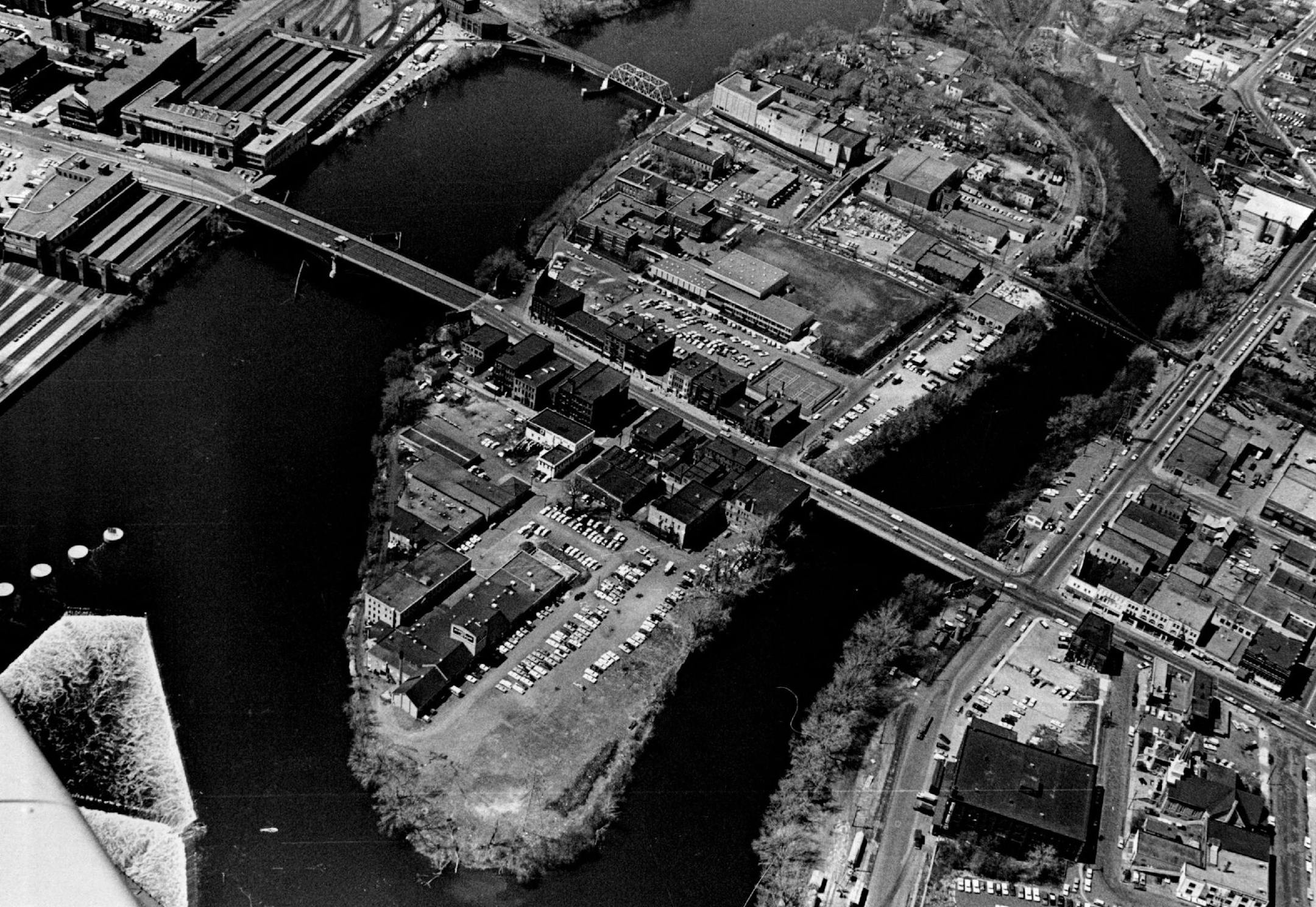
Why does Nicollet Island, a Minneapolis park, have private homes on it?

May 4, 2019 at 8:39PM
November 03, 1966 FUTURE OF NICOLLET ISLAND HERE STILL TO BE DECIDED Of the editorial/opinion page staff New York. ABSOLUTE silence almost prevails, expect for the sounds of water gently washing against the shore, a few seagulls wheeling overhaead, and automobile traffic far in the distance. May 19, 1966
The Minneapolis Park and Recreation Board acquired much of Nicollet Island in the 1970s and 1980s. (The Minnesota Star Tribune)

Nicollet Island is perhaps the most unusual park in a city known for its parks.

The 48-acre sliver of land in the Mississippi River by downtown is home to a secluded enclave of historic homes sitting atop public parkland.

So how did Nicollet Island get to be this way? Paul Kopnick asked the Star Tribune for answers as part of "Curious Minnesota," a new community-driven reporting project fueled by great questions from inquisitive readers.

"It's different than everywhere else in the city. It's parkland with houses on it," said Kopnick, who sometimes bikes the area. The only other occupied house in a Minneapolis park is rented by the park superintendent.

The short answer: The city's Park and Recreation Board bought most of Nicollet Island about four decades ago, including the land beneath just over 20 historic homes. Long-term land leases ensured the homes were restored and preserved by their owners after commercial and industrial buildings on the island were demolished.

The roughly 6-block-long island has often captured the imagination of dreamers and planners throughout the city's history. People pitched grand plans, including a sports stadium worthy of the Olympics, a large exposition center, a "Museum of the Mississippi" and even a hotel topped by three massive helicopter landing pads.

Given "its proximity to downtown, it evokes a lot of dreams," said Chris Hage, an island resident who co-wrote "Nicollet Island: History and Architecture" with his wife, Rushika.

Explorer Zebulon Pike camped there on his journey up the Mississippi in search of its origin. Henry David Thoreau carefully documented its foliage during a visit near the end of his life. The First Minnesota Regiment enjoyed a farewell party there before heading into the Civil War.

By the mid- to late 1800s, many prominent families called Nicollet Island home. Fast-forward to the 1960s and the island was packed with industrial buildings, storefronts, DeLaSalle High School and the historic homes. Hippies had begun to put down roots there, as had the drunks — and flophouses — displaced by the demolition of downtown's "skid row."

Flush with money for urban renewal, the city and other agencies razed the commercial and industrial buildings. But residents put up a fight when the wrecking ball began to topple historic homes on the island. Meanwhile there was a push to buy more parkland for a regional parks system. The Park Board ultimately acquired much of the island in the 1970s and 1980s, and the city sold the historic homes via a lottery system — with 99-year land leases — to owners who could restore them.

John Chaffee, who has lived there for four decades, said the Park Board's ownership was meant to ensure the homes were preserved and maintained. "It was never intended for park use," Chaffee said of the residential area. "The Park Board's ownership is … intended to allow them to control what goes on here."

Eric Roper • 612-673-1732

about the writer

about the writer

Eric Roper, Star Tribune

More from Minnesota Star Tribune

See More
card image
J. SCOTT APPLEWHITE, ASSOCIATED PRESS/The Minnesota Star Tribune

The "winners" have all been Turkeys, no matter the honor's name.

In this photo taken Monday, March 6, 2017, in San Francisco, released confidential files by The University of California of a sexual misconduct case, like this one against UC Santa Cruz Latin Studies professor Hector Perla is shown. Perla was accused of raping a student during a wine-tasting outing in June 2015. Some of the files are so heavily redacted that on many pages no words are visible. Perla is one of 113 UC employees found to have violated the system's sexual misconduct policies in rece