
Why do tiny cities like Lauderdale, Landfall, Lilydale and Falcon Heights exist?

June 20, 2020 at 6:40PM
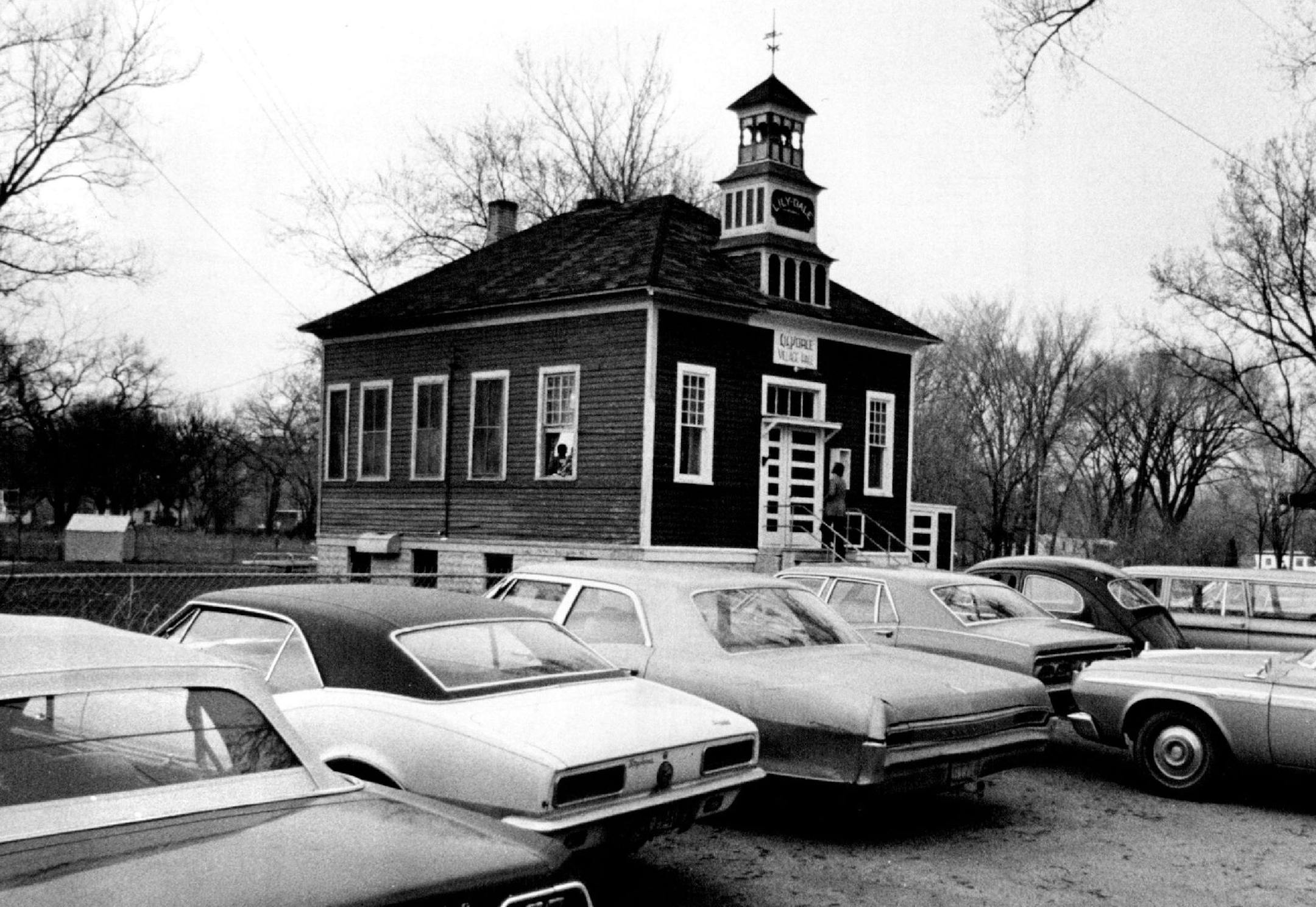
May 1, 1972 Village Hall At Lilydale. St. Paul Officials told more than 100 Lilydale residents yesterday they will help relocate every one displaced by plans to acquire the village as a park site. Roy Swan, Minneapolis Star Tribune
Some 100 Lilydale residents were told May 1, 1972, at Village Hall that St. Paul would acquire their land for a park. (The Minnesota Star Tribune)

When architect Mauricio Ochoa moved to the Twin Cities a decade ago, he quickly realized Twin was actually a bit of a misnomer.

The metro area actually includes dozens of independent cities — often referred to now as suburbs — all with their own governments, rules and regulations. Ochoa, originally from Honduras, said it's different from other parts of the world — think Paris, Mexico City — and even portions of the United States, including New York City and Houston, where the core cities are more geographically dominant.

Ochoa wondered, "Why do tiny cities like Lauderdale, Landfall, Lilydale and Falcon Heights exist?"

It is true that Minnesota has more incorporated cities than other places — 853 to be precise, compared with Wisconsin's 597 cities and villages and Michigan's 533 — said Luke Fischer, deputy director of the League of Minnesota Cities. And more than 70% have a population of less than 4,000, Fischer said. Much of this traces back to farming, he said.

"Minnesota has agrarian roots, so populations were distributed across the state," Fischer said. "Cities were formed to provide needed services."

Rural communities sprung up along waterways, rail stops, grain elevators and local supply stores.

Many Twin Cities suburbs, including Hastings and Anoka, were their own incorporated cities well outside Minneapolis and St. Paul.

As development marched out from the two larger cities, populations in other communities on the edge of urban development incorporated and kept their own distinct identities before being gobbled up via annexation.

"There is a lot of community identity wrapped up in self-governance," Fischer said.

Those distinct community identities still exist and flourish today. Many locals proudly declare themselves residents of Minnetonka, Edina or Eagan — not just the Twin Cities.

Each city and suburb has its own origin story, some full of aspiration, others tinged with drama and many with a strong independent streak.

Residents of Falcon Heights, now best known as home to the Minnesota State Fair, bristled at outside control and incorporated as a village in 1949 — and later transitioned to a city.

"They didn't want to be annexed to Roseville and they didn't want to be part of St. Paul so they became their own city," said Rich Arpi, a researcher at the Ramsey County Historical Society.

Maplewood also incorporated in 1957 after rumors began to swirl that St. Paul wanted to annex the area for the additional tax base.

Some communities organized around big dreams. In the 1880s, businessman Henry Castle bought the land and then laid out the village of North St. Paul, which became a stop on the Wisconsin Central Railroad.

"Henry Castle had grandiose ideas; he wanted to make an industrial center to rival Chicago," Arpi said. "He didn't quite make it."

shannon.prather@startribune.com • 651-925-5037

about the writer

about the writer

Shannon Prather

Reporter

Shannon Prather covers Ramsey County for the Star Tribune. Previously, she covered philanthropy and nonprofits. Prather has two decades of experience reporting for newspapers in Minnesota, California, Idaho, Wisconsin and North Dakota. She has covered a variety of topics including the legal system, law enforcement, education, municipal government and slice-of-life community news.

See Moreicon

More from Minnesota Star Tribune

See More
card image
J. SCOTT APPLEWHITE, ASSOCIATED PRESS/The Minnesota Star Tribune

The "winners" have all been Turkeys, no matter the honor's name.

In this photo taken Monday, March 6, 2017, in San Francisco, released confidential files by The University of California of a sexual misconduct case, like this one against UC Santa Cruz Latin Studies professor Hector Perla is shown. Perla was accused of raping a student during a wine-tasting outing in June 2015. Some of the files are so heavily redacted that on many pages no words are visible. Perla is one of 113 UC employees found to have violated the system's sexual misconduct policies in rece