

Hillary Rodham Clinton has twisted herself into a pretzel on the subject of terrorism and its connection to Islam. Like many Democrats, she says that we must choose our words carefully to avoid scapegoating peaceful Muslims or driving them into the terrorists' arms. But the words she has chosen won't help achieve our foreign-policy goals or help peaceful Muslims — because they make no sense.
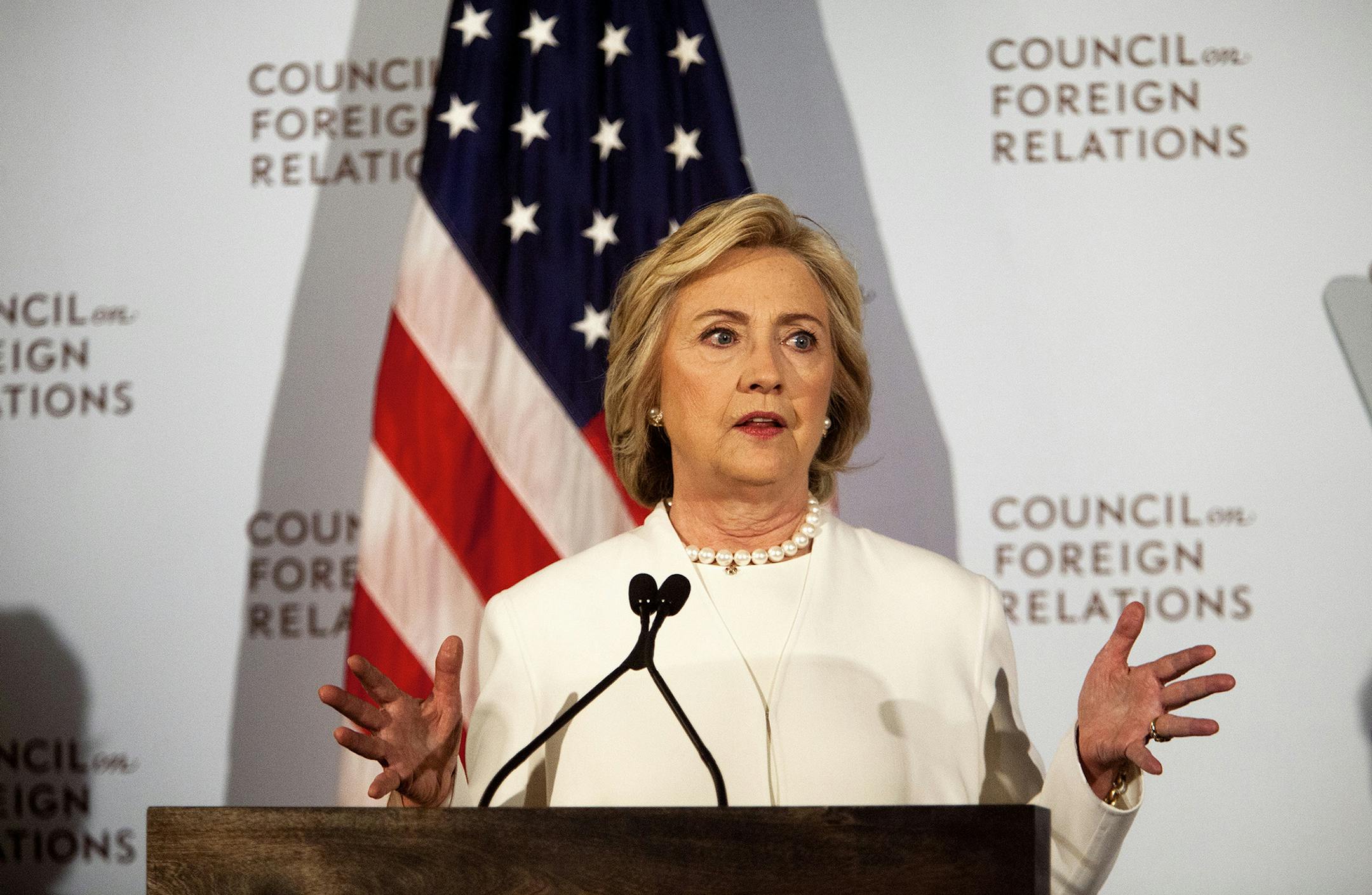
In a Nov. 19 speech on how to combat ISIL, Clinton argued that our rhetoric is part of our strategy: "Islam is not our adversary. Muslims are peaceful and tolerant people, and have nothing whatsoever to do with terrorism. The obsession in some quarters with a clash of civilization, or repeating the specific words 'radical Islamic terrorism' isn't just a distraction, it gives these criminals, these murderers more standing than they deserve. It actually plays into their hands by alienating partners we need by our side."
These were prepared remarks. One might be tempted to give Clinton the benefit of the doubt anyway and assume she meant to imply that "most" Muslims are as swell as she says. Surely, she doesn't mean to deny that some Muslims leave something to be desired in the peaceful-and-tolerant department.
But other Democratic foreign-policy luminaries are saying similarly far-fetched things. John Kerry, Clinton's successor as secretary of state, said a few days before her speech that ISIL's barbarism "has nothing to do with Islam; it has everything to do with criminality, with terror, with abuse, with psychopathism — I mean, you name it."
Nothing to do with Islam? Does anyone think we're going to find professed atheists among these psychopaths? Kerry obviously wanted to condemn ISIL and its allies while not lumping in most Muslims with them. He could have simply noted that most Muslims reject terrorism, that many call it a perversion of Islam, and that he hopes this view prevails among more and more of them. Unlike what he actually said, none of that would have been absurd.
Clinton also spoke for others in rejecting the phrase "radical Islamic terrorism." Liberal pundits say it's "ugly." The Democratic Party is running an ad alleging that it equates all Muslims with terrorists and incites fear. But to invoke "radical Islamic terrorists" logically implies that it is possible to be other Islamic things: for example, a kindhearted Islamic scholar. So it wasn't bigoted when Clinton, in 2005, gave a speech criticizing "radical Islamist extremists."
It's possible that some Muslims who hear that phrase will wrongly conclude that the speaker is expressing enmity toward all Muslims. But some misunderstandings are inevitable — and, in any case, Clinton's preferred terminology does nothing to reduce their likelihood.
At the most recent Democratic debate, Clinton condemned "radical jihadist ideology" in her opening statement. She used versions of "jihad" five other times that night. Everyone knows the religion with which jihad is associated. She didn't call it a "radical Crusaderist ideology." She's talking about a subset of Muslims, just as the Republicans who talk about "radical Islamic terrorists" are.


