

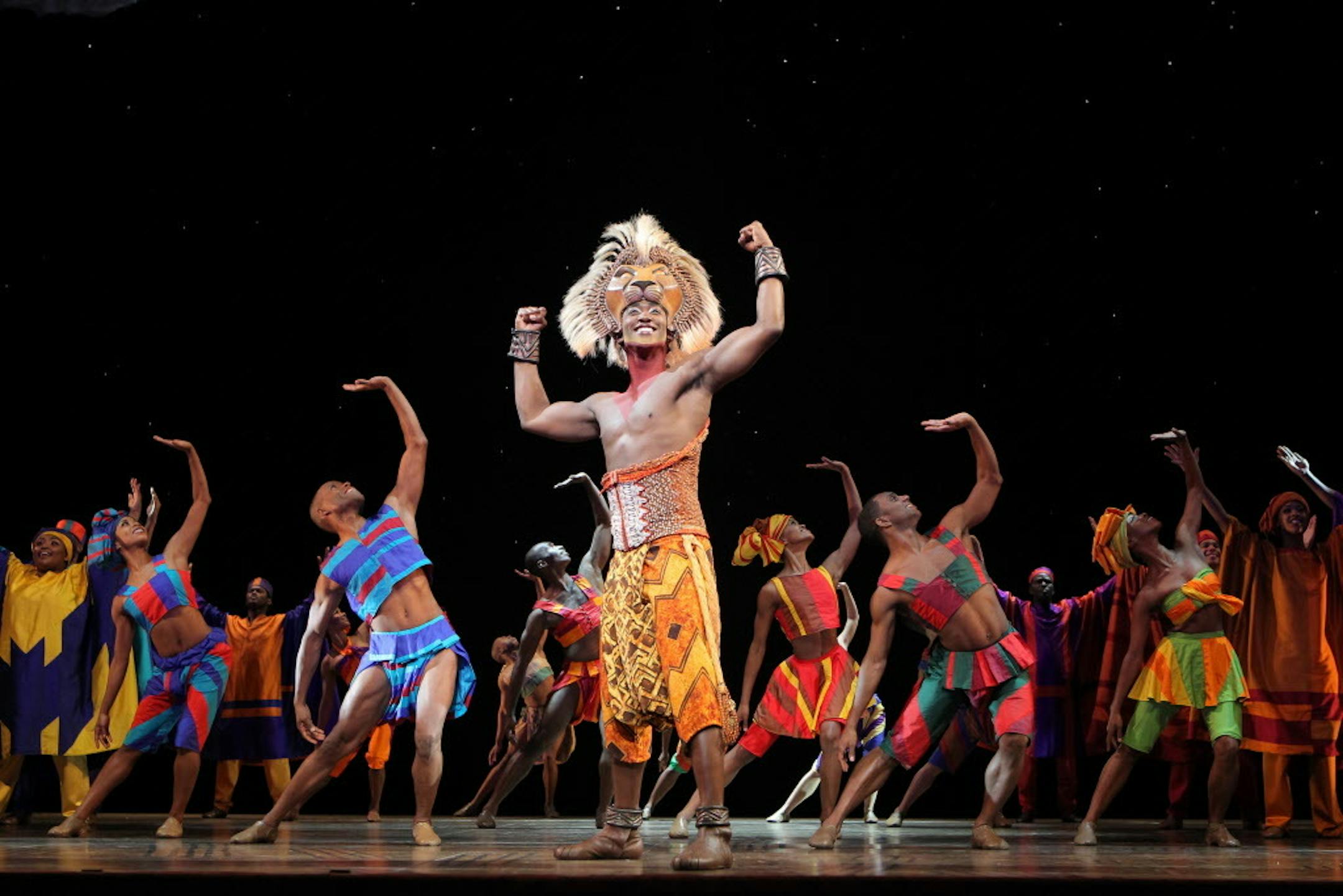
While fans of “The Book of Mormon” will crack up at the jokes in this blockbuster Broadway musical about Utah missionaries trying to convert Ugandans, Minneapolis civic leaders have other reasons to smile.
“Mormon,” which opens Tuesday for a three-week run at the Orpheum — its third engagement there in four years — will draw roughly 20,000 patrons a week to downtown Minneapolis. And that’s just some of the half a million people who annually see touring Broadway shows, concerts and comedy performances at the big playhouses on Hennepin Avenue.
These patrons, many from the suburbs, spend at restaurants, stay in hotels and pay for parking, creating a multiplier economic impact of $2.70 for every dollar spent, according to theater officials.
But they bring more than dollars to a strip once left desolate after the demographic changes of the 1970s and 1980s, when white middle-class families migrated to the suburbs. They add vitality to Minneapolis’ marquee entertainment district, and underscore how the arts can serve as engines of civic growth.
“Blockbusters are great door openers, not just for theater and the artists, but also for the city and downtown,” said Jim Sheeley, president of the Upper Midwest region of Broadway Across America, which works to present shows on Hennepin. “I can’t tell you how many theaters were renovated across the country to accommodate ‘Phantom of the Opera.’ ”
Sheeley has been observing the scene since the 1970s, when the weeks of touring Broadway programming in the Twin Cities could be counted on one hand. Today, the Hennepin Theatre Trust, which presents shows at the Orpheum, State and Pantages theaters in Minneapolis as well as St. Paul’s Ordway Center, averages 22 weeks of Broadway programming a year. That growth is directly tied to blockbuster musicals such as “Phantom,” “The Lion King,” “Les Misérables” and “Mamma Mia!”
“Big shows develop new audiences and create really vital economic spin,” said Jamie Grant, the Ordway’s new president. “People often buy tickets way in advance, which means that by the time the show rolls around, they’ve paid off their credit card bills and can spend more.”
Stage juggernauts are rare in the theater business, of course; 75 percent of commercial shows do not recoup their initial investments. The ones that do succeed serve manifold masters.


