

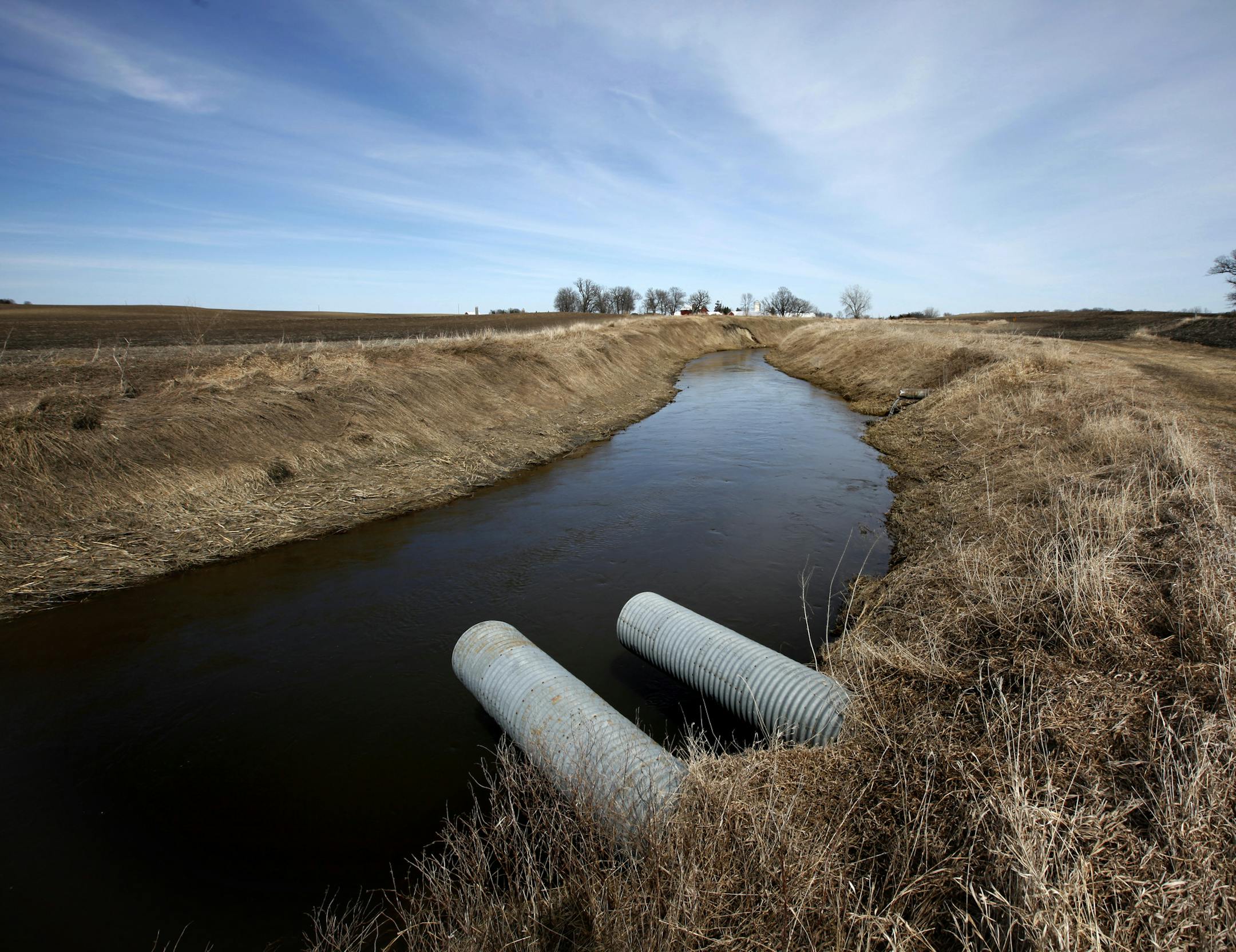
Four-fifths of the cropland that butts up against the streams and rivers of southern Minnesota is missing at least some of the legally required natural borders that are the first step in safeguarding waters that flow to the Mississippi River, Lake Pepin and eventually the Gulf of Mexico, according to the first detailed mapping of the region's rivers.
Overall, the southern third of the state earns a "C" because most of the waterways have modest protections, according to the Environmental Working Group a national watchdog group that conducts scientific research to promote environmental action.
But a set of precise aerial maps compiled by the group also reveal widespread violations and large disparities from one watershed to another.
Those borders of wild grasses, trees or shrubs — 50-foot buffer strips required by state law — are nature's way of filtering agricultural pollutants such as nitrogen and phosphorus, while also providing critical refuge for birds, bees, turtles, frogs and other wildlife. They are considered the first step in conservation in an area of the state where row crops take up more than half the landscape.
Minnesota's rule has been in place for years and is one of the few such laws in the country. The aerial photo maps created by EWG specifically for Minnesota are the first comprehensive look at how well it's being implemented at a time when the state and the nation are becoming increasingly concerned about agriculture's impact on water.
The Environmental Protection Agency estimates that agricultural runoff degrades more than 125,000 miles of rivers and streams across the country. Minnesota is spending millions in state tax dollars in a watershed-by-watershed effort to make major reductions in agricultural pollution by 2025.
But enforcement of the state's buffer rule has long been a sore point with environmental groups. They argue that the state and county governments, which are charged with implementing it, rarely use one of the few but very effective regulatory tools they have to protect vulnerable streams and rivers.
"Laws do work," said Kris Sigford, a water quality specialist with the Minnesota Center for Environmental Advocacy, a nonprofit environmental law firm. The fact that most of the rivers are partly protected is evidence of that, she said, adding, "But they are not self-implementing."


