

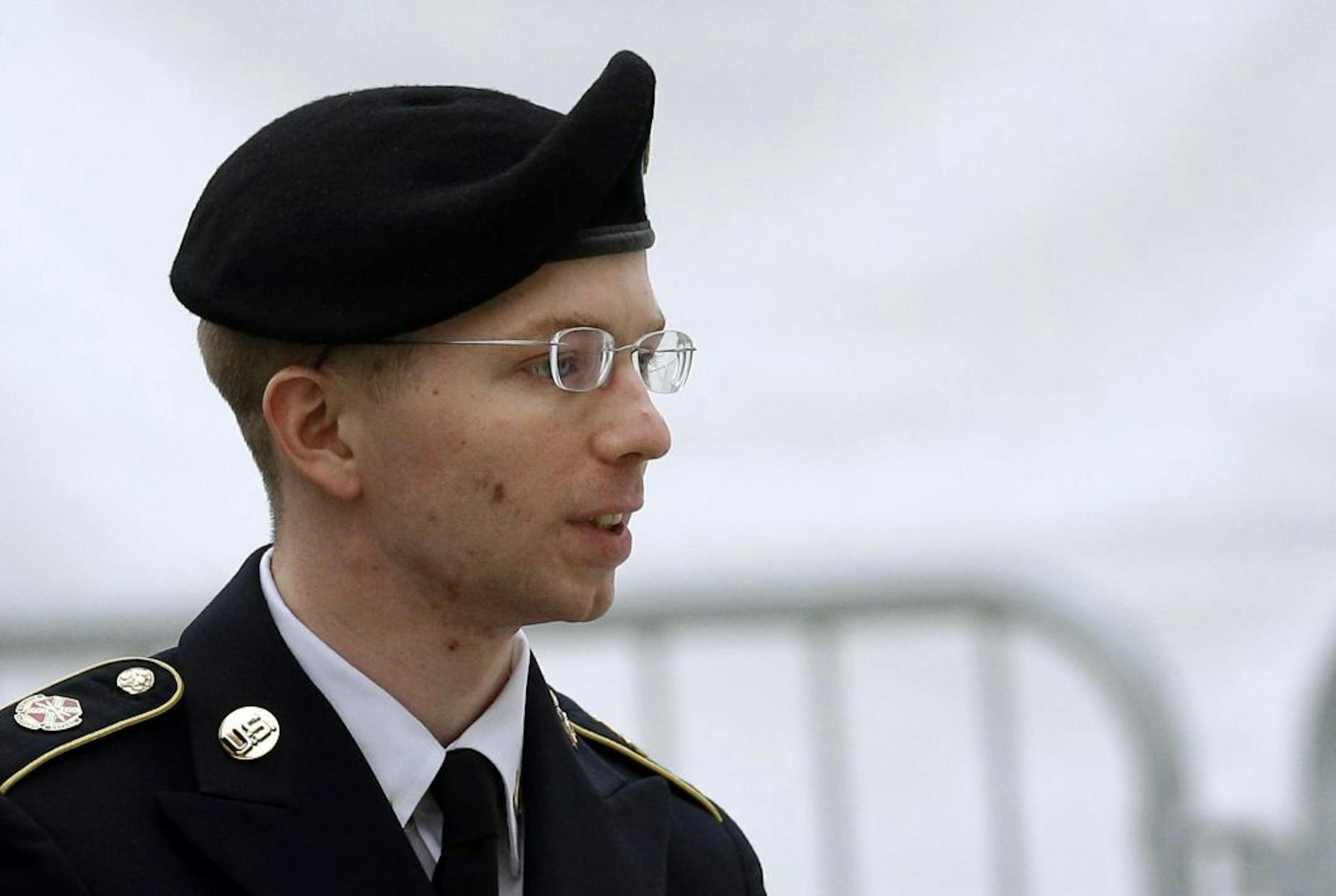
FORT MEADE, Md. - Sitting almost motionless, Pfc. Bradley Manning listened to his attorney argue that the soldier was young and naive and only wanted to enlighten the public about the bitter reality of America's wars when he gave a massive amount of classified material to WikiLeaks.
Prosecutors, though, contend the 25-year-old Army intelligence analyst effectively put U.S. military secrets into the hands of the enemy, including Osama bin Laden, and they want to send Manning to prison for the rest of his life.
Manning's military trial at Fort Meade outside Baltimore resumes Tuesday with prosecutors expected to call an expert to testify about evidence found on computers Manning used in Iraq. During opening statements Monday, defense attorney David Coombs said Manning's struggle to fit in as a gay man in the military made him feel he "needed to do something to make a difference in this world."
Manning has admitted turning over hundreds of thousands of documents to the anti-secrecy website WikiLeaks, pleading guilty earlier this year to charges that could bring 20 years behind bars. But the military pressed ahead with a court-martial on more serious charges, including aiding the enemy, which carries a potential life sentence.
Coombs said the soldier from Crescent, Okla., was "a humanist," a word engraved on his custom-made dog tags. As an analyst in Baghdad, Manning had access to hundreds of millions of documents but selectively leaked material, Coombs said. He mentioned an unclassified video of a 2007 U.S. Apache helicopter attack that mistakenly killed 11 civilians, including a Reuters news photographer.
"He believed this information showed how we value human life. He was troubled by that. He believed that if the American public saw it, they too would be troubled," Coombs said.
Prosecutors said they will present evidence that bin Laden requested and obtained from another al-Qaida member the Afghanistan battlefield reports and State Department cables published by WikiLeaks.
"This is a case about a soldier who systematically harvested hundreds of thousands of documents from classified databases and then dumped that information onto the Internet into the hands of the enemy," prosecutor Capt. Joe Morrow said.


