

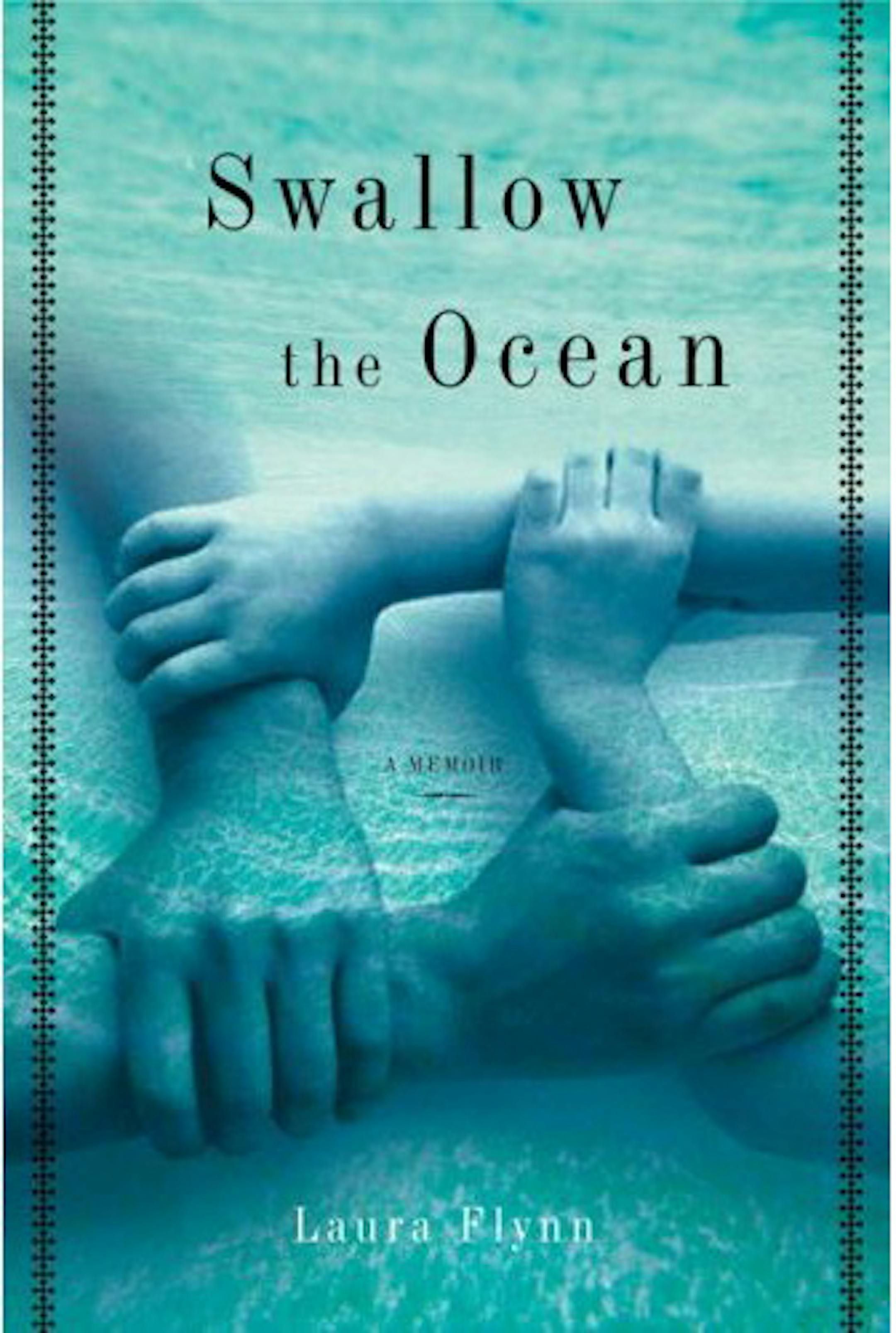
What a long haul childhood is. Even in a happy one, time can hang heavy. Remember waiting for school to be out? For your birthday? For Christmas vacation? And Laura Flynn's childhood most definitely wasn't happy.
In her strong and touching memoir, "Swallow the Ocean," Flynn chronicles her family's existence in San Francisco between 1972 and 1977, while she was in grade school -- just a few years, really, in adult time. But for Flynn, the middle daughter of a schizophrenic woman, it was half a lifetime.
Packed with detail, cleanly written in a style that never overwhelms the story, Flynn does an appallingly good job of conveying the sad tedium of a child's helplessness and the agonizing slowness of the adult world's response.
"Odd as it may seem, I don't remember being aware that anything was wrong with my mother," Flynn writes. But that was early on. By the time Flynn was 7, there was so much wrong that it drove her father away. "There goes a very bad man, " her mother assured the little girls.
After he left, home became their prison, like something out of a Brothers Grimm tale: "The shades went down, and the acacia tree in the front yard grew up over the windows. My mother didn't leave the house for months at a time, and for three full years no one came inside."
The mother hears voices. She laughs, cries, rages, tears up the house, throws things through the windows. She communes with JFK, the dead president. ("He helps me fight the devils," she confides.) She believes she's in a war between good and evil. (On the wrong side: Rasputin, Nixon, Lee Harvey Oswald, Del Monte foods, Mattel toys, and eventually her older daughter, Sara.) Once she says to Laura, "If ... I told you to kill yourself, you would, wouldn't you?" Reluctantly, the girl says yes, but mercifully the mother never gives the order.
There are worse childhoods than this, of course, and flashier memoirs. But Flynn's story is gripping, drawing its power from the relentless accumulation of harms: the messy, chaotic apartment; strange, homemade clothes (because things from the outside cannot be trusted); meals or rides to school that may or may not happen; mother's propensity to burn "dangerous" papers -- everything from unpaid bills to the special notebook in which Laura has been carefully writing a childhood novel.
"I hate her," Laura thinks, when she finds the ashes of her book. "I hate her. I hate her." But that is something children can say -- and mean -- while still loving the parent. It is clear, even at their mother's worst, that Laura and her sisters still care about her.


