

Even the biggest museums are basically icebergs — eye-catching peaks of history, art and culture bobbing atop vast, hidden resources.
Expanding the bergs doesn't necessarily bring everything to light. Walker Art Center nearly doubled its size with a 2005 expansion and now shows about 5 percent of its collection, up from 2 percent. A year later, the Minneapolis Institute of Arts (MIA) added a wing and opened 34 new and renovated galleries, but it, too, has most of its 80,000-piece collection in storage.
Like homeowners everywhere, most museums have too much stuff. Rather than crowd the walls and clutter the halls, museums store the excess and change their exhibitions periodically to introduce new ideas and freshen things for visitors. Many artworks — especially watercolors, drawings and fabric — are too fragile to be shown for more than a few months at a time because they fade when long exposed to light.
Even cultural trends affect what gets shown, and when, and why.
"There's a real evolution in museums today," said Dan Spock, director of the Minnesota History Center in St. Paul. "In the old days you might go to an antiquarian historical society and you'd see every type of maple syrup bucket. That might be valuable for someone deeply interested in maple syrup harvesting, but most people want a broader story now."
Not enough room
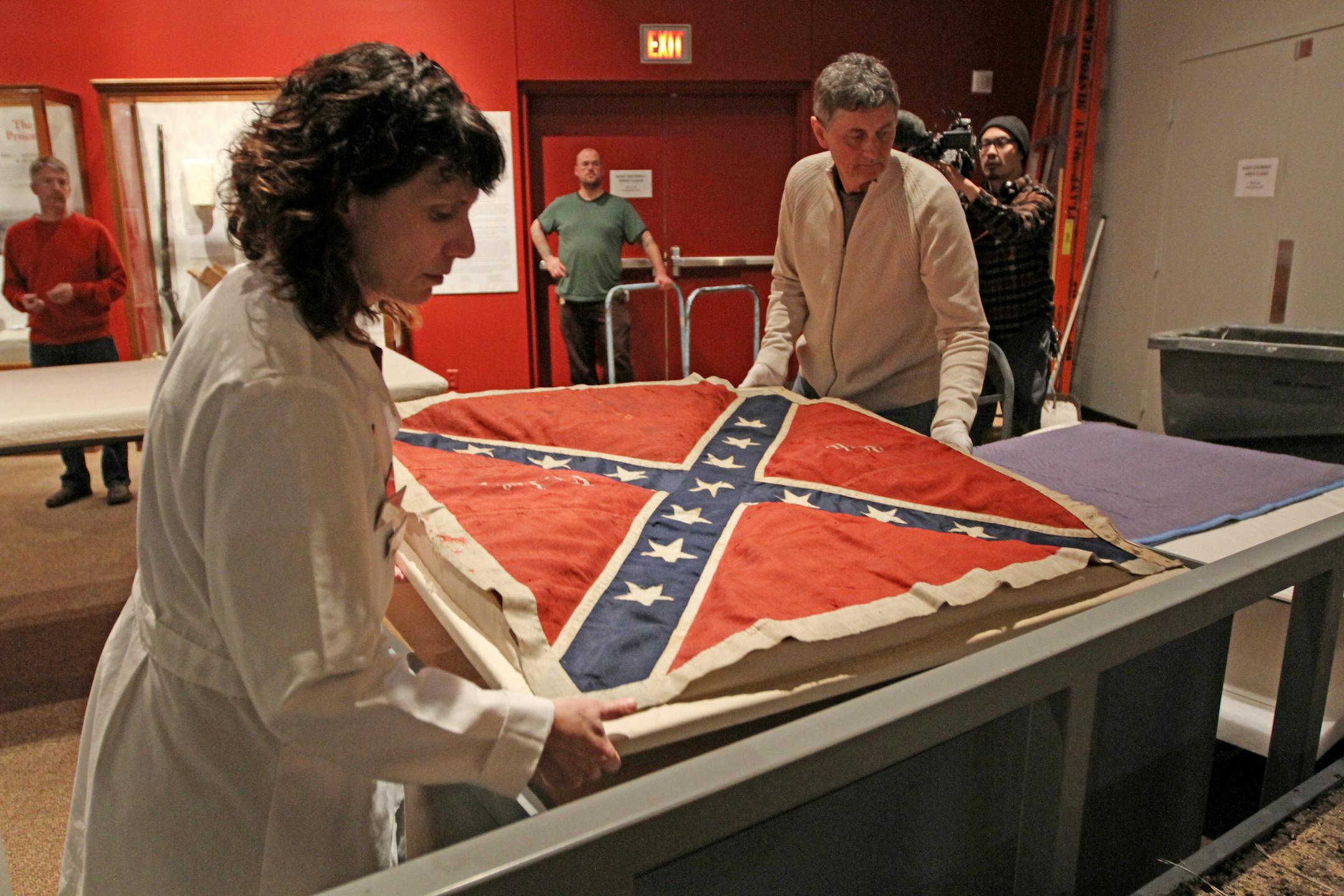
Shaping those stories is the job of curators, experts who pick objects to answer questions, develop themes or illustrate ideas. The History Center's current Civil War show, for example, uses letters, clothing, weapons, photos and other objects to answer the question: How did the Civil War affect Minnesota families? Most items are from the center's own collection, but some are borrowed from other museums because they're a key to Minnesota's story.
Displaying everything the History Center owns would be not only ridiculous but pretty near impossible given that the collection comprises 225,000 artifacts, 6,000 works of art (landscapes and portraits), 205,000 photos, 50,000 manuscripts, 500,000 books and 25,000 maps. Highlights range from a "duster" worn by a member of the Jesse James bank-robbing gang to Prince's "Purple Rain" costume, a 1919 guide to St. Paul prostitution and the 2 billionth roll of Scotch tape.
"To curate means to choose," Spock said. "By selecting, a museum can choose to emphasize some things over others."


