

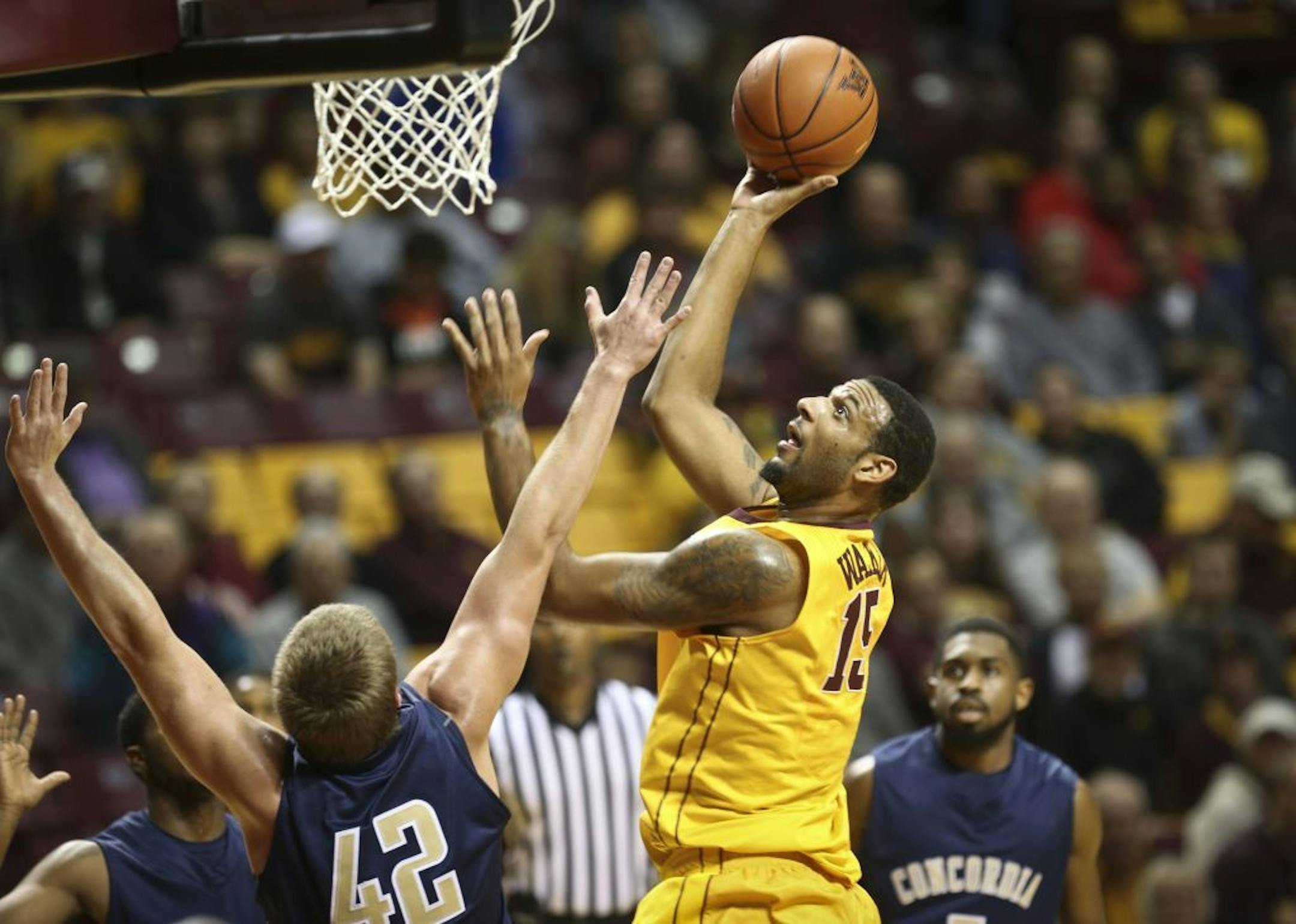
Last night in the Gophers season opener against Lehigh, Minnesota's frontcourt did not seem to miss Mo Walker, who was suspended for six games for "violating university policy." In fact, one might say that it thrived, with Elliott Eliason posting the first double-double of his career and transfer Joey King starting off his Gophers tenure with a 20-point game. The Gophers outrebounded the competition and won, heartily.
But what is ahead? How will Walker's suspension affect Minnesota going forward?
Right off the bat, the Gophers face Montana, who has a 7-footer on the roster (in Andy Martin), but one that still isn't getting very many minutes or playing much into the game plan. Otherwise, the Grizzlies have had up-and-down rebounding performances. They grabbed 49 in their exhibition against Simon Frazier, but managed just 26 in their opener against Lewis-Clark State.
Richmond isn't big, but their frontcourt has more experience, with both Alonzo Nelson-Ododa and Trey Davis returning and appearing poised to take the next step.
In general, the Gophers won't really be out-sized terribly as the team's opponents in the next five games are all relatively small. Coastal Carolina has a pair of 6-10 players, but the Chanticleers shouldn't be much of a problem for the Gophers. Wofford doesn't have a single player taller than 6-8. Then comes Syracuse, which has been a good rebounding team in the recent past, but not a great one. Six-nine Rakeem Christmas and 6-8 C.J. fair root the frontcourt and certainly give the Orange more continuity there, if not great size.
Perhaps the game when the Gophers frontcourt will most be tested is the Dec. 3 matchup against Florida State -- which has two guys over seven feet -- and Walker will be back in the fold by then.
Even so, the Gophers' frontcourt is very much scrapped together right now, with new lineups being tested and players being asked for more. The frontcourt was already a source of concern, with a very thin and inexperienced core. Undoubtedly, now more than ever, Minnesota will have to find ways to compensate for their holes in personnel.
Some things we can expect:


