

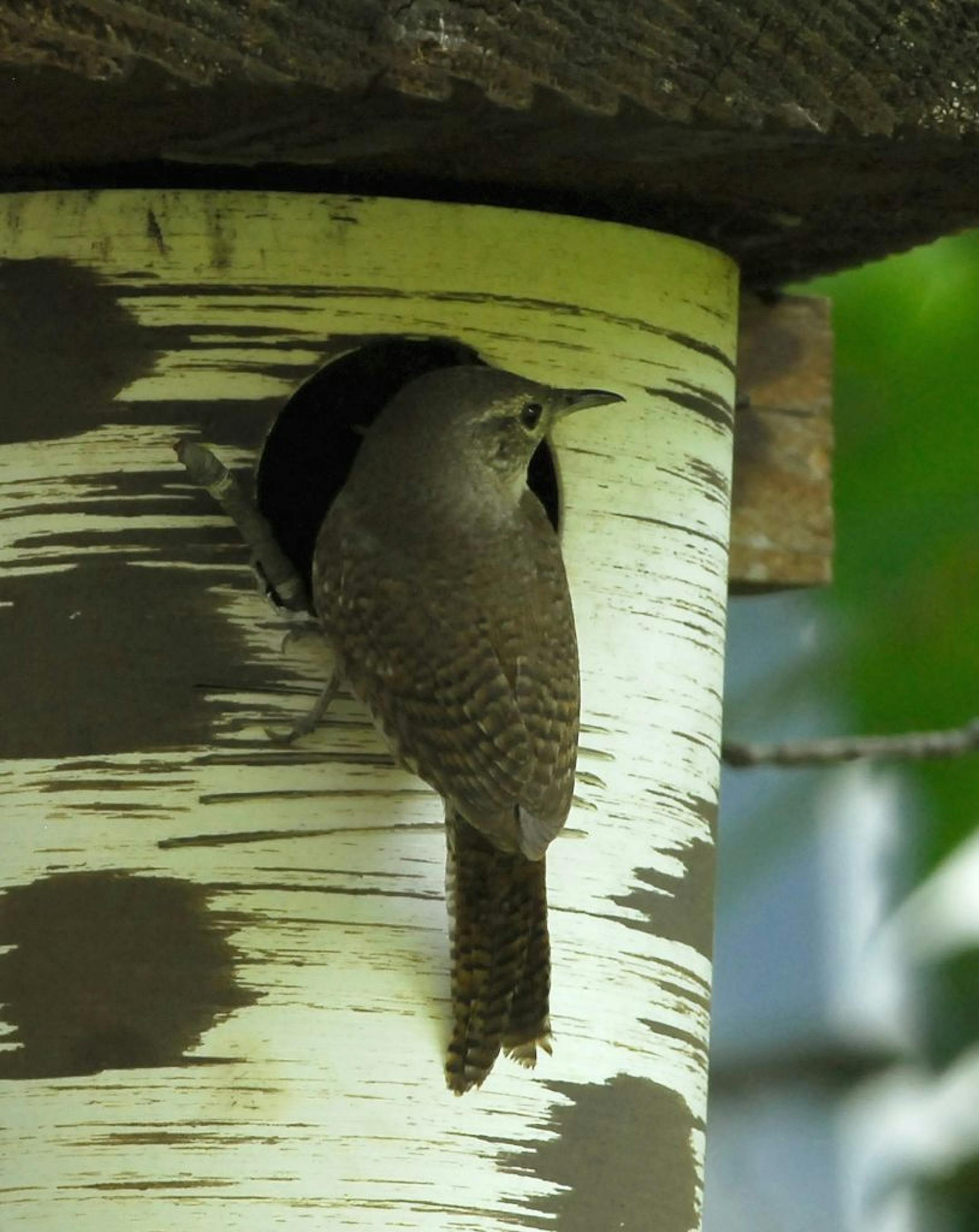
Q Every year we look forward to the arrival of our favorite bird, the house wren. This year we haven't seen or heard a single wren. Where have they gone?
A It can be a mystery why a bird species will be around for years on end, then not be seen for a while. Birds can be "spotty" like this. For example, a number of readers lamented this spring that they hadn't seen any orioles, yet other readers wrote that they were inundated with them.
In the case of the wrens, there may have been a change in the local ecology or the wrens found another address. If you have a log pile, stone wall or wren nest boxes you're almost guaranteed to host wrens, either this year or next.
Switch up suet Q I like to put out chunks of raw suet all year round for birds. Will this go rancid in hot weather? I can switch to those suet cakes but the birds seem to prefer the real thing.
A I'm sure your birds appreciate suet to replace energy lost during the busy nesting season and to feed their youngsters. But raw suet can become rancid in the heat. Even worse, it starts to melt on hot days and can drip onto bird feathers. They can't remove this oily mess and it impairs their feathers' ability to keep them waterproof and insulated. So I would strongly recommend suet cakes in the warm months.
Squirrel trapping issues Q My neighbor has been trapping gray squirrels and releasing them across town because he's tired of them getting into his feeders. I don't think this is a good idea, but don't know why.
A This is a heartless and useless idea for a lot of reasons. For one thing, at this time of year, an adult squirrel trapped down on the ground likely is a mother squirrel anxious to feed before going back to her brood. If she's taken away, her young will die a lingering death.
If this doesn't convince your neighbor, then he might be interested to know that he's just wasting his time: There are always new squirrels around looking for a territory. They'll move right in when there's a vacancy.


