
What happened to the historic mansions on Park Avenue?

June 15, 2019 at 9:16PM
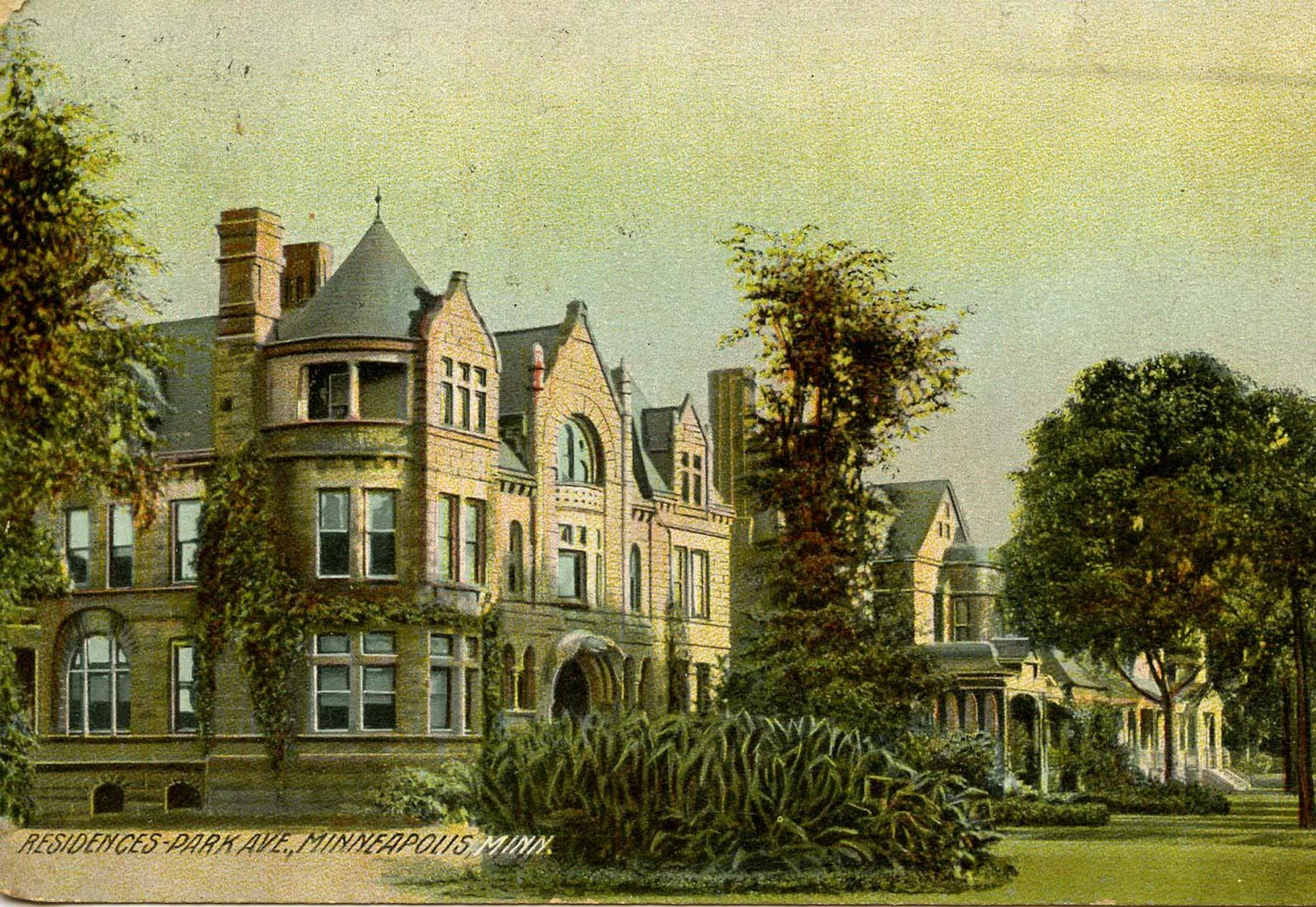
A 1910 postcard of the Foreman Double Mansion at the southeast corner of 23rd Street and Park Avenue. It was built in 1888 and demolished in 1953.
A 1910 postcard shows the 1888-built Foreman Double Mansion at 23rd Street and Park. It was razed in 1953. (The Minnesota Star Tribune)

Many people travel to Summit Avenue in St. Paul to admire its extensive collection of historic stone mansions. Good luck doing the same in Minneapolis.

Minneapolis' comparable mansion street, Park Avenue, is today known largely as a high-speed roadway into downtown. But it was once the posh address of the city's elite.

Why did one survive and the other not? A reader asked the Star Tribune for answers as part of Curious Minnesota, a community-driven project fueled by reader questions.

At its peak, about 36 mansions lined Park from Franklin Avenue to 28th Street, once known as the "Golden Mile." Most were owned by boldface families of the era like Peavey, Heffelfinger, Bell and McKnight. Just a handful remain.

Few have researched the area as extensively as Ryan Knoke, who began leading walking tours there after buying a house on Park about 15 years ago, though he has since moved.

Knoke's primary explanation for Park's decline is that the street's proximity to downtown — without the hill that separates Summit from downtown St. Paul — and its connection to growing suburbs ultimately brought loads of traffic that drove away residents.

"I think numero uno, it was the traffic," Knoke said. "Because it was the traffic that drove the families out."

He added that Summit Avenue benefited from a more aggressive push in the 1960s and '70s to save the old buildings there.

Architectural historian Larry Millett said Park Avenue had lost its cachet by the 1920s and 1930s. Summit benefited from its geography.

"It sat up on the hill," Millett said. "Downtown was never going to expand up that bluff. … It had that natural barrier."

Mansions began rising in the 1880s on Park Avenue, then a much narrower roadway with wide green boulevards. By the early 1890s, its residents had formed an improvement association and paid for it to be converted into the city's first asphalt street. Park became a hot spot for racing bicycles and parading automobiles.

But having the nicest street in town came with its downsides. In the early 1900s, Park residents asked the city to convert it into an official parkway to "exclude traffic wagons from this handsome avenue." By the 1920s, residents of Park and Portland avenues were demanding that the city bar heavy trucks from rumbling up and down the streets.

The traffic grew worse as Richfield developed to the south and commuters streamed downtown, spurring what Knoke considers two fatal blows to Park Avenue. In 1946, the city converted Park and Portland into one-way streets. In the mid-1950s the street was widened by 20 feet, before Interstate 35W opened.

"It was a slow process of people moving away, but the final blow to the mansions" came with these roadway decisions, Knoke said.

Some mansions were first partitioned into apartments. Many ultimately met the wrecking ball starting in the 1950s.

Eric Roper • 612-673-1732

about the writer

about the writer

Eric Roper

Curious Minnesota Editor

Eric Roper oversees Curious Minnesota, the Minnesota Star Tribune's community reporting project fueled by great reader questions. He also hosts the Curious Minnesota podcast.

See Moreicon

More from Minnesota Star Tribune

See More
card image
J. SCOTT APPLEWHITE, ASSOCIATED PRESS/The Minnesota Star Tribune

The "winners" have all been Turkeys, no matter the honor's name.

In this photo taken Monday, March 6, 2017, in San Francisco, released confidential files by The University of California of a sexual misconduct case, like this one against UC Santa Cruz Latin Studies professor Hector Perla is shown. Perla was accused of raping a student during a wine-tasting outing in June 2015. Some of the files are so heavily redacted that on many pages no words are visible. Perla is one of 113 UC employees found to have violated the system's sexual misconduct policies in rece