

Appliances last four years, if you're lucky. Our most recent victim was the vacuum cleaner battery. Four years ago the idea of going cord-free was attractive, because nothing quite produces instantaneous caveman rage like tugging the plug out of the wall because the cord isn't long enough. "Now I've got to go all the way over there and plug it in over here, where I'm already mostly done. Why was I born?"
For all its convenience, it is the most high-strung appliance I've ever owned, always having a breakdown. It is prone to hyperventilating if it aspirates a single strand of dental floss and wraps it around the drum. But I've become adept at fixing it, and like a Marine with his trusty rifle, I can field-strip it and fix it, in the dark, under fire.
After four years, though, the battery has lost its stamina. It will do one floor on low power, but don't ask it to handle a rug because it drains on high power after five seconds. Fine by me; time for a break! You recharge in your cradle while I rest from my labors.
But then it went completely dead, so I looked up replacement batteries. There were two options: manufacturer-certified equipment with a guarantee, or ...
Amazon junk at one-fourth the price with reviews like "Four stars, fire was easy to extinguish when it exploded." And "Five stars, battery gets hot but doubles as an iron after five minutes, great for wrinkled linens."
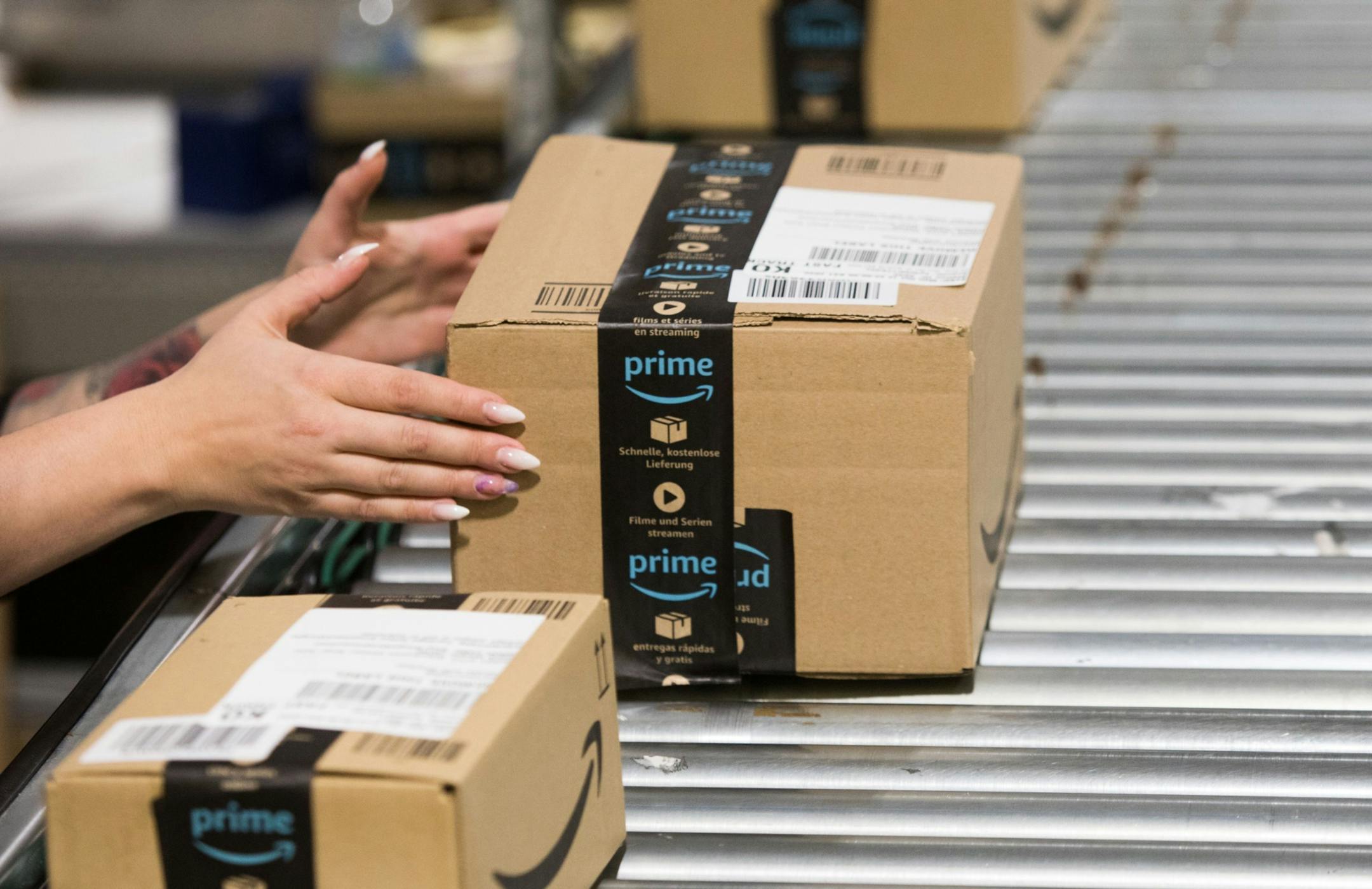
Perhaps it's not fair to say "Amazon junk," but I'm starting to think in those terms. A recent article in New York magazine discussed how search results on Amazon yield a baffling array of identical items with different prices and bizarre company names, because Amazon is turning into an intermediary for Chinese dreck.
None of these brand names make any sense. Some examples: Cooptop, Moacc, Tacgea, Anmarko, Wemomo, Mibote, Vovoly, Kaluns.
The only ones that look like they have anything to do with food are "Coukre," as in "pressure coukre," and "Umite," as in "Umite eat this if you're starving."


