

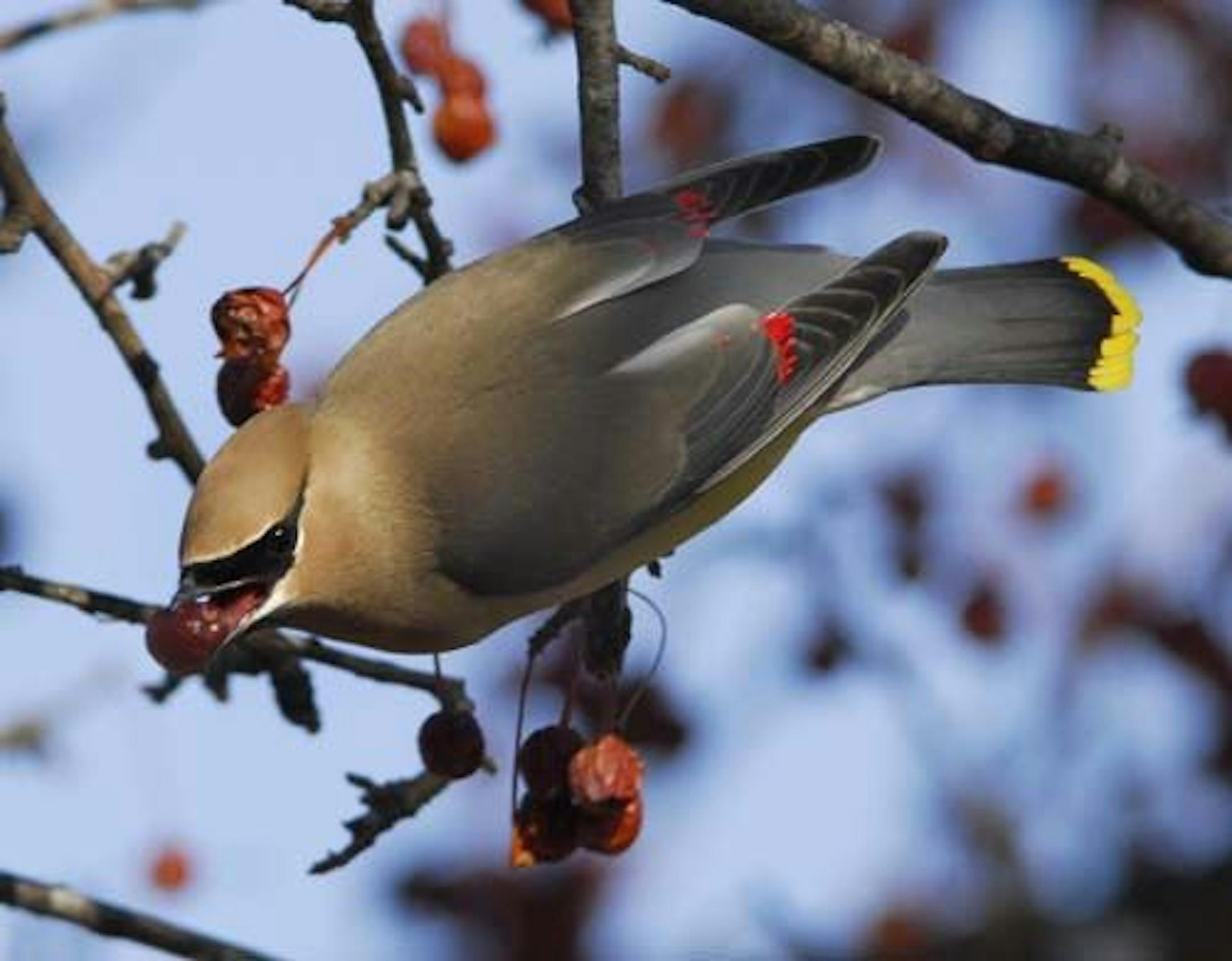
Cedar waxwings may drop into your life for a moment, then drop right out again. You'll almost always hear them before you see them, as these highly social birds stay connected to their flock via their high, thin calls. A group of waxwings then swoops into a tree or shrub and gobbles up its ripened fruit.
In summer, they pluck serviceberries and mulberries; autumn finds them devouring mountain ash, dogwood and cedar berries, and crabapples help them survive the winter.
Let's stop right here and note the salient feature of these birds, which is their sheer physical beauty. Many people gasp when they see their first waxwing, stunned by the bird's silky, Art Deco look. Their taupe, gray and yellow feathers are so sleek they look painted on. Add a handsome black mask over the eyes and just a suggestion of a head crest. They're accessorized by a yellow stripe at the end of their tails and unique, waxy-looking red tips on their wings.
In fact, the birds are named for these red wingtips, resembling melted sealing wax, which are extensions of the feather shaft. Bird experts think the number of red tips may suggest a bird's age to potential mates, and an older bird has more appeal than a younger one.
Waxwings are frugivores, one of the few North American birds whose diet is dominated by fruit: 80 percent berries, 20 percent insects. It's this affinity for fruit that dictates much of their behavior.
They're one of the last species to nest each summer, waiting until fruit is abundant before setting up housekeeping. If it's not too late in the season when they finish up their brood, they'll turn right around and raise a second nest of youngsters, although this is unusual at our latitude. We now know that nearly all songbirds raise their broods on an insect diet. Waxwings do this, too, but only for the first few days, then they switch them to a fruit regimen.
Fruit helps build and strengthen these social birds' bond with their flock: They'll perch side by side on a utility wire or tree limb and pass a berry from beak to beak down the line. This continues until one bird decides to eat the fruit.
In the scarcity of spring, waxwings may augment their fruity diet by licking tree sap and eating fruit-tree buds and flowers.


