

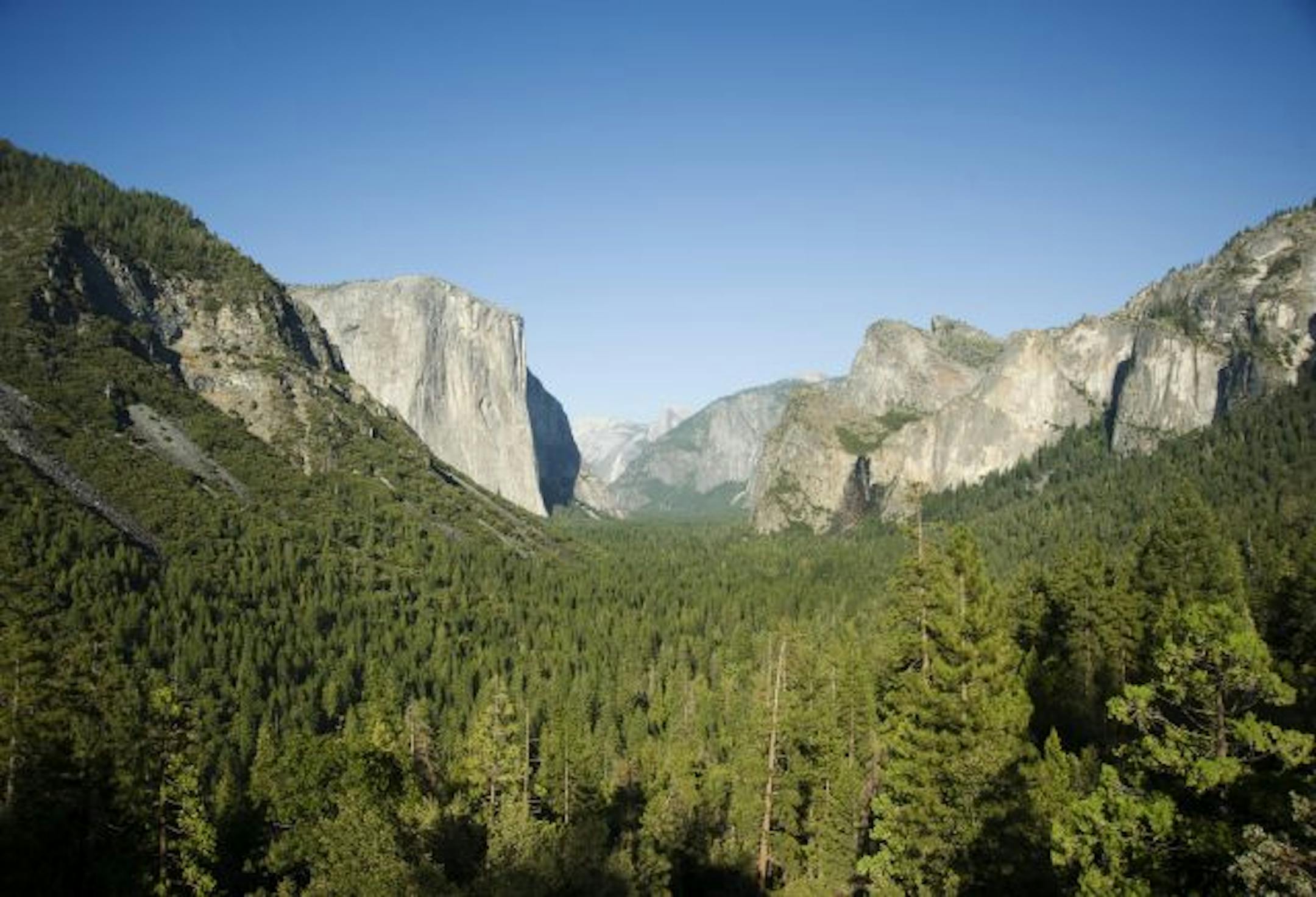
Less than 15 minutes after arriving in Yosemite National Park, my husband, Walter, and I had our first wildlife lesson. We were standing at the receptionist desk of the Wawona Hotel, a Victorian-era resort that presides over the park's southern edge. A college-age clerk asked us for our signatures.
"It just says that you are 'bear aware' and stuff," she said, pointing to a block of tiny text and a line at the bottom of the guest contract.
The problem was that I had no idea what she was talking about. Was I supposed to drive 5 miles per hour so I didn't take out a cub padding across the road? Attach bells to my belt to avoid being mauled? When I expressed my confusion, the receptionist puffed out her cheeks and looked at the ceiling. Clearly, she wasn't in the mood for a nitpicker.
"It means you know not to leave food or smelly items like shampoo in your car because bears can get into them," she said.
Unfortunately, our room, despite the hotel's promises, wouldn't be ready for a few hours and there wasn't a place to stash our bags. When I asked her what we should do, she gazed past me to some undetermined middle distance. It was clear she was stumped.
"You'll be fine," she said, waving us away.
I'm normally fairly laid-back when it comes to traveling, but this slacker attitude didn't sit well with me. American national parks are unapologetic about the lack of phones and TVs in many of their lodgings. But I wasn't asking for a bellhop or a pillow menu. I was simply an exhausted and recession-weary Minnesotan who had endured a seemingly endless winter. I wanted every minute and every dollar of this late May vacation to count.
The 'grandest hotel'


