

Want to make your brain smarter?
Slow down and dig deeper, advises Dr. Sandra Bond Chapman, a neuroscientist who has spent nearly 30 years studying this question.
It's not an easy prescription in a multitasking age, where the pinging of messages distracts your train of thought and schools reward rote memory. But Chapman's research shows that the brain's true growth occurs only when we focus, analyze and get those trains back on track.
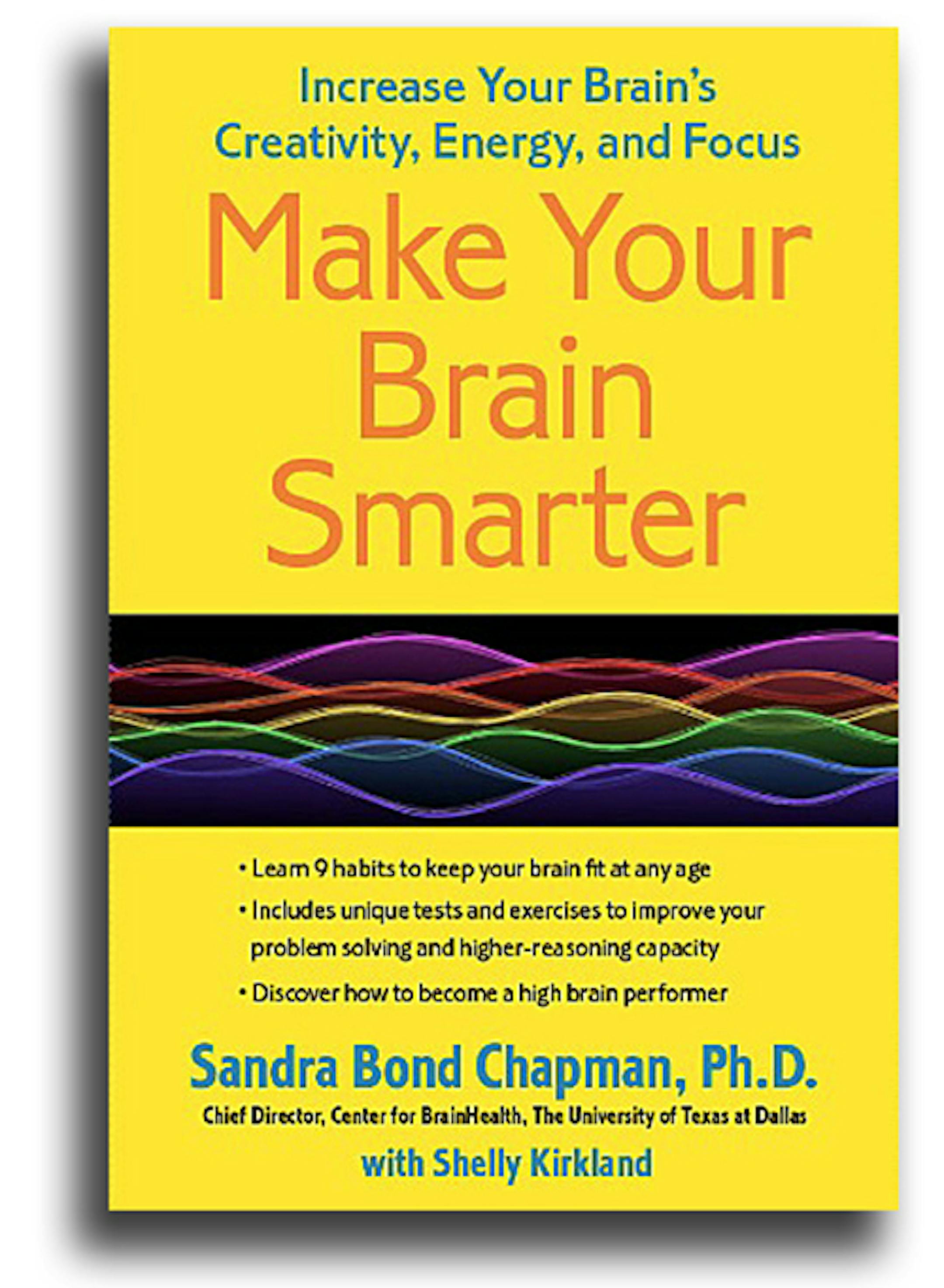
Chapman, founder and chief director of the Center for BrainHealth of the University of Texas at Dallas, discusses her findings in her new book, "Make Your Brain Smarter: Increase Your Brain's Creativity, Energy and Focus" (Free Press, $26), written with Shelly Kirkland.
We talked to her about why frontal lobes are front and center in her research and what it means to be smart.
Q Is technology good or bad for our brains?
A There is some good to staying connected. The problem is that we're letting technology manage us more than we manage it. The more we keep ourselves in shallow, busy levels, the more our thinking gets fragmented, the more we are building a distracted brain that can't focus. We're building an ADD [attention-deficit disorder] brain. The frontal lobes require deeper-level thinking.
Q Why do the frontal lobes play such a key role in your research?


