
Wading into the swamp

Fear of alligators turns to awe of the Everglades' strange, wild beauty.

Chicago Tribune
October 8, 2011 at 6:08PM
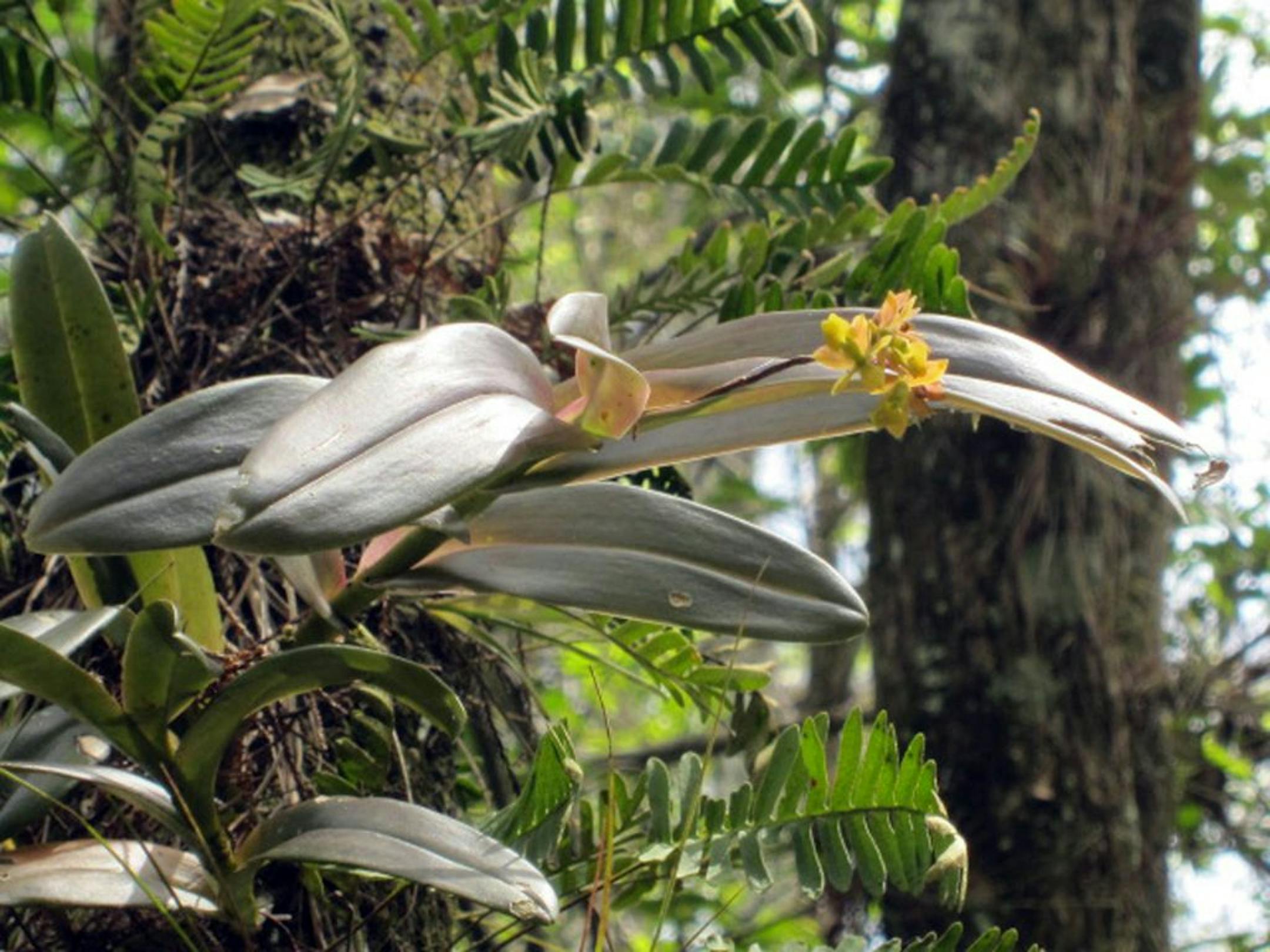
Epidendrum amphistomum, also called the dingy flowered star orchid, grows in South Florida's Fakahatchee Strand Preserve. But the state park is more well known for the ghost orchid, whose location is secret.
Epidendrum amphistomum, also called the dingy flowered star orchid, grows in South Florida's Fakahatchee Strand Preserve. But the state park is more well known for the ghost orchid, whose location is secret. (Chicago Tribune/The Minnesota Star Tribune)

Stabbing my walking stick into the muck and sliding my feet forward, I waded into the swamp, one eye on the lookout for alligators, the other trying to spot the elusive orchids that draw so many people to South Florida's Fakahatchee Strand Preserve, a 100-square-mile state park that is home to one of the largest concentrations of native orchids in North America.

Towering trees formed a tropical canopy. Sunlight filtered through the branches. The vegetation was so thick -- a crosshatch of vines and palms -- that it seemed to barely part before closing in behind us.

My first thought when wading into the cool, clear water: Was this a mistake? I had persuaded my husband to spend a weekend in the Everglades, arguing that we could have a nice vacation in what is, effectively, a swamp. The highlight would be a walk in the Fakahatchee, dubbed the "Amazon of North America" and made famous by the bestselling book "The Orchid Thief" by Susan Orlean.

But now, as I sloshed into the water, I had second thoughts. Would I be able to do this?

A guidebook listed alligators and venomous snakes as "special concerns," something I hadn't thought about when I booked the trip. "Be aware that cottonmouth moccasins are abundant in the Fakahatchee Swamp. It is wise to step with caution," the book warned.

"Great vacation," my husband cracked sarcastically.

Before we waded into the swamp, we'd been having a decent time. Driving from Miami along the Tamiami Trail, a two-lane highway that runs east-west along the northern edge of the Everglades National Park from Miami to Naples, we marveled at the scores of alligators sunning themselves by the road. We took a canoe trip in the Big Cypress National Preserve and paddled through mangrove tunnels. Along our motorboat tour of the coast, two dolphins jumped and played in the boat's wake.

That picture-perfect wildlife experience would have been enough for most people. But I wanted to see the real Everglades and I was convinced I needed to wade into the swamp.

Through Friends of the Fakahatchee, a nonprofit group that leads canoe trips and walking tours, I connected with Bill Mesce, 63, a Vietnam veteran in Army fatigues and a safari hat who drove us in his 1968 Belgian military jeep into the interior of the preserve.

Into the thicket

About 5 miles down an old logging road, he pulled over and walked us down a planked path that, leading into the dense thicket of vines and fallen trees, turned into dirt path, which turned into a flooded path, which eventually disappeared, so that we found ourselves plunging into thigh-deep water.

That was just about the time I started to get nervous.

Mesce explained how to stake our walking sticks into the ground for balance and then slowly slide one foot forward at a time, so as not to step into a hole or, worse, on an alligator. "They're more afraid of you, than you are of them," he said as he slogged forward.

As we tromped along behind him, I was surprised to feel my fear give way. Except for the occasional call of the birds and the sounds of the water around us, the swamp was quiet. The water was clean and clear. Mesce claimed that you could drink it, though I wouldn't have tried it myself.

True, it was a swamp. But it was hard not be charmed by its strange, wild beauty.

Two hours into our hike, Mesce excitedly pointed to a tiny green root structure clinging to the bark of a tree. "This is the orchid that makes us famous," he said. "This is the ghost orchid." Mesce spoke with reverence, as he described the plant that is so rare that its location is a secret.

Ghost orchids get their name because they have no leaves, only roots, and when they bloom, their flower seems to float in midair. To me, the ghost, which was not blooming, looked like a shriveled shoelace.

But nearby, security cameras attached to trees pointed toward the federally protected plant. We felt a certain thrill with just being able to get close to such a rare, revered plant.

We saw other orchids that day: ribbon orchids, jingle bell orchids and butterfly orchids. Those that were in bloom produced flowers so tiny that half the fun was just spotting them.

As we neared the end of our walk, I began thinking about returning to the Fakahatchee, maybe during the peak of orchid blooming season, between November and December. Mesce said plenty of visitors have the same reaction.

"It's a wonderful place," he said. "The more you learn about it, the more you want to explore. People call it the Faka-habit. If you catch it, you have to come back."

about the writer

about the writer

COLLEEN MASTONY

More from Minnesota Star Tribune

See More
card image
J. SCOTT APPLEWHITE, ASSOCIATED PRESS/The Minnesota Star Tribune

The "winners" have all been Turkeys, no matter the honor's name.

In this photo taken Monday, March 6, 2017, in San Francisco, released confidential files by The University of California of a sexual misconduct case, like this one against UC Santa Cruz Latin Studies professor Hector Perla is shown. Perla was accused of raping a student during a wine-tasting outing in June 2015. Some of the files are so heavily redacted that on many pages no words are visible. Perla is one of 113 UC employees found to have violated the system's sexual misconduct policies in rece