

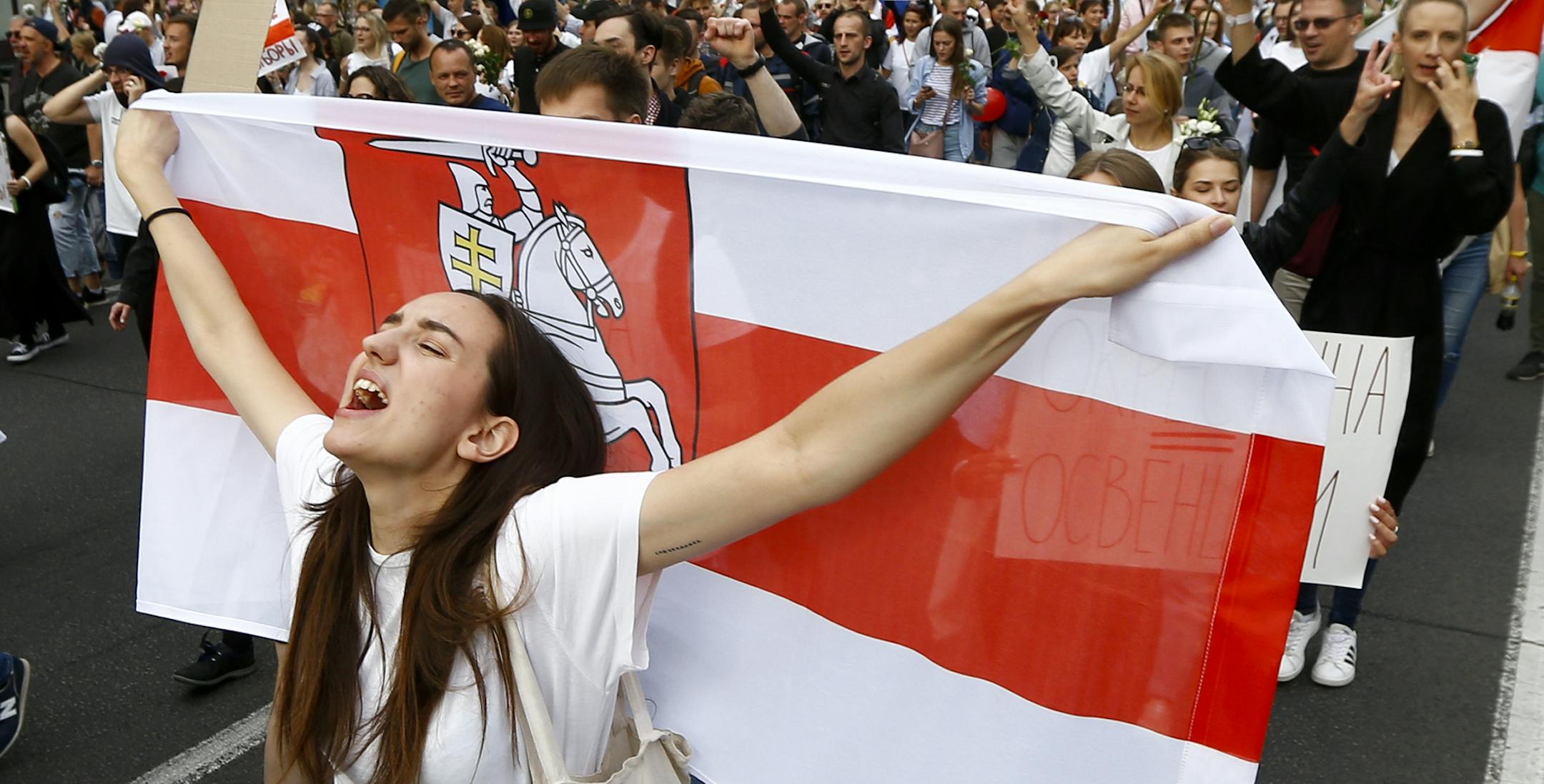
In Minsk and in Minneapolis, and throughout Belarus and America, citizens are seething over voting issues.
In Belarus, the throngs in the streets are protesting an election stolen this month by strongman Alexander Lukashenko, the repressive president for 26 years who's often described as "Europe's last dictator." Proving the appellation apt, Lukashenko's security services beat or tortured many of the brave Belarusian protesters, which only added to their numbers.
In the U.S., of course, the dynamic isn't as dire. But allegations of voter suppression are boiling over in the 2020 campaign, too. The most incendiary issue involves the United States Postal Service, which warned that it may not be able to properly process the record number of mail-in ballots expected because of COVID-19 concerns.
Critics charge that the cuts to a service that's even more essential amid the pandemic are politically motivated — an allegation backed up by none other than President Donald Trump himself, who told Fox Business Network's Maria Bartoromo, "If we don't make a deal, that means they don't get the money. That means they can't have universal mail-in voting; they just can't have it."
The "they" Trump is denying are Democrats and, more profoundly, the American people. Neither will have the president decreeing "they just can't have it," so a House vote and congressional hearings with Postmaster General Louis DeJoy (a Trump and GOP megadonor) were scheduled. DeJoy de-escalated the situation, at least a bit, by suspending further cuts until after the election. But he didn't commit to undoing any of the damage already done.
Voters electrified by threatened elections is an issue that extends beyond Belarus and the U.S., however. There's a universality to heated emotions over voting, three experts said in e-mail interviews.
"The protests we are seeing in Belarus and the U.S. are happening in two very different contexts, but they are a reflection of the same universal desire for representative government," said Annie Boyajian, director of advocacy for Freedom House, a nonpartisan think tank dedicated to strengthening democracies worldwide. The phenomenon is "something we see all over the world," Boyajian added. "No matter where people are — Sudan, Iran, Hong Kong, France — they want a government that protects their rights and is responsive to their needs."
And when a government is more repressive than representative, it can create a backlash that's hard to contain in any country, in part because it becomes a personal as well as a political issue.


