
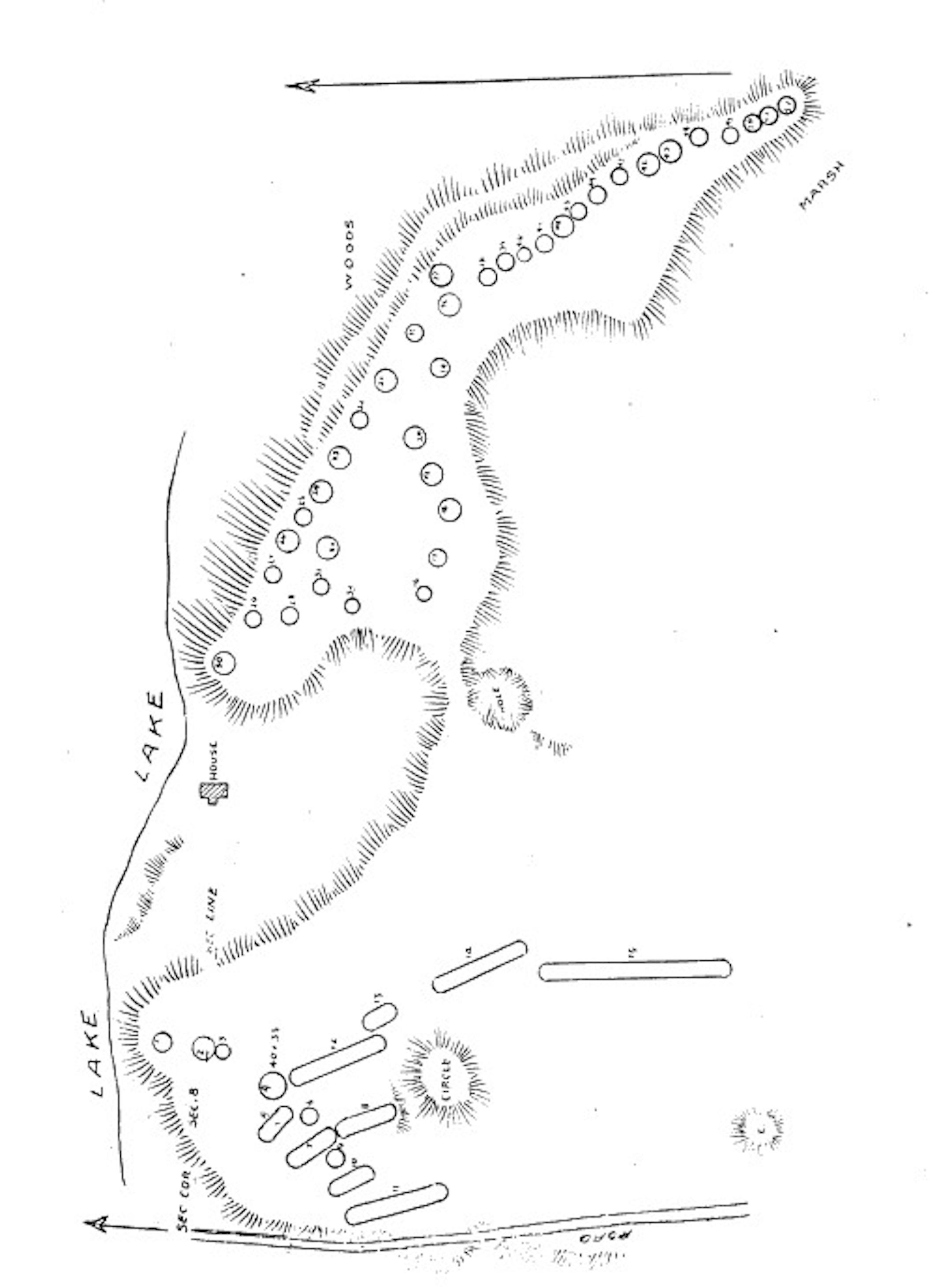
Vintage map of the mound complex near Lake Minnetonka

The 1911 map, from the book "Aborigines of Minnesota," shows the area before a century of development.

February 16, 2015 at 5:58PM

My Sunday column described the disturbance of an Indian mound at the east end of Lake Minnetonka, despite the area having been mapped as an archaeological site as early as 1883. Below is a map of the so-called Shaver Mounds included in a 1911 book, the Aborigines of Minnesota, digitized in Google Books and, as a pre-1922 work, in the public domain. Virtually all of the marked features in this map have been destroyed over the years.

Correction: In the print version of my column, and early digital versions, a photo by the Office of the State Archaeologist of a geomorphologist on the site in 2010 was incorrectly credited to me.
(The Minnesota Star Tribune)
about the writer

about the writer

James Eli Shiffer

Topic Team Leader

James Eli Shiffer is the topics team leader for the Minnesota Star Tribune, supervising coverage of climate and the environment as well as human services. Previously he was the cities team leader, watchdog and data editor and wrote the Full Disclosure and Whistleblower columns.

See Moreicon

More from Minnesota Star Tribune

See More
card image
J. SCOTT APPLEWHITE, ASSOCIATED PRESS/The Minnesota Star Tribune

The "winners" have all been Turkeys, no matter the honor's name.

In this photo taken Monday, March 6, 2017, in San Francisco, released confidential files by The University of California of a sexual misconduct case, like this one against UC Santa Cruz Latin Studies professor Hector Perla is shown. Perla was accused of raping a student during a wine-tasting outing in June 2015. Some of the files are so heavily redacted that on many pages no words are visible. Perla is one of 113 UC employees found to have violated the system's sexual misconduct policies in rece