

It's easy to knock social games such as "FarmVille" as a nuisance or a mindless waste of time. But these games have built a massive and engaged army of users, many of whom drop real money into the programs.
More than 200 million people play games on Facebook each month, the social network says. The developers behind these games have made millions.
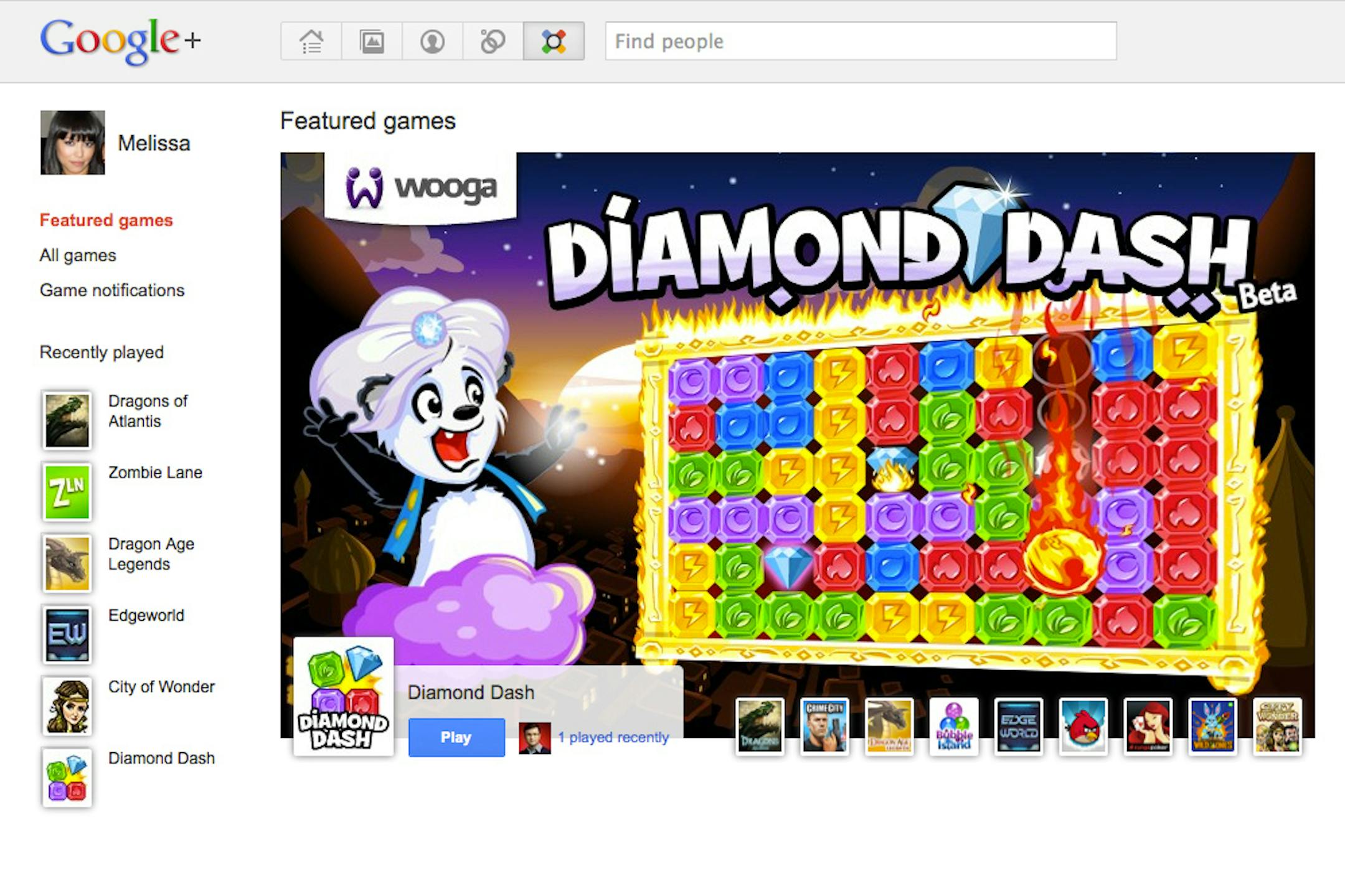
Google+ (plus.google.com), the search giant's new social network, made a significant play for a chunk of Facebook's empire recently with the introduction of a platform for gaming. Google+ is hoping to leverage the interest in social gaming to prop up its burgeoning social network, which launched this summer and is still in a closed field trial.
Sixteen games are rolling out slowly to Google+ users, including popular titles "Angry Birds," "Bejeweled Blitz," "Sudoku" and "Zynga Poker."
The incredibly popular "FarmVille" isn't available on Google+, reportedly due to an exclusivity agreement with Facebook.
The appeal of social gaming is that users can compete against friends in an environment layered with online social connections. While playing a simple arcade game such as "Bejeweled," users can compete against friends and try to beat their recent high scores.
These games have also created a new genre of casual gaming -- games that can be played when time is available and a brief distraction is needed. When more pressing needs arise, games can be quickly left, frozen in place to be picked up again later. Most of these social games are played on a "freemium" basis. They're free to play, but users can buy in-game features to further their success.
The platform -- Facebook or Google+ -- takes a cut of those transactions. Facebook has taken 30 percent of a game's earnings, with 70 percent going to the developer. Google, in an effort to encourage developers to invest in its platform, says it will take only 5 percent from the developer.


