

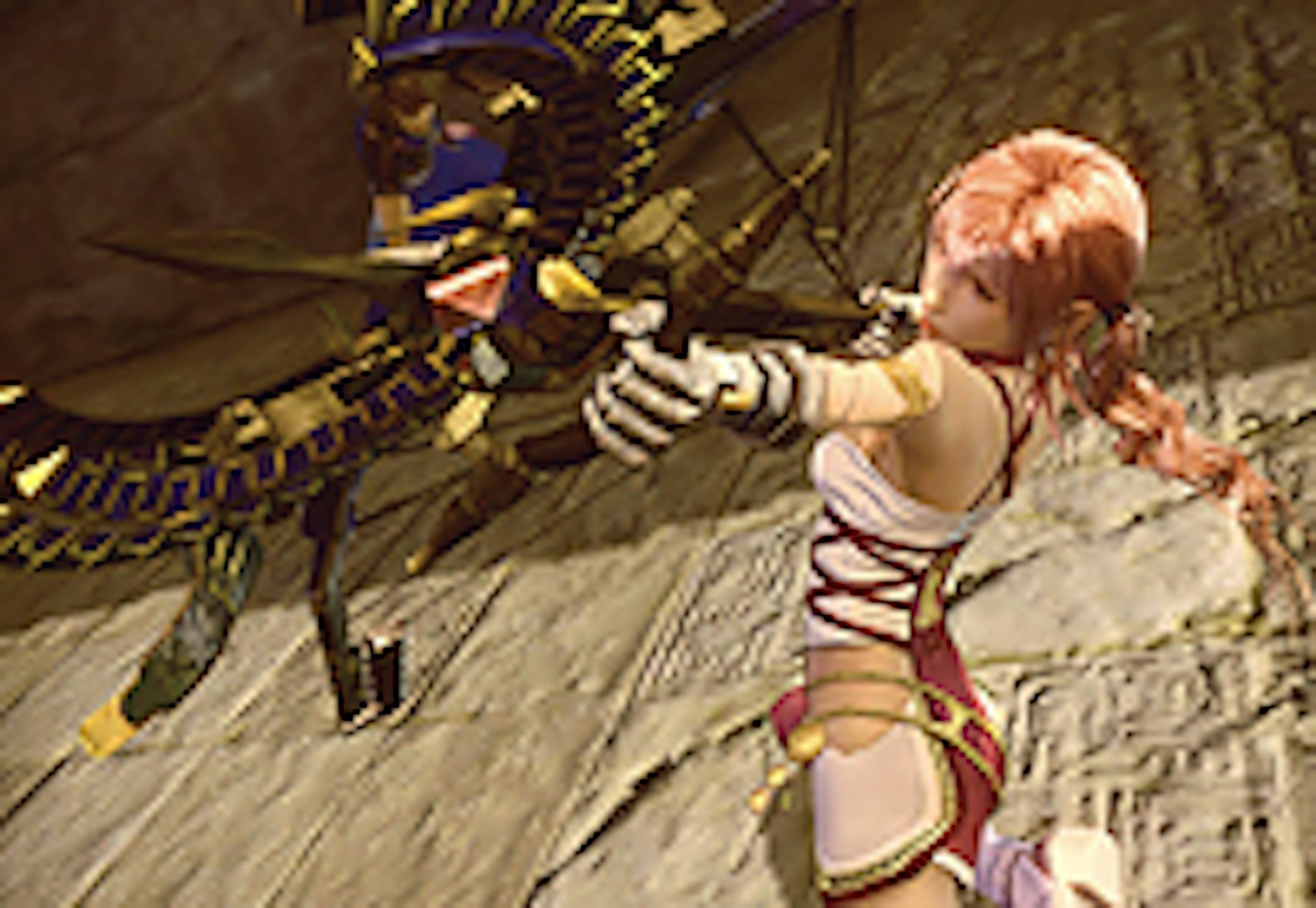
When I think back on the "Final Fantasy" series, my favorite moments are tied to the characters and the story surrounding them. Celes on the post-apocalyptic island in "Final Fantasy VI." The return of Rydia in "Final Fantasy IV." Sephiroth in Nibelheim in "Final Fantasy VII." This franchise has built its following on creating memorable worlds and narrative twists that stick with gamers for years.
"Final Fantasy XIII" is an exception to the rule; the entry's greatest achievement is on the battlefield, while the story is a convoluted mess. When Square Enix announced a direct sequel, I hoped that "Final Fantasy XIII-2" would repair the broken half of that equation. Apparently, I expected too much.
Gamers are willing to forgive one mistake, but after completing "FF XIII-2" (after about 30 hours), I'm worried that absurd storytelling is the future of the series. This game takes the lamest characters from the last entry (such as Serah and Hope) and puts them center stage alongside an annoying moogle and new protagonist Noel. Meanwhile, the best characters (such as Lightning and Fang) are relegated to background and cameo roles.
The plot surrounds the cast with an anything-goes premise focused on time travel. This is where things get really bonkers; time-travel and alternate realities are easy excuses to have a bunch of crazy stuff happen (or not happen) whenever it's convenient. Why is that giant flan blocking my path? Why is that person acting strangely? The answer to almost every mystery in the game is "a time paradox did it." This catch-all crutch makes it impossible to get invested in the characters or their actions. To make matters worse, Square Enix intentionally left the story incomplete.
But "FF XIII-2" is phenomenal in other ways. In fact, practically every other part of the game is excellent.
The combat of "FF XIII" returns in a familiar yet improved form, resulting in my new favorite battle system in the "Final Fantasy" series. Fights require a satisfying mix of strategic management and direct control, forcing you to switch your tactics and adapt to changing conditions. Quickly shift to a defensive paradigm when a boss is about to use a powerful attack, or use a buffing/debuffing paradigm to prepare for a long battle. It's a little easier than the last one, but remains fun and fast-paced, without the minor annoyances that got in the way in "FF XIII."
The biggest addition to battle is monster collection, which isn't just an optional side activity. You'll always have Noel and Serah in your party, and the third slot is occupied by a monster that you've defeated. Each monster has a role that you can level up and use to build your paradigms. For instance, Feral Behemoths are commandos, Blue Chocobos are ravagers and Cait Siths are medics. You need to consider these roles along with Serah's and Noel's aptitudes when forming your paradigms. This adds a level of customization and versatility that you didn't have with your party before.
Among the most prominent criticisms of "FF XIII" concerned its linearity, and the team clearly sought to rectify that in the sequel. With a few exceptions, you control how and when you progress through the main quest with the Historia Crux. The Historia Crux lets you travel to about 10 areas, but many have past, present and alternate incarnations that you can unlock. If you get bored or frustrated, you can always return to the Historia Crux and try something else. The only limiting factor is that you need special items -- Wild Artefacts -- to unlock optional zones, and they are rare and often hidden. Even so, I loved the newfound freedom that the Historia Crux allows.


