

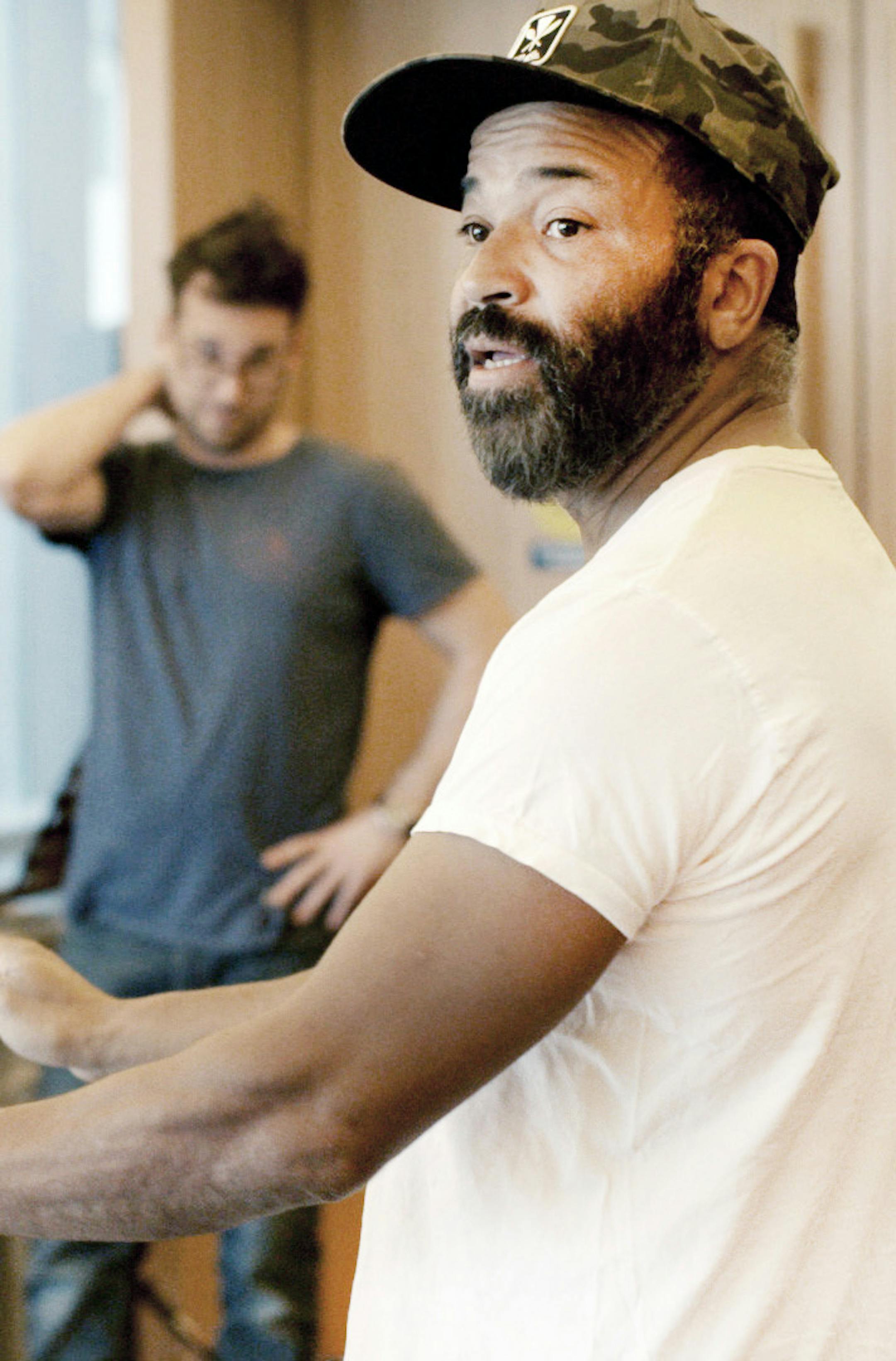
Jeffrey Wright, star of the HBO series "Westworld," has had an acting career that spans decades, including Emmy, Tony and Golden Globe victories for the stage and TV versions of "Angels in America."
Lesser known is his career as activist, with a particular interest in what's called "resource-related" conflicts, notably in Sierra Leone and more recently in veterans' affairs. He produced and appears in HBO's "We Are Not Done Yet," a short film about 10 veterans struggling with PTSD who create a poetry performance in which they fuse their pain to words.
Led by poet Seema Reza, the project culminates in a staging at Lansburgh Theatre in Wright's hometown of Washington, D.C. It's a moving, raw film about trauma, and the power of art to heal.
Q: How did all this come together?
A: I had been doing a reading with a group called Theater of War. It uses Greek tragedy as a platform for conversations around PTSD in the military community. I read the role of Sophocles' Ajax, and the idea is that this is the story of a warrior who comes home and has this psychotic episode, and that the Greeks had given thought to this, and were shining a light on the impact of the experience of war. We did one of these readings down in D.C., and afterward a representative for the Department of Defense asked if there was more I might be able to do.
Q: This is obviously emotional for you, too.
A: Just weeks before I had been in Colorado, coming home from a ski trip with my kids, and was at this small rural airport. There was a gentleman there in a wheelchair, an African-American triple amputee, with medals and decorations across his chest, waiting for his plane to arrive. He said he had been hit by a mortar shell in Afghanistan, and that when he was in Walter Reed [National Military Medical Center], folks from my line of work had come by now and then, and I thought, "Good for them, but what am I going to do with my time and how could I reach out, too?" A couple months later, I was introduced to Seema Reza.
Q: Why does art — in this instance, the spoken word — have such enormous therapeutic power?


