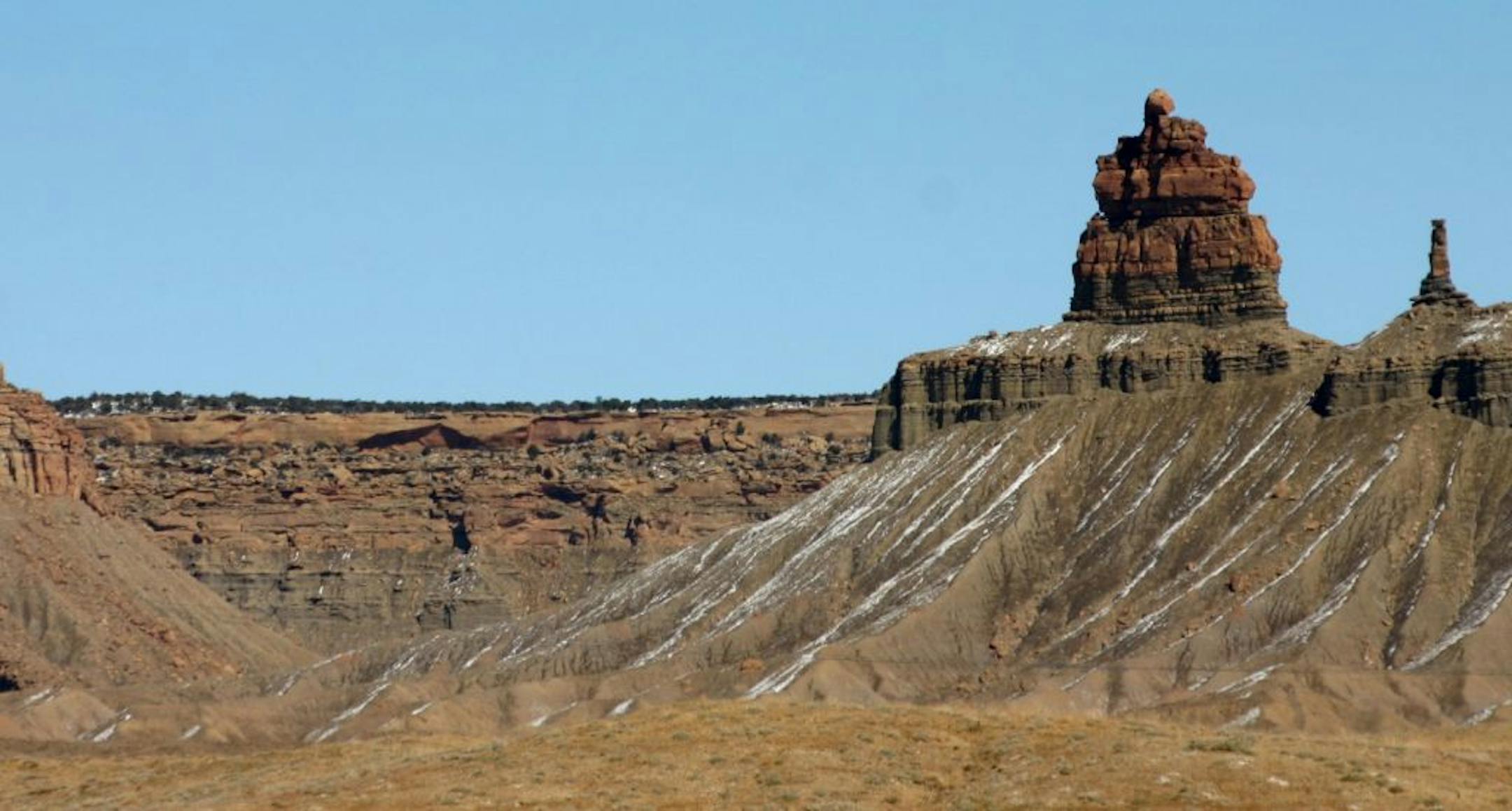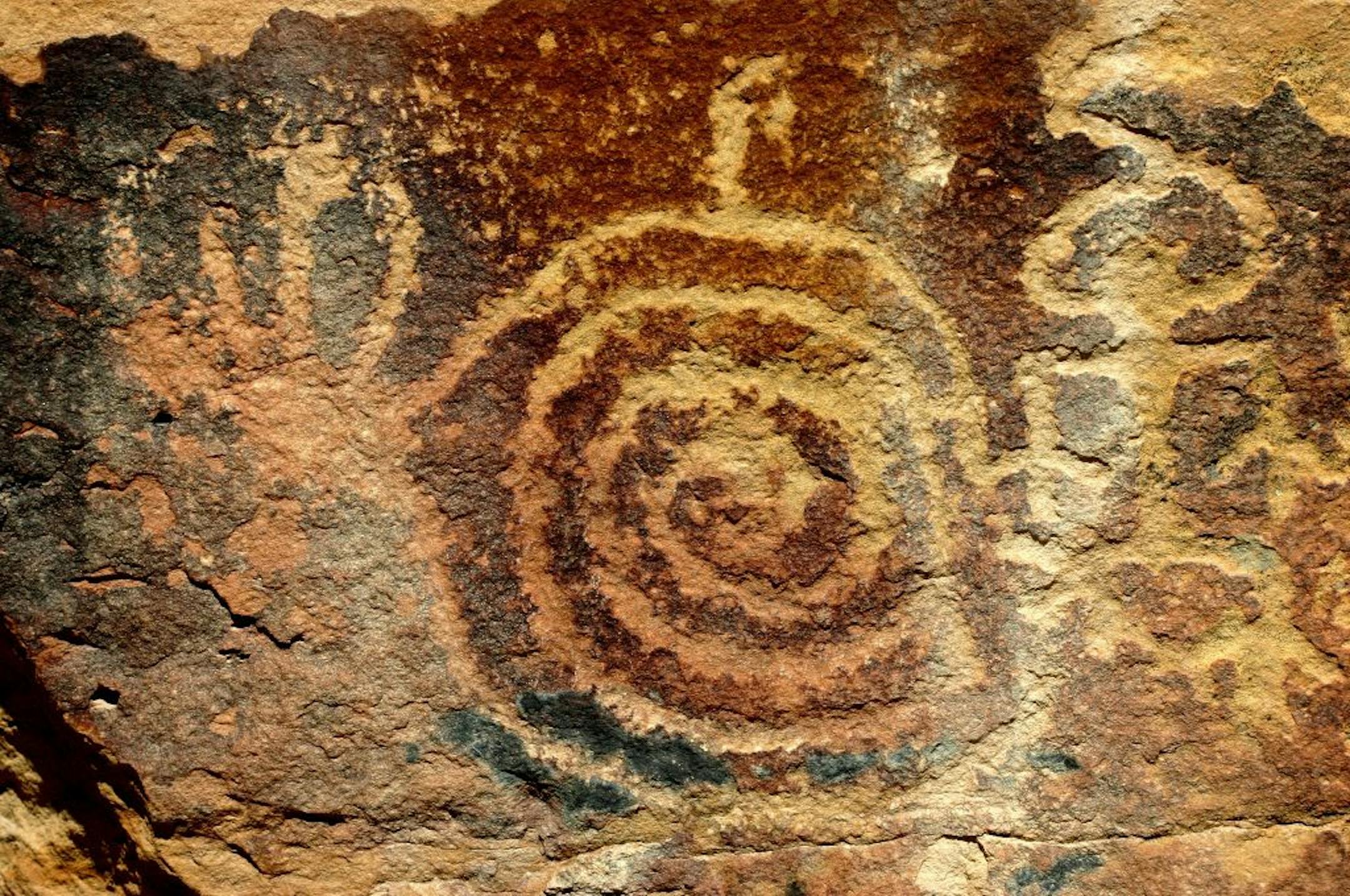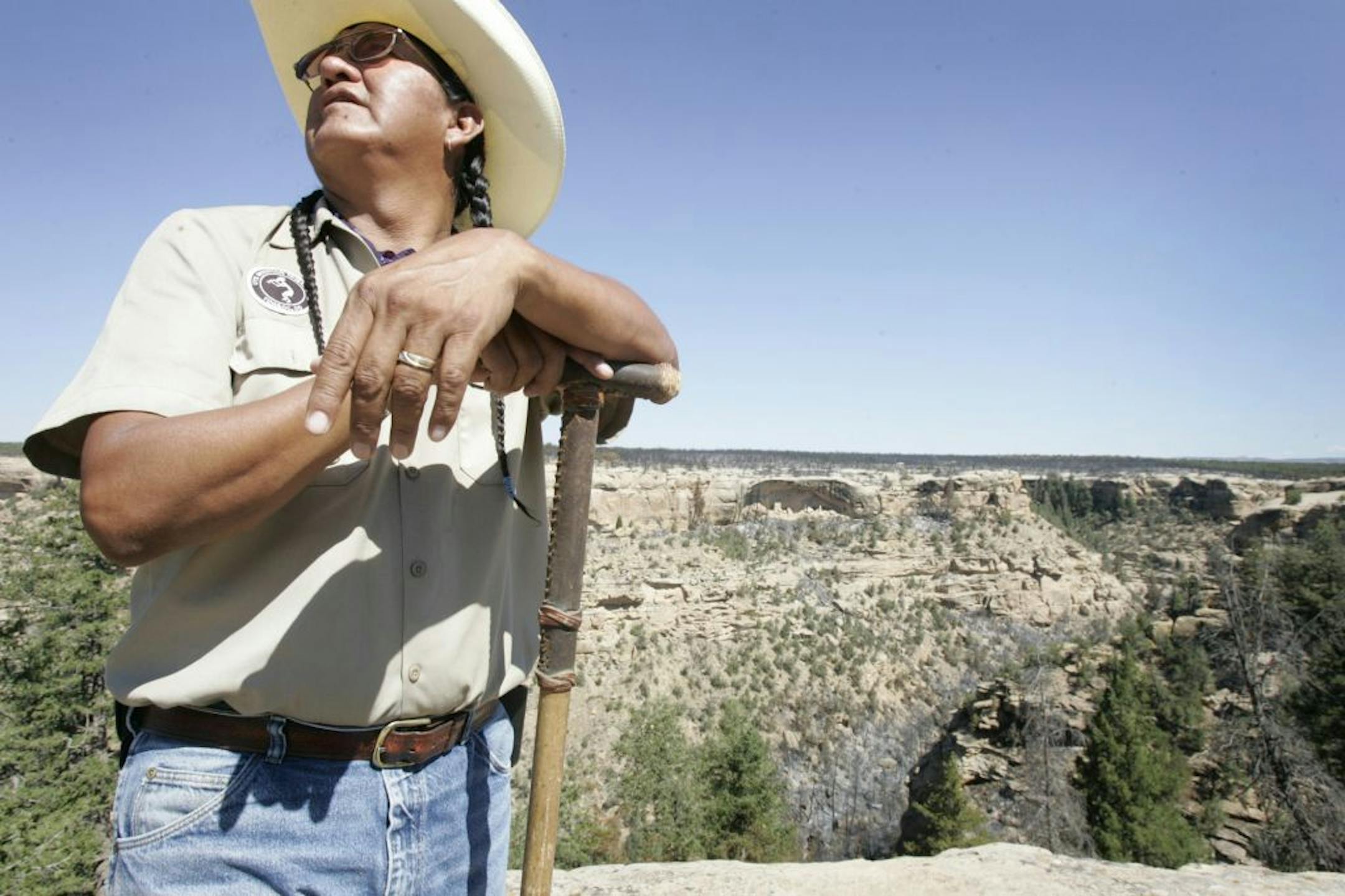
At the small tribal visitor center near the Ute reservation town of Towaoc in the high Colorado desert, I climbed into an aging Ford van with four others. We'd come to Ute Mountain Tribal Park for an unusual, intimate look at cliff dwellings cut into the sandstone canyons here. The series of stone rooms were built more than 800 years ago by what are now known as Ancient Puebloans (sometimes referred to as Anasazi), ancestors to modern-day Pueblo and Hopi people. Despite the popularity of such sites, we seemed to be alone as we traveled 20 miles of gravel road up the Mancos River Canyon with our guide, Rick Hayes.
Hayes, 54, is half Ute, half Cheyenne, with a pair of braids to his shoulders, a big laugh and a nonstop commentary.
Once on the mesa top, Hayes looked out the van's window to the north. "That's where all the people are," he said, pointing in the distance to Mesa Verde National Park, which the tribal park wraps around.
We, on the other hand, had the world to ourselves.
Visitors to the American Southwest know about the national park, 52,000 acres in the middle of a massive plateau more than 1,500 feet above the desert below. Named after that "green table" of land, the park is home to hundreds of cliff dwellings. For more than a century, millions of people have visited the park.
Fewer people know about the place I'd come to: another 125,000 acres that sit on the same high mesa, also topped by sage, pinyon pines and juniper trees, also sliced by colorful rock canyons and also home to dwellings, rock art and pottery pieces left behind by the same people.
That's because this land belongs to the Ute Indians, who opened it as a tribal park in 1981 and who restrict access to those accompanied by a Ute guide. If you call ahead, you can sign up for a half-day or full-day tour.
My advice: Take the full day.