
Using smartphone cradle and app, researchers develop handheld biosensor to detect toxins

August 1, 2013 at 6:26PM
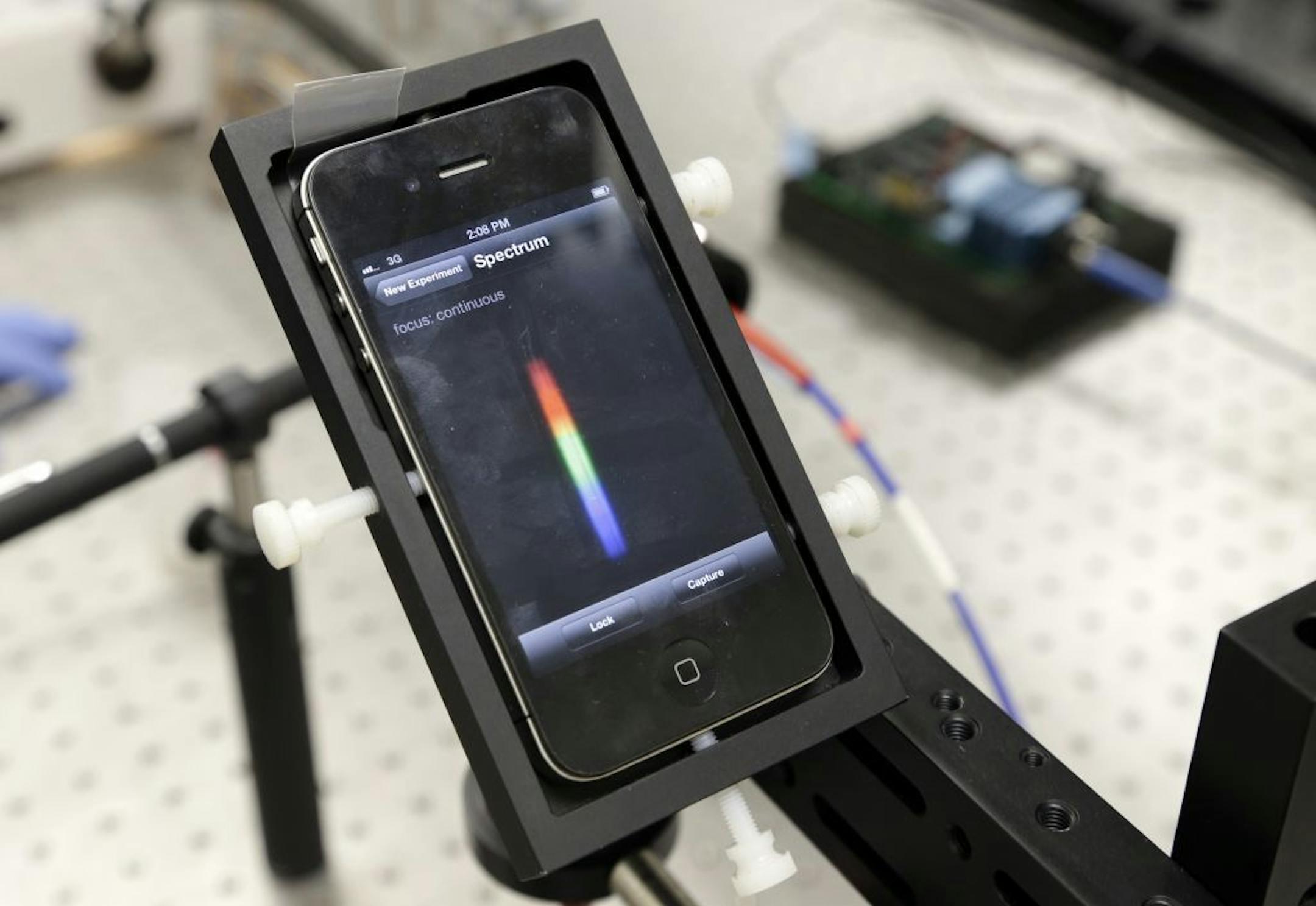
A handheld biosensor was developed by researchers at the University of Illinois, Urbana-Champaign, is shown June 21, 2013 in Urbana, Ill. Thanks to a cradle and app that turn your smartphone into a handheld biosensor, you may soon be able to run on-the-spot tests for food safety, environmental toxins, medical diagnostics and more.
A handheld biosensor was developed by researchers at the University of Illinois, Urbana-Champaign, is shown June 21, 2013 in Urbana, Ill. Thanks to a cradle and app that turn your smartphone into a handheld biosensor, you may soon be able to run on-the-spot tests for food safety, environmental toxins, medical diagnostics and more. (Associated Press - Ap/The Minnesota Star Tribune)

URBANA, Ill. — Afraid there may be peanuts or other allergens hiding in that cookie? Thanks to a cradle and app that turn your smartphone into a handheld biosensor, you may soon be able to run on-the-spot tests for food safety, environmental toxins, medical diagnostics and more.

The handheld biosensor was developed by researchers at the University of Illinois, Urbana-Champaign. A series of lenses and filters in the cradle mirror those found in larger, more expensive laboratory devices. Together, the cradle and app transform a smartphone into a tool that can detect toxins and bacteria, spot water contamination and identify allergens in food.

Kenny Long, a graduate researcher at the university, says the team was able to make the smartphone even smarter with modifications to the cellphone camera.

about the writer

about the writer

More from Minnesota Star Tribune

See More
card image
Provided/Sahan Journal

Family members and a lawyer say they have been blocked from access to the bedside of Bonfilia Sanchez Dominguez, while her husband was detained and shipped to Texas within 24 hours.

card image