

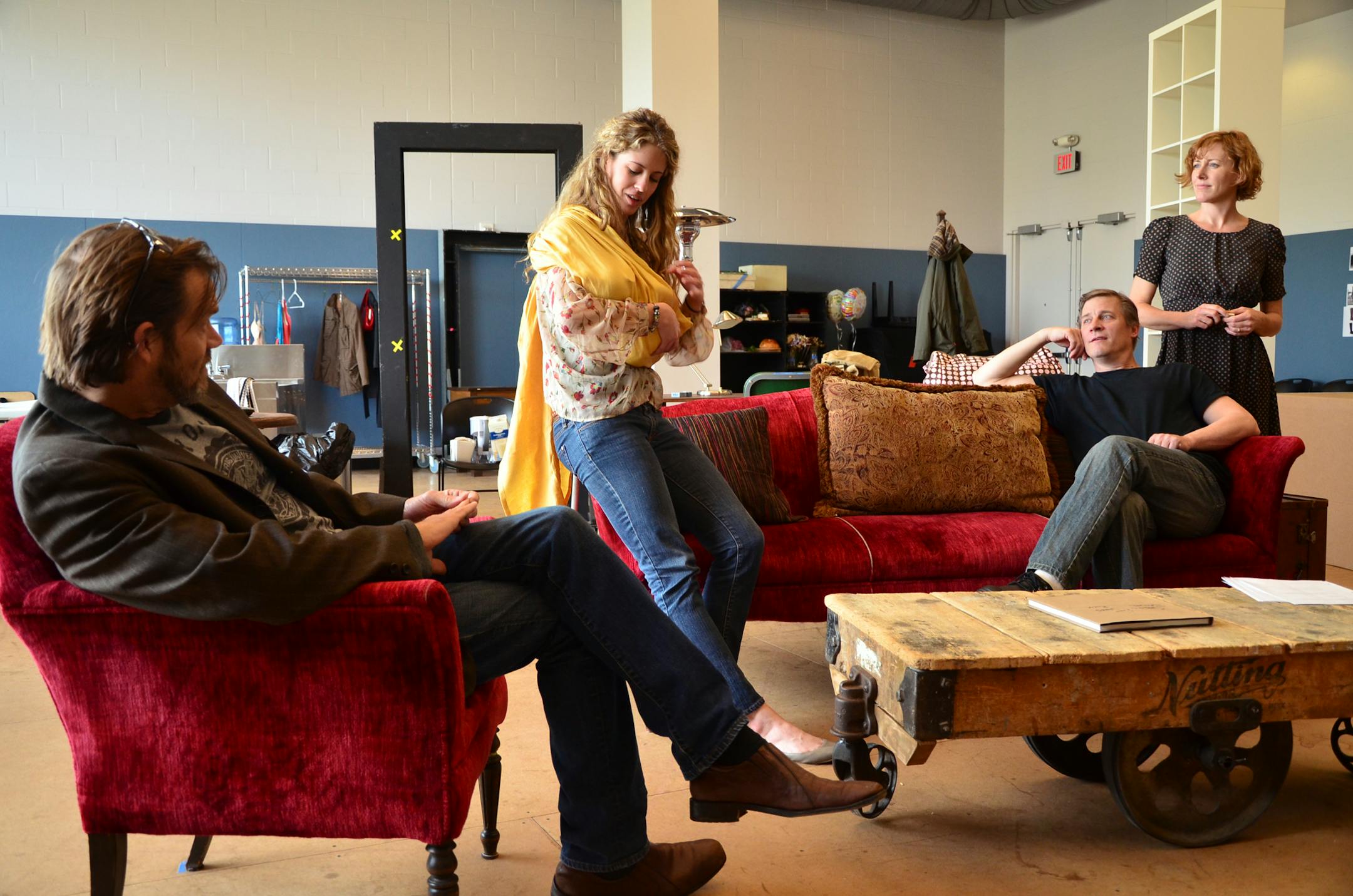
What playwright does this make you think of? Four people sit around in a bourgeois domicile and natter anxiously about their lives. Are they unhappy? Yes and no. Do they want to change? Yes and no. Does much of anything happen? Yes and no.
The clear answer is Anton Chekhov, the Russian writer who "raised the portrayal of banality to the level of world literature," in the eyes of novelist James. T. Farrell. But you would also get points if you answered playwright Donald Margulies, who takes inspiration from Chekhov.
"He's sort of my main man," said Margulies, whose play "Time Stands Still" opens Friday at the Guthrie Theater.
Margulies won the 2000 Pulitzer Prize for "Dinner With Friends," which critic Peter Marks noted uses "the most shopworn of subjects" and is set in a "comfortably banal Connecticut [suburb]."
Simply put, Margulies enjoys the challenge of elevating individual quandaries into universal truths -- all in the context of a parlor conversation with surprisingly high stakes.
"That's the challenge of writing naturalistically, to make it seem as if the words are organic and in the moment," Margulies said.
"Time Stands Still" was born during a particularly volatile time in the Iraq war, when each morning brought news of another car bombing. Margulies began to ponder the "juxtaposition of my life and what was happening half a world away."
He created a play that revolves around four people in a New York apartment. Sarah and James are freelance journalists returned from covering the war; Richard is Sarah's photo editor, a man who prefers to work in an office; Mandy is Richard's young paramour. Margulies agrees that there is something of the myth of "Hunters vs. Nesters" lying within the subtext. Some people are wired for adventure and risk, while others find their comfort in the equally valid pursuit of repose.


