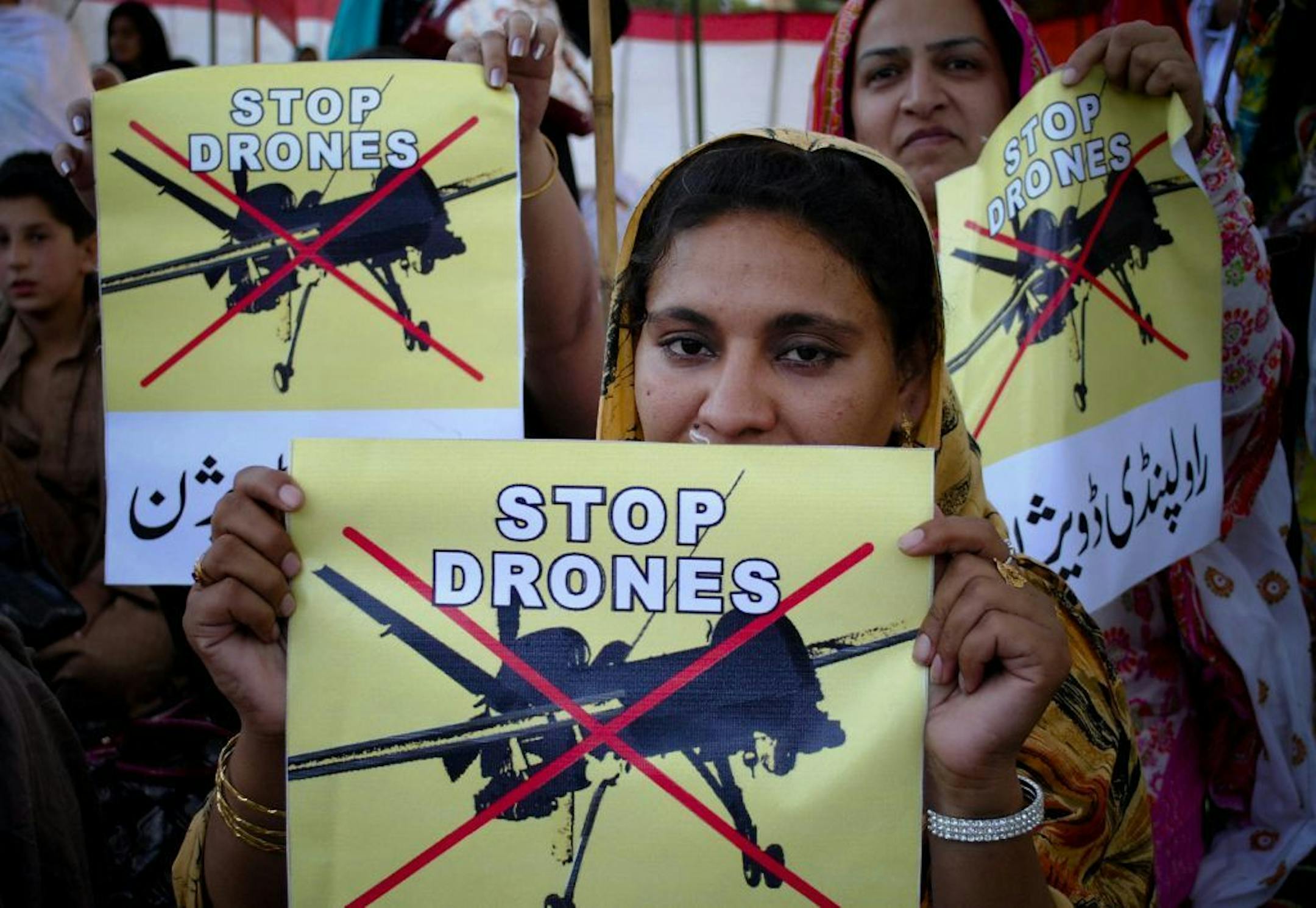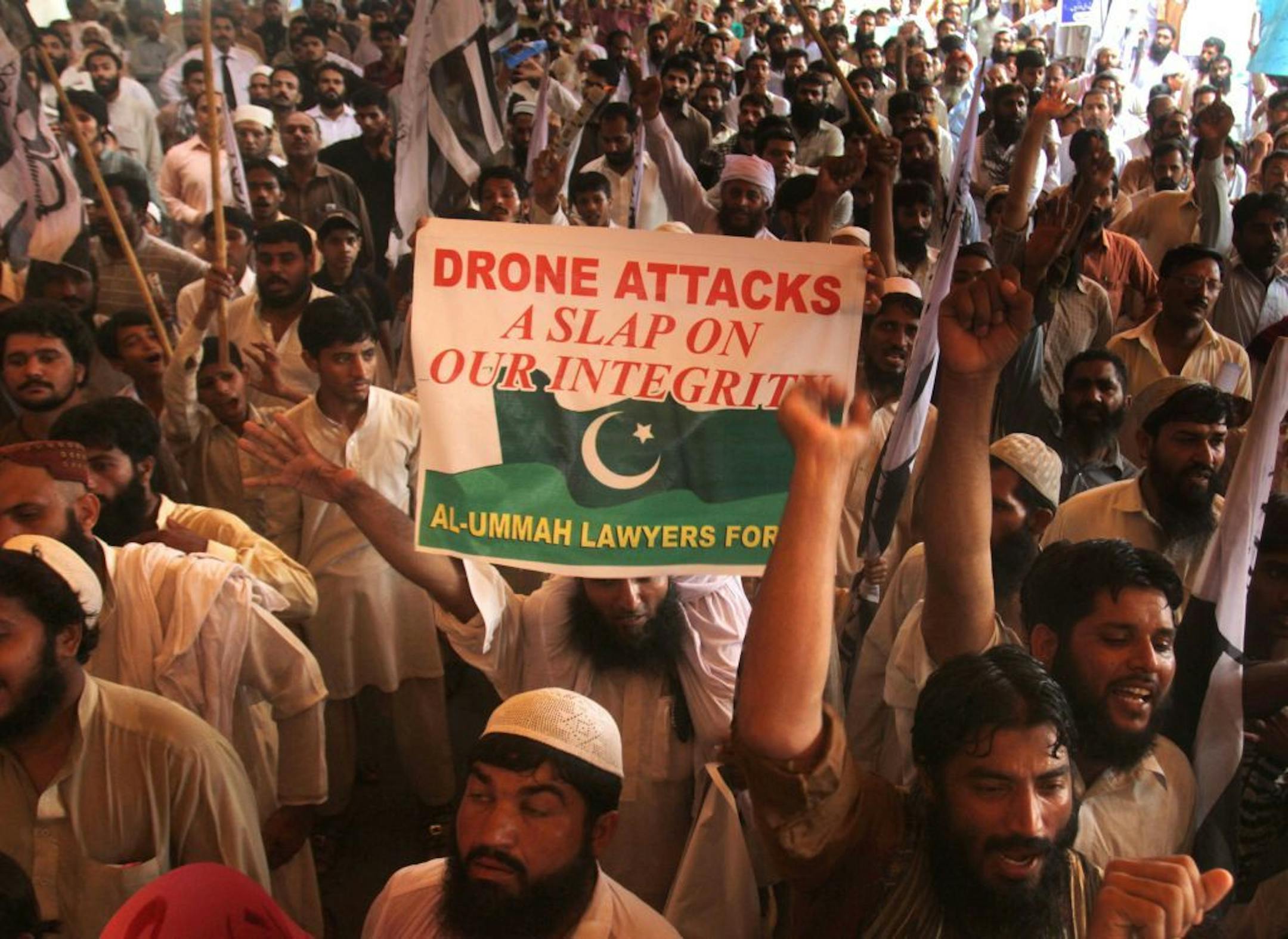
ISLAMABAD — The United States has drastically scaled back the number of drone attacks against militants in Pakistan and limited strikes to high-value targets in response to growing criticism of the program in this country.
Those actions appear to have temporarily appeased Pakistan's powerful generals, who publicly oppose the covert CIA strikes, U.S. officials said. But some officials are still worried about pushback from Pakistan's new civilian leaders, who took power in June with a strong stance on ending the attacks altogether.
The future of the drone program is likely to be a key item on the agenda during U.S. Secretary of State John Kerry's visit to Pakistan, which is expected soon.
Only 16 drone strikes have taken place in Pakistan so far this year, compared with a peak of 122 in 2010, 73 in 2011 and 48 in 2012, according to the New America Foundation, a U.S.-based think tank.
The CIA has been instructed to be more cautious with its attacks, limiting them to high-value targets and dropping the practice of so-called "signature strikes" — hitting larger groups of suspected militants based purely on their behavior, such as being armed and meeting with known militants, said a current U.S. intelligence official and a former intelligence official briefed on the drone program.
The CIA embraced the measures, feeling the drone program may be under threat from public scrutiny, the officials said, speaking on condition of anonymity because they were not authorized to discuss the classified program publicly.
Two other senior American officials said the U.S. scaled back the number of attacks and tightened up its targeting criteria as a concession to the Pakistani army, considered the most powerful institution in the country and the final arbiter on the future of the drone program.
Senior Pakistani army officers made it clear that the program could not continue at the tempo it was being carried out and expressed concern that civilian casualties were breeding more militants, said the U.S. officials, speaking on condition of anonymity because they were not authorized to talk to the media.