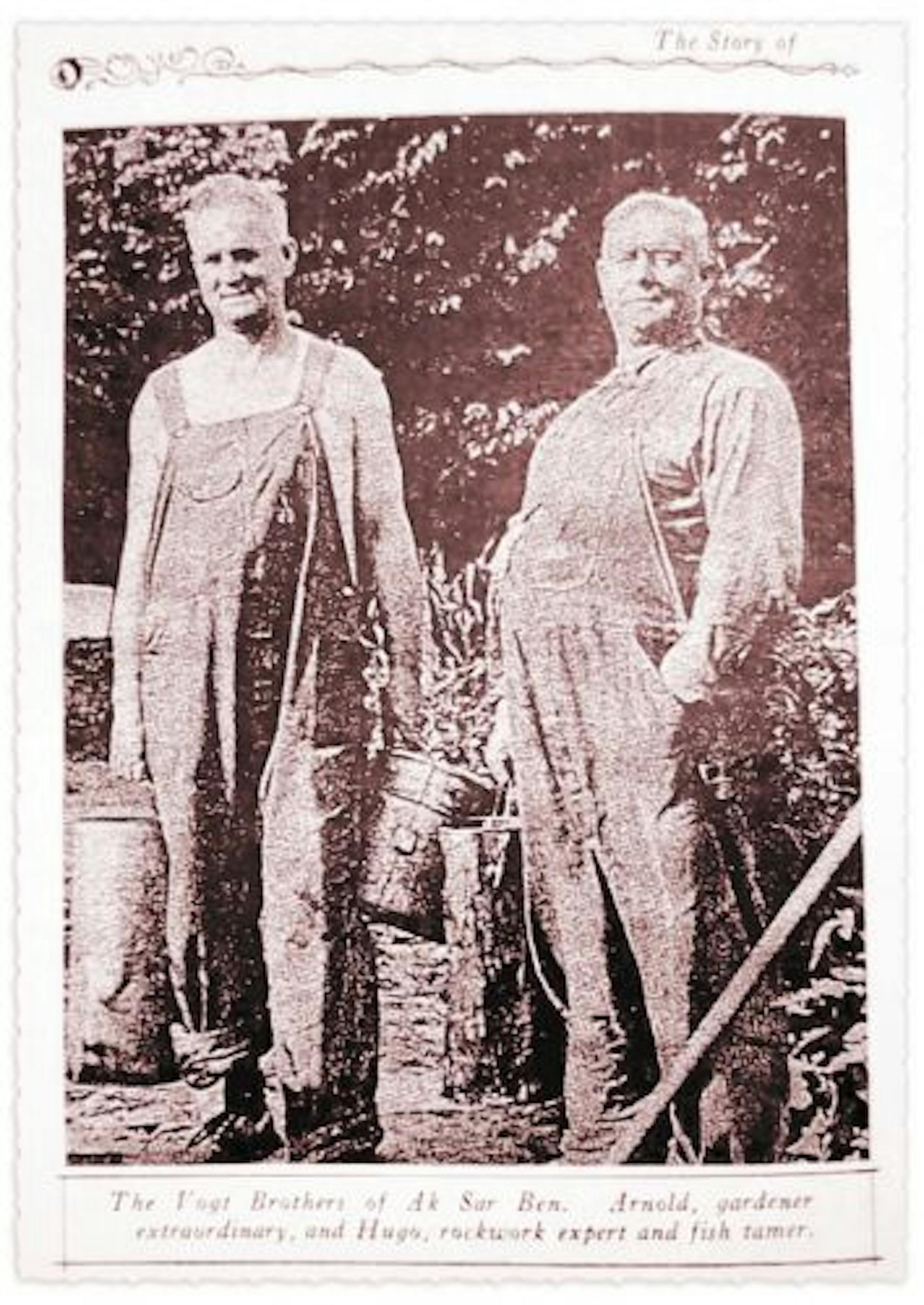
Minnesota might be the land of 10,000 lake places, but the shore-side gardens that bachelor brothers Arnold and Hugo Vogt sculpted out of stone 90 years ago remain a testament to, well, quirkiness and resiliency. ¶ Nostalgia and begonia lovers are expected to ooh and aah this Saturday -- and Saturday only -- along Tame Fish Lake about 120 miles north of the Twin Cities between Aitkin and Garrison. ¶ The nearly two-acre spread along 343 feet of lakeshore is called Ak-Sar-Ben Gardens. That's Nebraska spelled backward. Arnold and Hugo sold real estate in Omaha before World War II, but spent summers tinkering around their cabin in overalls on what was then known as Long Lake. Hugo's penchant for training bass from minnow-hood to eat from his hand would become such an attraction that the lake was formally rechristened Tame Fish in 1942. ¶ Arnold, the younger of the two, was the green thumb of the operation. A respected Duluth flower show judge, Arnold was known for his own brilliant iris, tulips, jonquils and more than 500 dahlias, including his flaming red Son of Satan specimens with orange-salmon centers. ¶ Hugo left his younger brother to the flowers. When he wasn't taming his favorite pair of bass, Amos and Andy, Hugo was busy working with rocks and pebbles. Eventually, word began to spread.
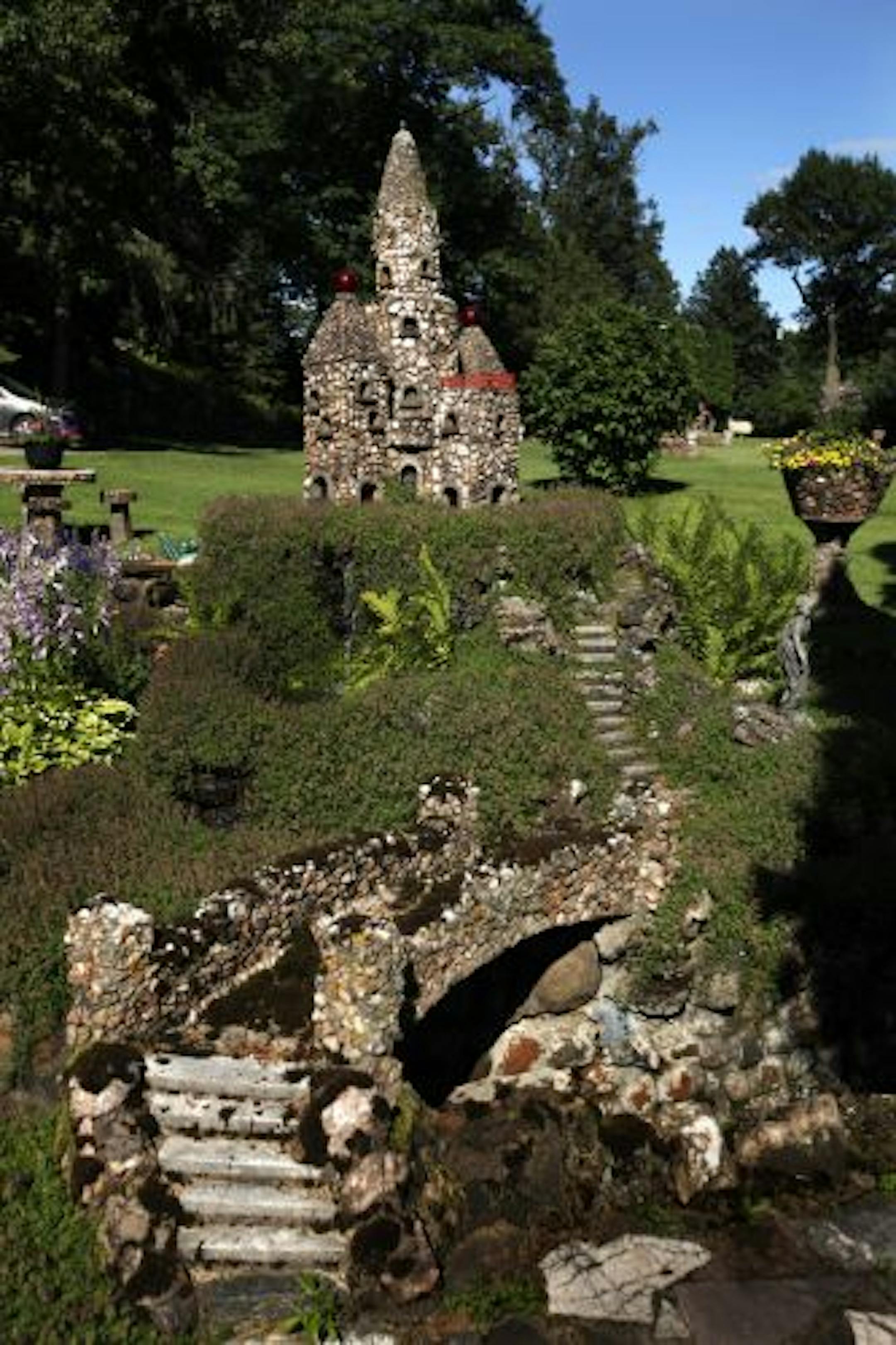
Starting in 1918, people began to swing by to see Arnold's new roses. Or the wishing well. Or the storybook castle and drawbridge that Hugo created from stones, marble, quartz and chunks of iron ore. The registration book, stationed in one of Hugo's stone-covered masterpieces, soon included the names of celebrities of the era, including humorist Will Rogers, silent movie star Norma Talmadge and Gov. Harold Stassen and his wife, Esther.
By 1939, the Vogts were charging a dime a visit, replacing wooden sidewalks with marble and counting a staggering 40,000 visitors a summer. The boastful bachelor brothers even hung a stone sign that proclaimed the place an "Eveless paradise."
Thyme marches on
Today, Hugo's castle is layered with creeping thyme, which just flowered a vibrant purple. Time, indeed, has crept on. Hugo died in the early 1940s and Arnold gave up his "eveless" bastion, marrying in 1944. After Arnold's death a dozen years later, his widow carried on the best she could.
A truck driver named Rudy Seliga and his wife from Minneapolis took over the neglected weedy gardens from her in 1959, raising their four kids and charging 75 cents a visit. A petting zoo, picnic area and drive-in restaurant operated next door, serving burgers, shrimp baskets, fries and malts as annual attendance climbed to 60,000 in the 1960s.
In 1969, Minneapolis Tribune "Your Weekend" writer Ben Kern stopped by, reluctantly: "For years I have been instinctively ignoring Ak-Sar-Ben signs on the theory that any Minnesota tourist attraction called 'Ak-sar-ben,' which is Nebraska spelled backwards, had to be a loser," he wrote. "Now I have visited Ak-Sar-Ben, paid my 75 cents, and report that it is well worth it -- no big news flash, perhaps, but a tip for flower admirers."
By the late 1970s, the place again had gone to seed as renters neglected the treasures, tossing beer cans in the moat that surrounds Hugo's castle. The tamed bass had gone belly up decades before.