

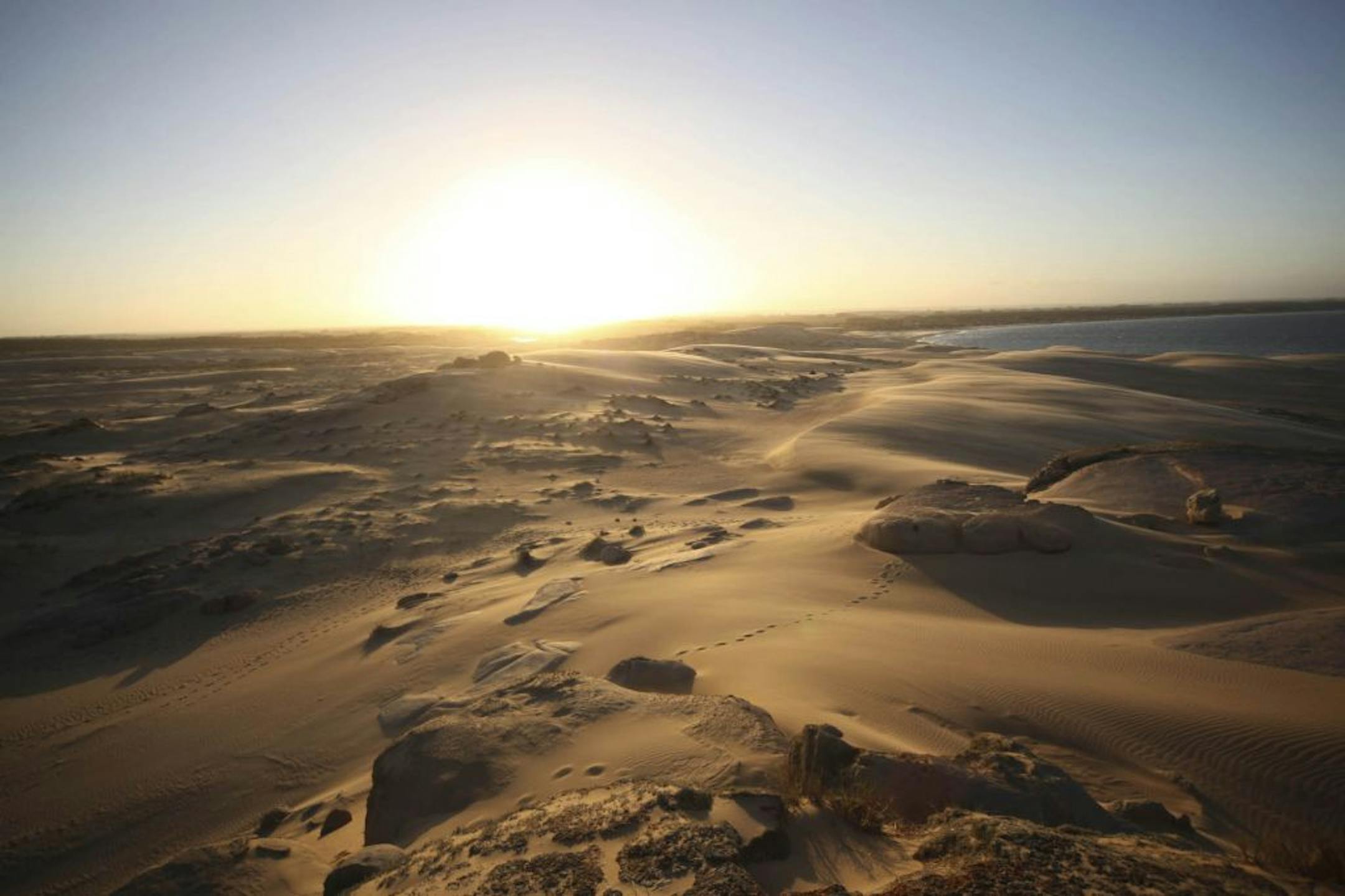
As I stood clueless in the patch of sand that is Cabo Polonio's downtown, a local provided directions to my hotel that were perfect for a Uruguayan beach village lacking conventional electricity and roads.
"Keep heading up the path and make a right at the boats on the beach and follow the ocean," said Santiago Pereda, an American-Uruguayan English teacher.
The 15-room Perla del Cabo was built more than 40 years ago by fishermen. Waves lap its porch, where dining tables mingle with hammocks. Rooms range between $80 and $200.
During my Uruguay visits over the years, I had heard rumors of this tranquil, carefree, dune-rich town and decided to see it for myself. At the hotel, I met Jaclyn Balkan, a Fordham University graduate student, and her boyfriend, banker Chris Brown, who said they had learned of Cabo Polonio from Uruguayan friends.
"There's a sensation of discovery when you stumble upon a place like this," Brown said. Balkan enjoyed the roar of the ocean just a few feet from her window.
There are a few Uruguayan beach villages like this that retain an almost unspoiled character. They tend to attract the young and bohemian, along with Montevideo residents seeking to disconnect from modern life on vacation. Yet there are always threats to Eden, as the word gets out and developers smell profit.
A hippie vibe
Cabo Polonio is in the state of Rocha, which borders Maldonado, home to the Miami-esque resort of Punta del Este. Rocha's beach towns, many still fishing villages, begin about 90 minutes northeast of, and a world away from, Punta.


