

Opinion editor's note: Star Tribune Opinion publishes a mix of national and local commentaries online and in print each day. To contribute, click here.
•••
The war in Ukraine, now in its fourth month, has caused many of us to challenge key beliefs previously taken for granted. Europe, in turns out, isn't some special region of the world immune to the depravities and brutalities of armed conflict. The European Union, an organization often referred to as a slow-moving, bureaucratic machine, can actually come together with resolute action when the circumstances call for it. And Russia's Vladimir Putin, depicted in the past as a strategic genius with an uncanny ability to exploit his adversaries' failings, is in actuality a bad gambler who has dug his country into a massive geopolitical hole.
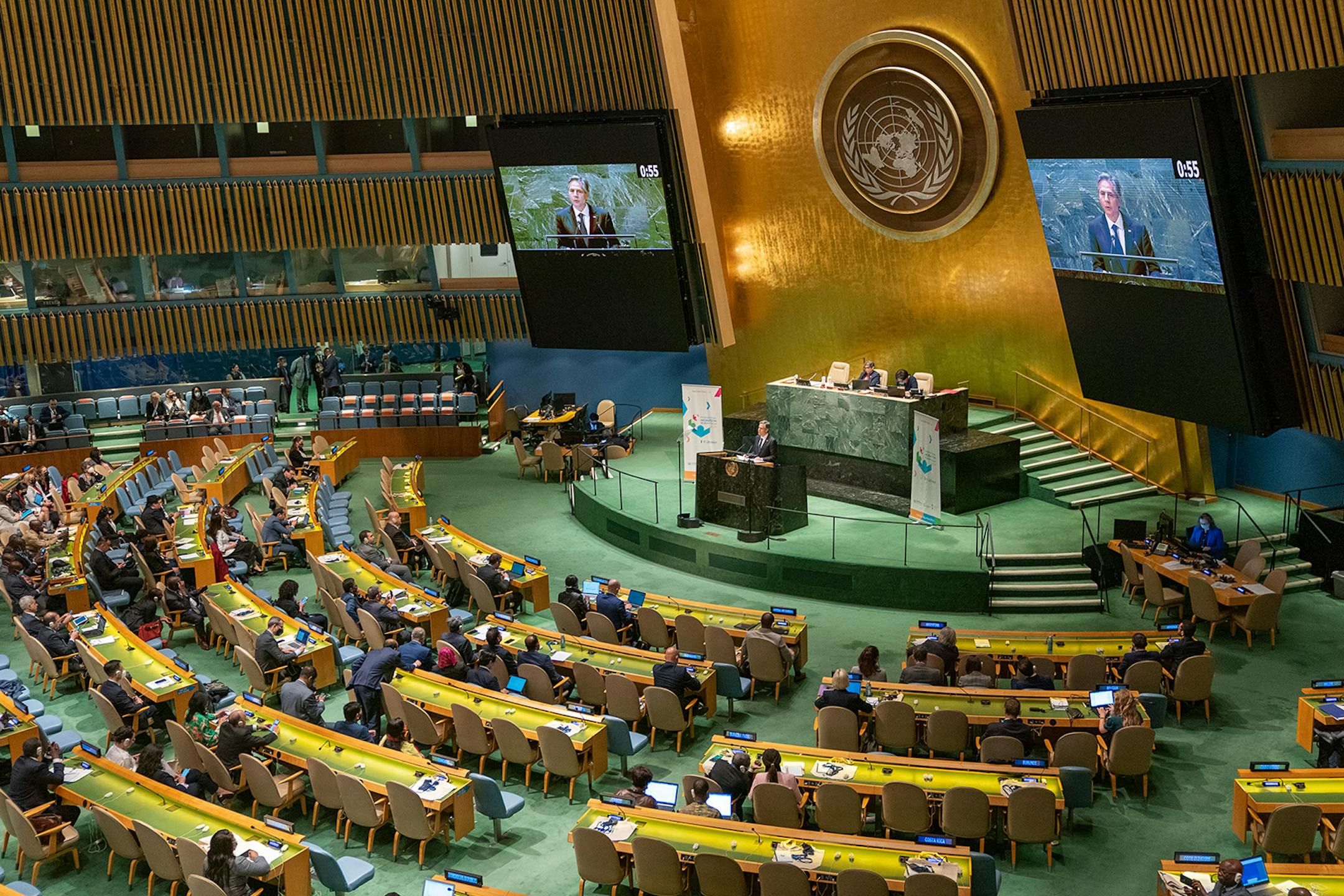
Yet one widespread belief continues to prevail and may have gotten stronger since Russian forces began pummeling Ukrainian cities on Feb. 24: The United Nations, the world's answer to combating the threat of war, is ineffectual at best and irrelevant at worst.
Ask Ukrainian policymakers what they think of the world's preeminent multilateral institution, and you will receive a collection of passionate denunciations and angry diatribes. On April 5, Ukrainian President Volodymyr Zelenskyy told the United Nations Security Council point-blank that it failed to do the job the U.N. Charter prescribed for it: maintaining international peace and security. Zelenskyy's frustration was fueled by Russia's veto of a Security Council resolution more than a month prior, which called for the withdrawal of Russian forces from Ukrainian territory. Even U.N. Secretary-General Antonio Guterres acknowledged the Security Council is "paralyzed" on Ukraine, unable to do much to end the bloodshed.
The Security Council is no stranger to bad press. Ukraine, of course, isn't an exception. Despite a peace framework that has withered on the shelf for years, the U.N.'s top policymaking body has been a hapless bystander throughout Syria's civil war, as Russia used its veto more than a dozen times to protect its client, Syrian dictator Bashar Assad, from U.N. sanctions. In May, the Security Council failed to adopt additional sanctions on North Korea for its recent tests of intercontinental ballistic missiles, courtesy of a Russian and Chinese veto.
Observers have categorized the lack of Security Council action as an indictment of the entire organization. Over the years, former diplomats have tabled multiple proposals that would reform the body, including one that aims to dilute the power of the veto in cases of humanitarian emergency. Others have pursued more radical options: In March, a group of U.S. senators introduced a resolution urging the U.S. mission at the United Nations to work toward expelling Russia from the Security Council altogether.
Unfortunately for those who advocate for reform, the chances any of these proposals will be adopted lie somewhere between slim to none. Expelling Russia from the Security Council, for instance, is a nonstarter, for it would require an amendment to the U.N. Charter. Amending the charter isn't as easy as acquiring a simple majority vote — such a feat requires the support of two-thirds of members in the U.N. General Assembly and, crucially, the acquiescence of all permanent members of the Security Council. Russia, in essence, would be able to veto any reform that dilutes its power.


