

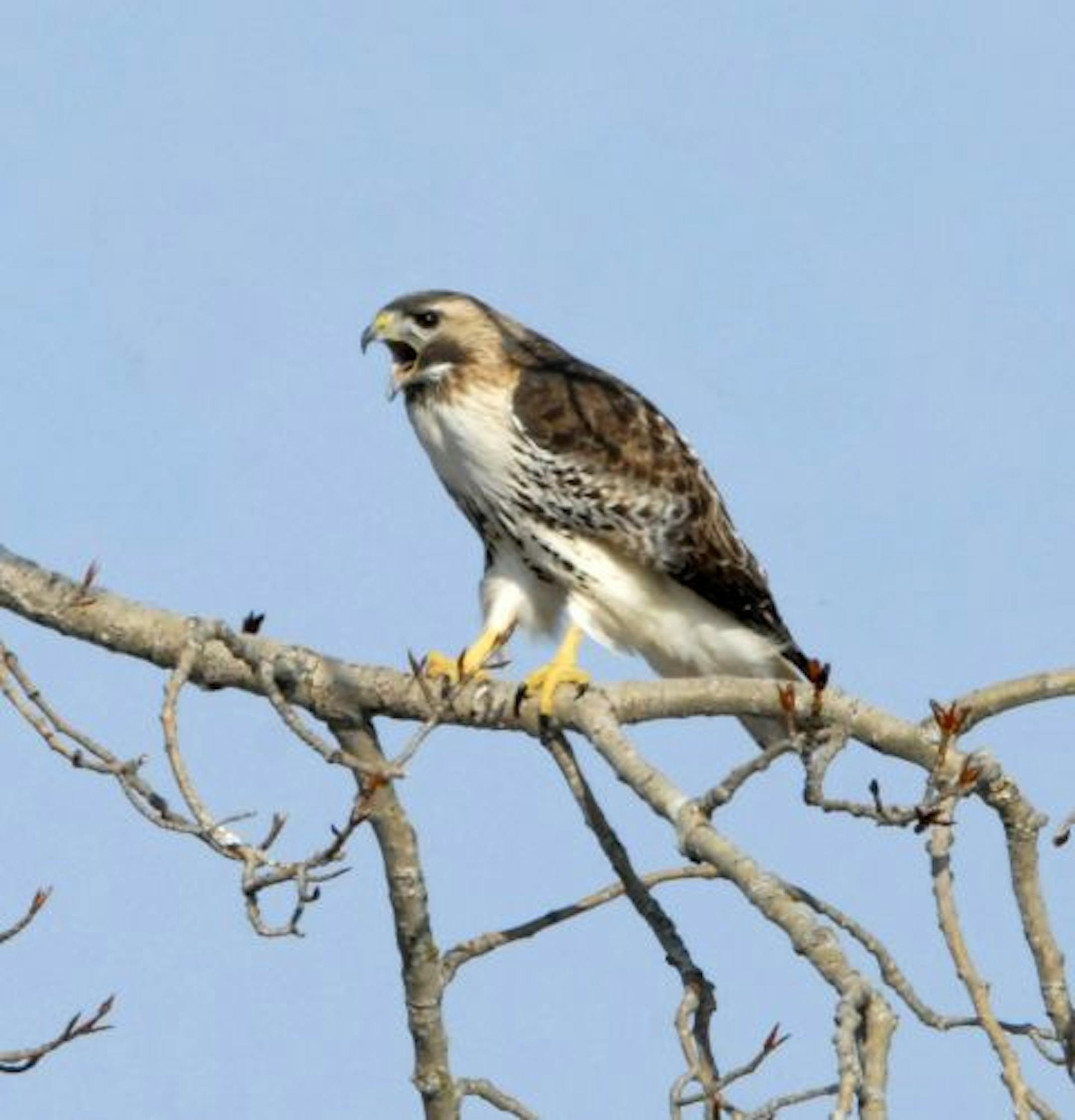
Q Why would a red-tailed hawk be hanging around our back yard, watching the feeders? I didn't think these hawks ate birds.
A Red-tailed hawks usually hunt for small mammals and larger birds like pheasant and grouse, although they have been known to consume songbirds. More likely this beautiful hawk is looking for rodents: Feeding stations sometimes attract mice, voles and squirrels to the spilled seed underneath. Some savvy hawks have learned to hang out at feeders for a four-legged meal.
Sandhills forage in forest Q On a recent biking trip, several of us noticed a pair of sandhill cranes emerging from an oak forest. Could they have been eating acorns in the woods?
A Great observation about a bird we tend to think of in wetlands, using its long beak to explore for snails, frogs and insects. But sandhills have a varied diet, and it turns out that they do eat acorns where they are available. In our area, cranes also hunt for seeds and berries in late fall.
Cover mirror to foil cardinal Q I'm having trouble with a cardinal continually attacking the outside mirrors on our cars. What can I do to get him to stop?
A Cardinals are known to attack their reflection in windows and mirrors -- in the springtime, when they're highly territorial. This is fairly unusual behavior in the fall, but the solution is the same in both seasons: Cover up the mirrors, maybe with paper bags, when the cars are parked. It shouldn't take long for the cardinal to give up and move on.
Discouraging woodpeckers Q One or more woodpeckers visit our house each day to peck on our window frames and wood siding, creating holes in the wood. What can we do to discourage them?
A Woodpeckers can be a problem around wooden houses. They also are very determined birds and it takes determination on a homeowner's part to deter them.


