

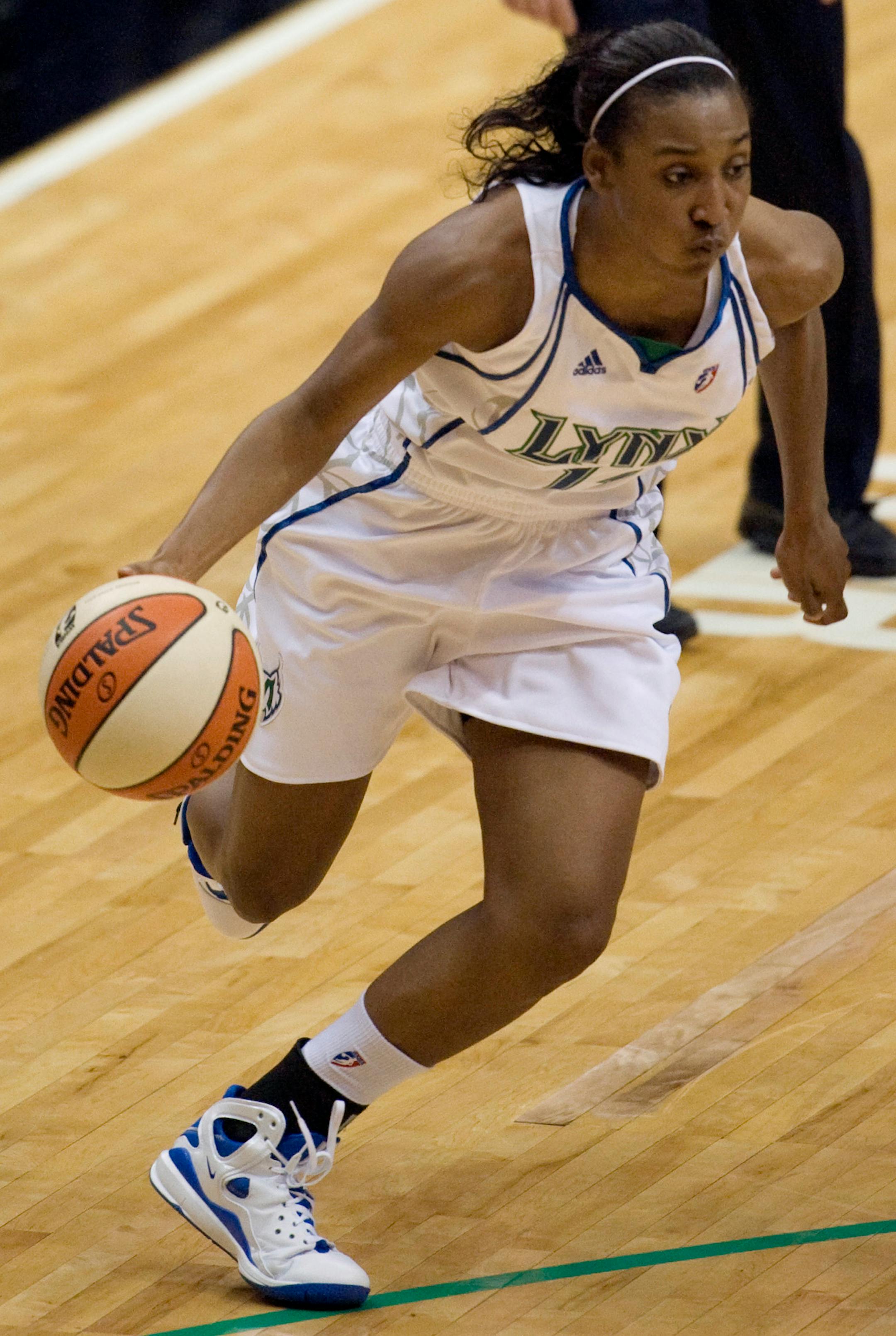
Candice Wiggins and Lindsey Harding saw two sides of China's Olympic preparations last month when the Lynx guards were part of the U.S. women's basketball team that played in a Beijing tournament. Outside the glittering, just-opened arena, they spoke English with taxi drivers and watched landscapers beautify the city that will host the Summer Games in August.
Inside Wukesong Arena, they got a taste of how seriously China is preparing its athletes for these Olympics. The country has poured money into its sports programs in an effort to top the medals table. Australian coach Tom Maher was hired to remold a women's basketball program that had derailed over the past decade, and China beat the United States 84-81 to win the Good Luck Beijing tournament.
U.S. coach Anne Donovan said China has caught up to several countries after its dismal ninth-place finish at the 2004 Olympics. That's good news for the growth of women's basketball, but it adds one more complication to a challenging period for the U.S. As players split the year between their WNBA teams and high-paying overseas leagues, Donovan has precious little time to develop a cohesive team -- jeopardizing the U.S.'s chances of extending its string of three consecutive Olympic gold medals.
"We're struggling," Donovan said. "We've never seen this in women's basketball. Because the rest of the world is catching up, we're going to have to change what we do in terms of carving out time for training camps.
"We're used to having players show up for camps. But other than [the 2007 FIBA Americas championship], we haven't had any semblance of an Olympic team together since Athens. Our chemistry will have to come together very quickly."
The U.S. has 29 players in its Olympic pool, including Harding, Wiggins, Lynx star Seimone Augustus and former Gophers Lindsay Whalen and Janel McCarville. A 12-player Olympic roster will be announced soon.
In an odd shuffling of circumstances, the evolution in the women's game has put Donovan into a position similar to that of the U.S. men's coaches a few years ago. The men's teams were collections of all-stars who rarely convened for training camps, and their sorry performances at the 2004 Olympics (third) and 2002 world championships (sixth) led to major changes.
Under managing director Jerry Colangelo and head coach Mike Krzyzewski, the U.S. has worked toward a more committed, cohesive roster.


