U.S. to send arms to Syrian rebels

Assad used chemical weapons, crossing red line, U.S. says.

The Washington Post
June 14, 2013 at 3:04AM
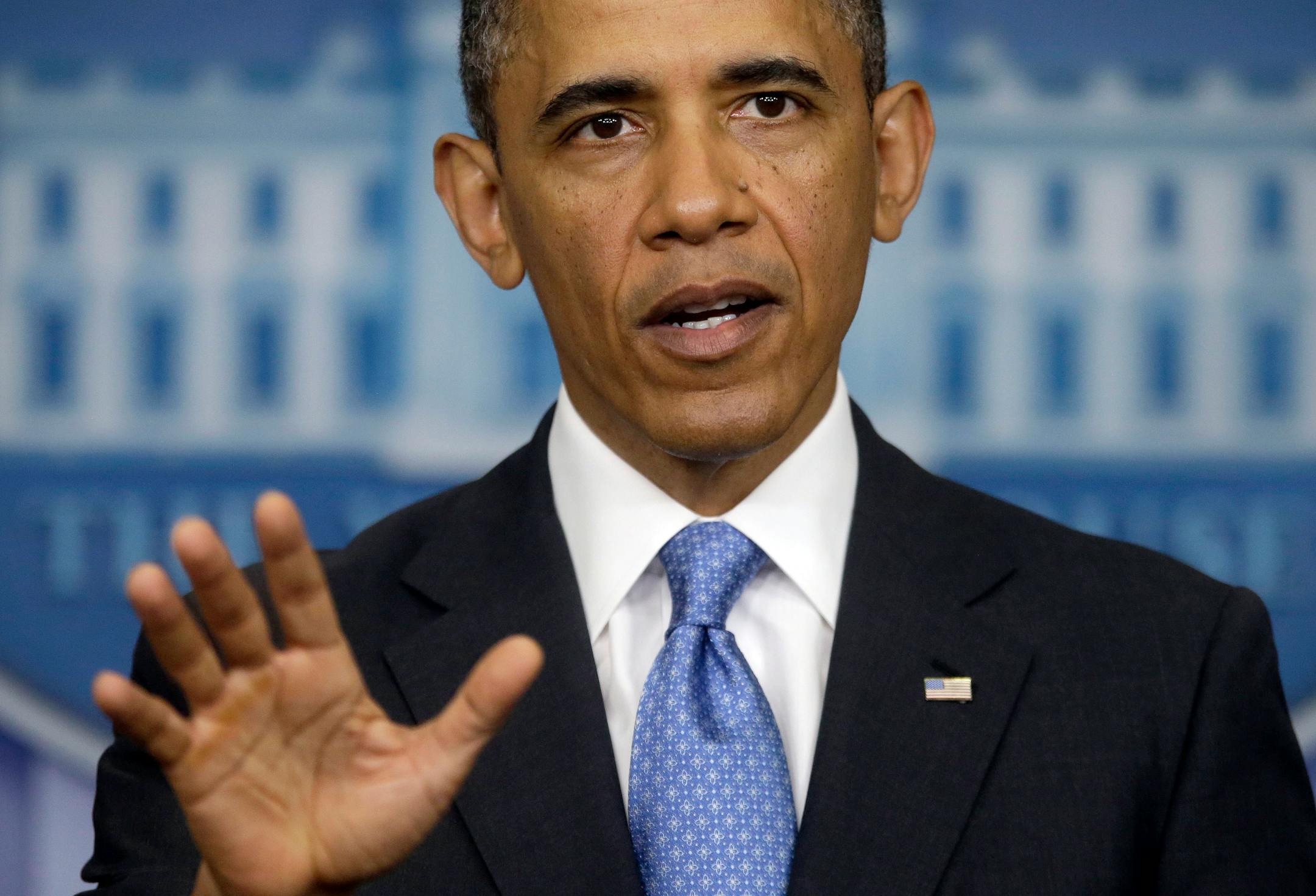
President Barack Obama
President Barack Obama (Colleen Kelly — Associated Press/The Minnesota Star Tribune)

The United States has concluded that the Syrian government used chemical weapons in its fight against opposition forces, and President Obama has authorized direct U.S. military support to the rebels, the White House said Thursday.

"The president has said that the use of chemical weapons would change his calculus, and it has," said Benjamin J. Rhodes, Obama's deputy national security adviser. Rhodes said U.S. intelligence had determined with "high certainty" that Syrian government forces have "used chemical weapons, including the nerve agent sarin, on a small scale against the opposition multiple times in the last year."

Intelligence agencies estimate that 100 to 150 people have died as a result of chemical weapons use, he said.

Rhodes did not detail what he called the expanded military support, but it is expected initially to consist of light arms and ammunition. He said the shipments would be "responsive to the needs" expressed by the rebel command.

Obama has "not made any decision" to pursue a military option such as a no-fly zone and has ruled out the deployment of U.S. ground troops, Rhodes said.

Syria's outgunned rebels have issued urgent appeals this week for antitank and anti-aircraft weaponry to counter a government offensive that is backed by Hezbollah fighters and Iranian militia forces.

"Suffice it to say this is going to be different in both scope and scale," Rhodes said of the new assistance. Obama said last year that confirmation of chemical weapons use would cross a "red line" for the United States.

The shipments, to begin in a matter of weeks, are likely to be undertaken by the CIA, which has been the primary U.S. government interlocutor with the opposition's Supreme Military Council, led by Salim Idriss. Such covert action requires a signed presidential finding.
That method avoids what the administration previously has said are legal restraints against supplying arms for attacks against another government without approval by an international body such as the United Nations, according to U.S. officials who spoke on the condition of anonymity about intelligence matters.

The weapons would probably be delivered by air to Turkey or Jordan, or both, and by land into Syria along rebel-held corridors. The opposition's requests for antitank and anti-aircraft weaponry are still under discussion. The CIA declined to comment on the new direction in Syria policy.

Despite its long insistence that Syrian President Bashar Assad must leave power and its recognition of the opposition as "a legitimate representative of the Syrian people," the United States and most of the world still officially recognize the Assad government.

Rhodes said the administration would continue to push for a negotiated political settlement of the conflict, including a proposed conference between opposition leaders and government representatives that is on hold.

Syria will be at the top of the agenda when Obama meets with leaders of the Group of Eight industrial nations, including Russia, in Northern Ireland next week. Russia, Assad's primary arms supplier and diplomatic backer, has blocked harsher international action against him at the United Nations.

The Obama administration has provided more than $515 million in humanitarian and nonlethal military assistance to the Syrian opposition, including food and medicine. But while regional governments have been funding weapons supplies for the rebels, the United States and its closest allies, including Britain and France, have been reluctant to do so.

This week, demands from numerous U.S. lawmakers that Obama authorize the delivery of arms — despite persistent U.S. public reluctance reflected in opinion polls — escalated after the rebels' loss of a key town near the Lebanese border and reports that government forces were massing with Hezbollah and Iranian fighters to retake rebel-held portions of the northern city of Aleppo.

Officials described Obama's decision as a gradual one, as intelligence assessments about chemical weapons use became more firm. After an initial, inconclusive assessment in April, the president "directed our intelligence community to further investigate the use of chemical weapons and to seek credible and corroborative information," Rhodes said.

The U.S. investigation, he said, was conducted separately from, but in conjunction with, a U.N. effort to confirm chemical weapons use. "Following a deliberative review, our intelligence community assesses that the Assad regime has used chemical weapons, including the nerve agent sarin, on a small scale against the opposition multiple times in the last year," Rhodes said. "Our intelligence community has high confidence in that assessment given multiple, independent streams of information."

Intelligence committees in Congress were briefed on the arms decision earlier this week and on the chemical weapons conclusions on Thursday.

Republican Sens. John McCain of Arizona and Lindsey Graham of South Carolina welcomed the chemical weapons assessment. The two have been among the sharpest critics of the administration, saying it has not been doing enough to help the rebels.

"U.S. credibility is on the line," they said in a joint statement. "Now is not the time to merely take the next incremental step. Now is the time for more decisive actions," they said, such as using long-range missiles to degrade Assad's air power and missile capabilities.

Sen. Robert Casey Jr., D-Pa., said the moderate opposition forces risk defeat without heavier weapons, but he also warned that may not be enough. "The U.S. should move swiftly to shift the balance on the ground in Syria by considering grounding the Syrian air force with standoff weapons and protecting a safe zone in northern Syria with Patriot missiles in Turkey," Casey said.

Such a no-fly zone would roughly parallel NATO's action in Libya two years ago. NATO has said it is not contemplating a similar move in Syria.

The chemical weapons assessment lagged behind two key European allies in reaching the same conclusion. France sent its dossier of chemical weapons evidence to Washington more than a week ago, and Britain had earlier provided what both countries called extremely persuasive evidence.


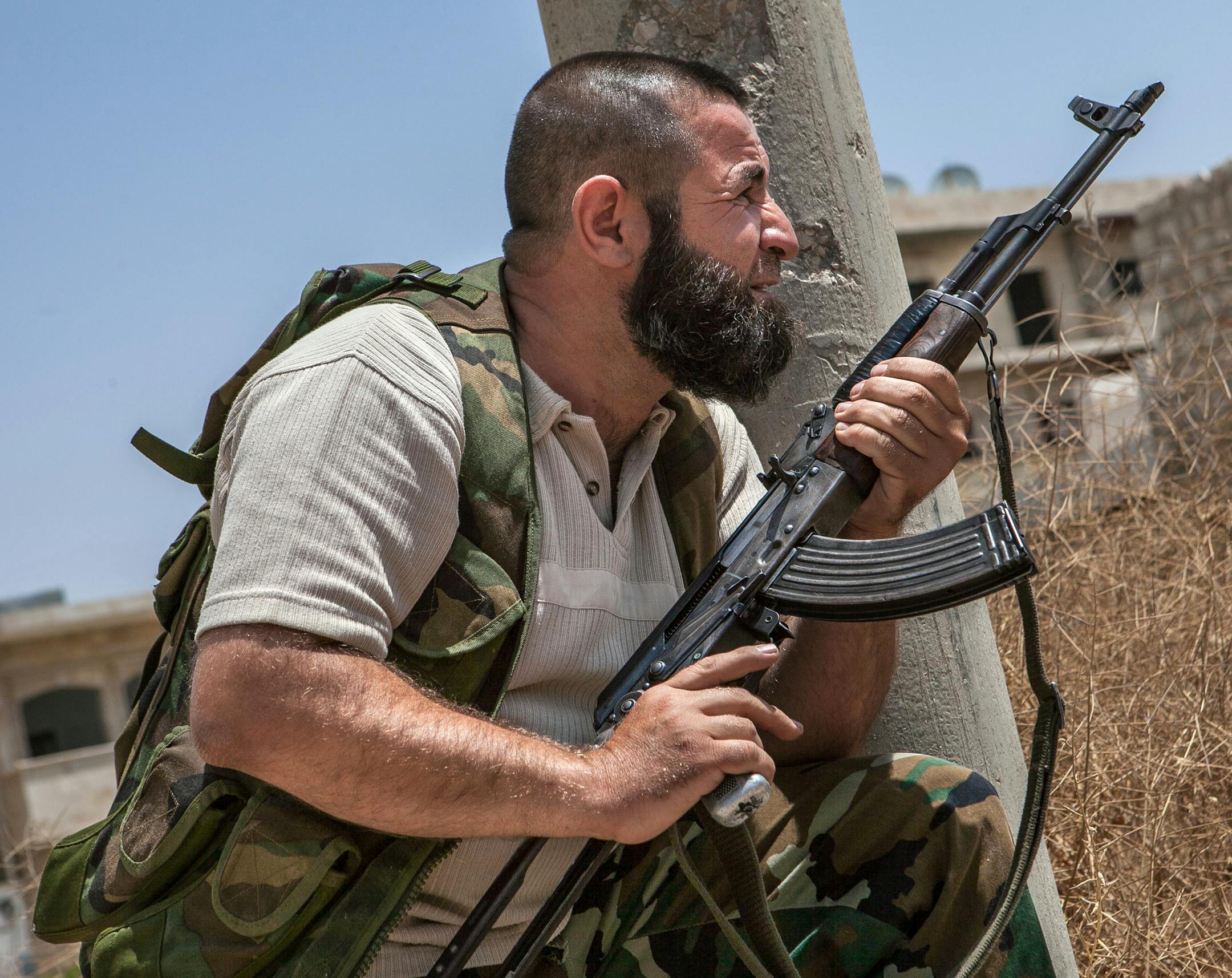
A Syrian rebel fighter belonging to the "Martyrs of Maaret al-Numan" battalion holds a position on June 13, 2013 in the northwestern town of Maaret al-Numan in front of the army base of Wadi Deif, down in the valley. At least 93,000 people, including over 6,500 children, have been killed in Syria's civil war, the United Nations said on June 13, 2013, warning that the true death toll could be far higher. AFP PHOTO DANIEL LEAL-OLIVAS (Photo credit should read DANIEL LEAL-OLIVAS/AFP/Getty Images)
A Syrian rebel fighter held his position Thursday in the northwestern town of Maaret al-Numan in front of an army base. DANIEL LEAL-OLIVAS • AFP (The Minnesota Star Tribune)
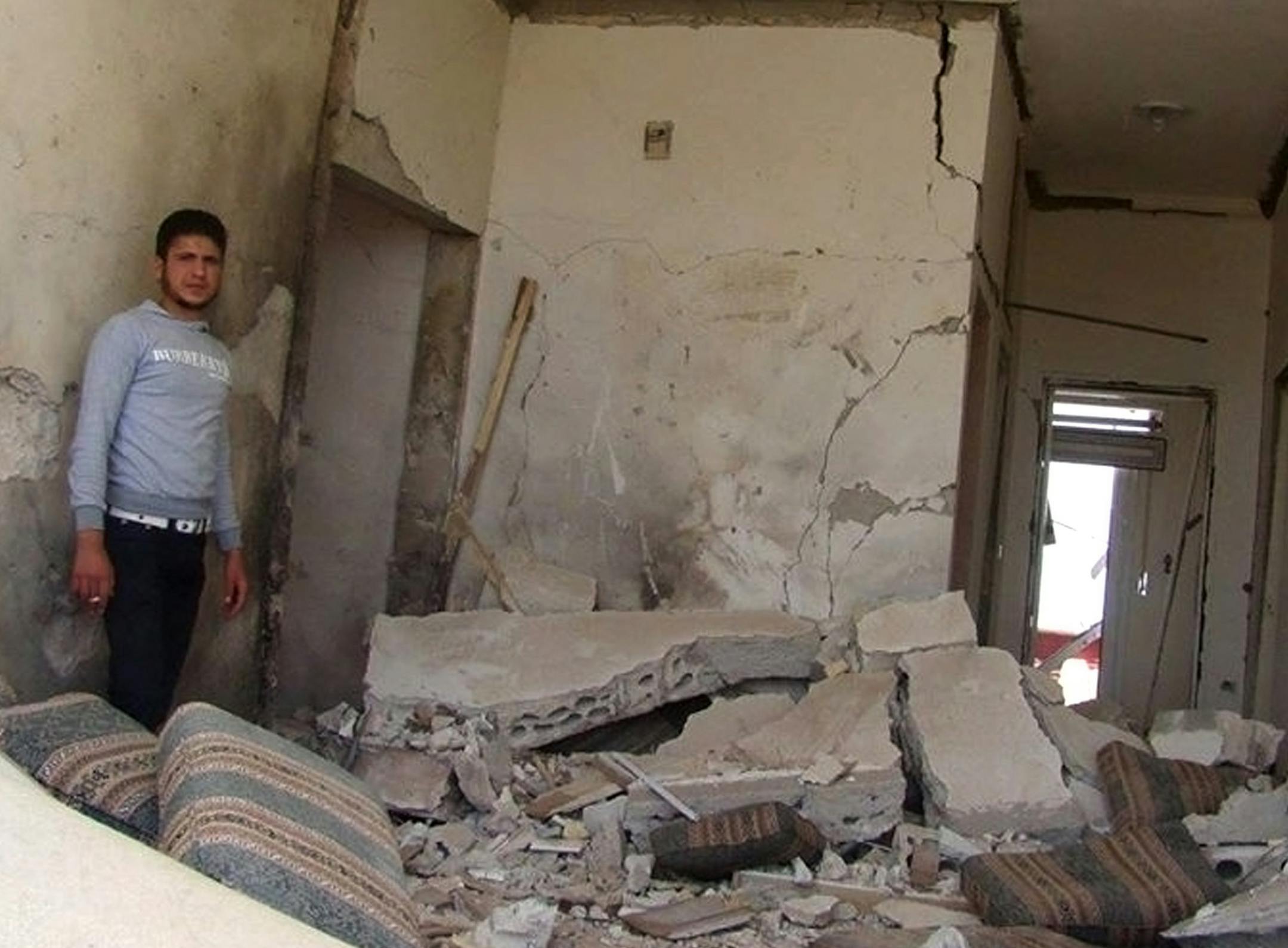
This citizen journalism image provided by Edlib News Network, ENN, which has been authenticated based on its contents and other AP reporting, shows a Syrian man checking his destroyed house that was damaged by a Syrian forces air strike, in Idlib province, northern Syria, Thursday, June 13, 2013. (AP Photo/Edlib News Network ENN)
This citizen journalism, which has been authenticated based on AP reporting, showed a Syrian man examining his house Thursday that was damaged by a Syrian air strikes, in Idlib Province. (The Minnesota Star Tribune)
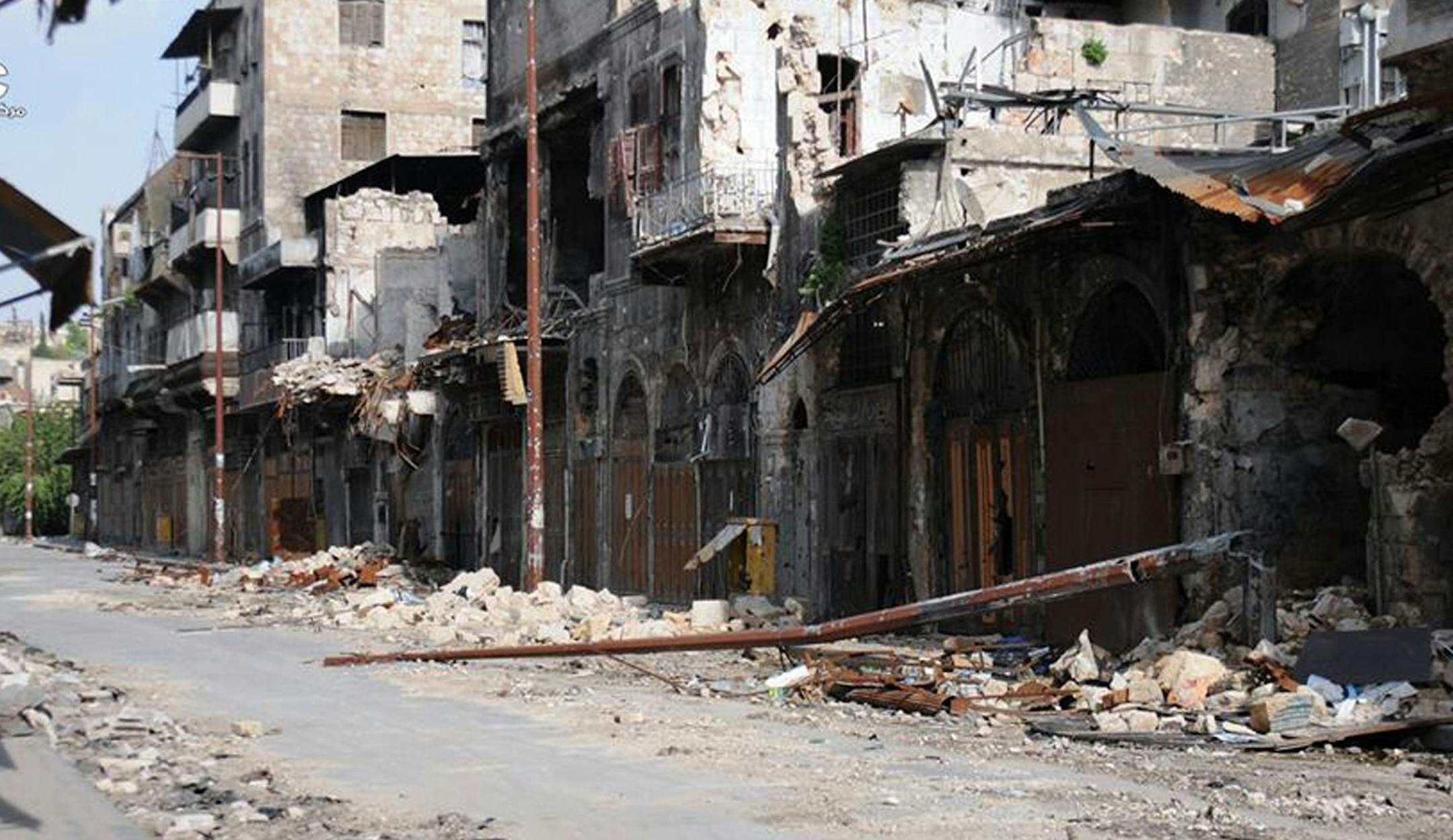
This citizen journalism image provided by Aleppo Media Center AMC which has been authenticated based on its contents and other AP reporting, shows damaged buildings during battles between the rebels and the Syrian government forces, in Aleppo, Syria, Thursday, June 13, 2013. Syria's upwardly spiraling violence has resulted in the confirmed killings of almost 93,000 people, the United Nations' human rights office said Thursday but acknowledged the real number is likely to be far higher. (AP Photo
Damaged buildings were seen Thursday during battles between the rebels and Syrian government forces in Aleppo, Syria. (The Minnesota Star Tribune)
about the writers

about the writers

Karen DeYoung

Anne Gearan

More from Minnesota Star Tribune

See More
card image
Provided/Sahan Journal

Family members and a lawyer say they have been blocked from access to the bedside of Bonfilia Sanchez Dominguez, while her husband was detained and shipped to Texas within 24 hours.

card image